As the title suggests, please take this comparison with a pinch of salt. It’s just for fun and nothing too technical to share and discuss. This is something I did not try before but there is always a first time.
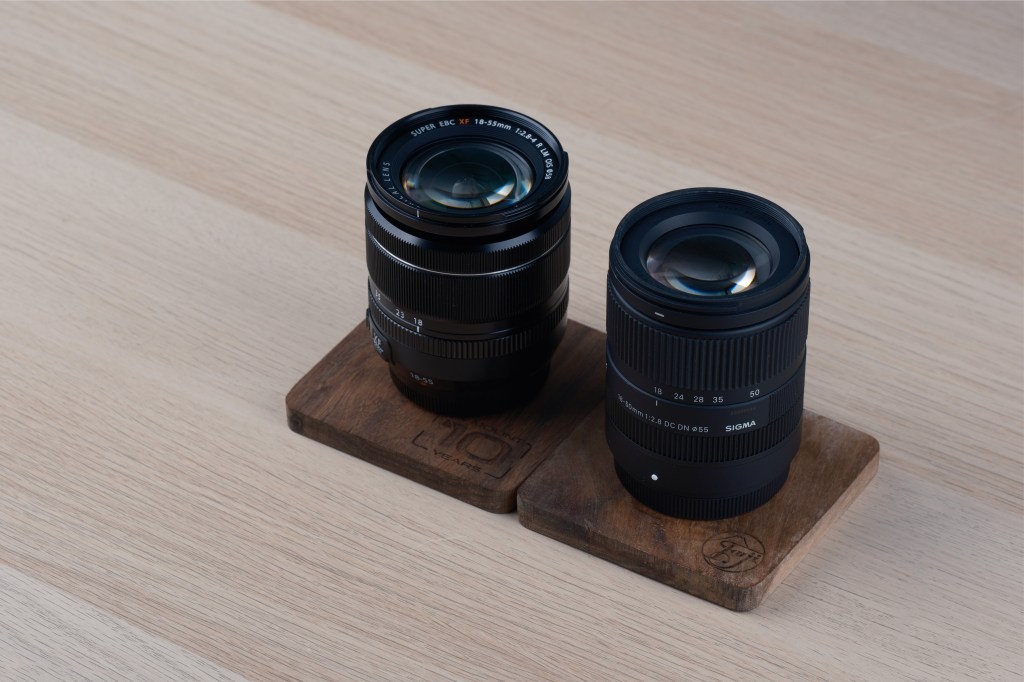
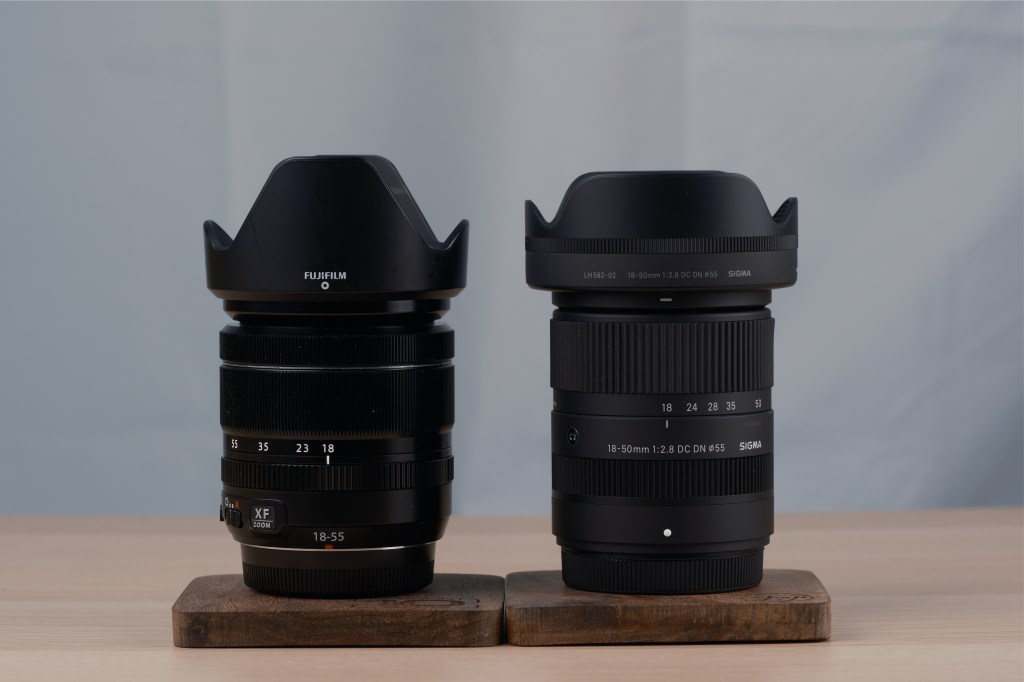
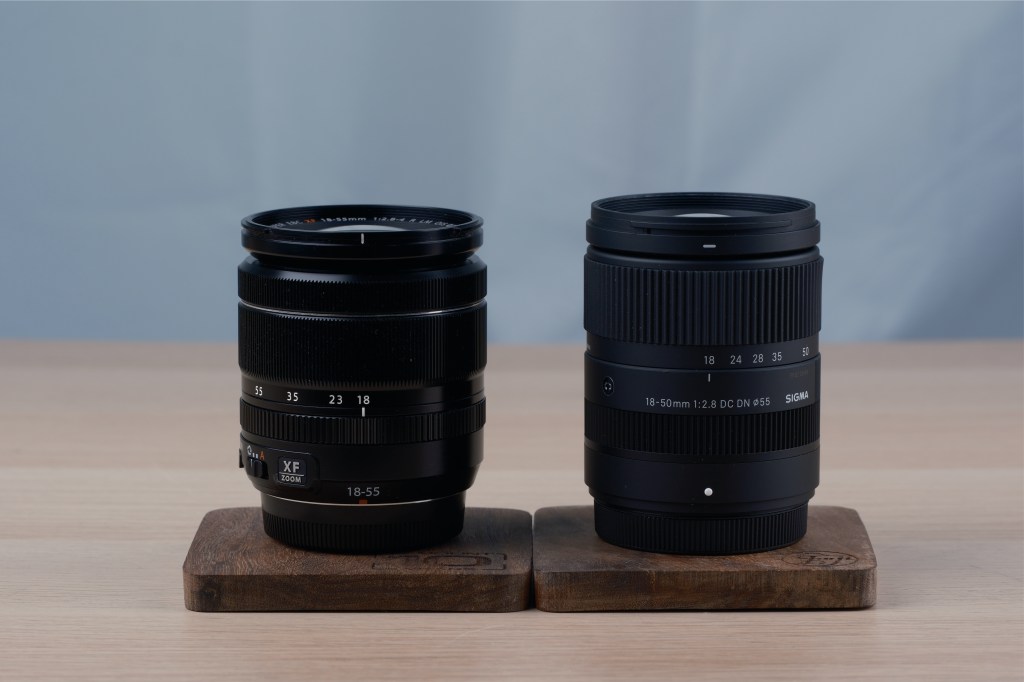
First thing first, why compare these 2 lenses? My reason is simple. They are approximately the same size and same price range (approximately 150 USD different) for brand new. Some might suggest why not compare the Sigma 18-50mm with the XF 16-55mm instead. In my opinion, they are not the same size and you can buy 2 of the Sigma 18-50mm lenses and have some cash left. To cut things short, they are in a different league.
Here we go.
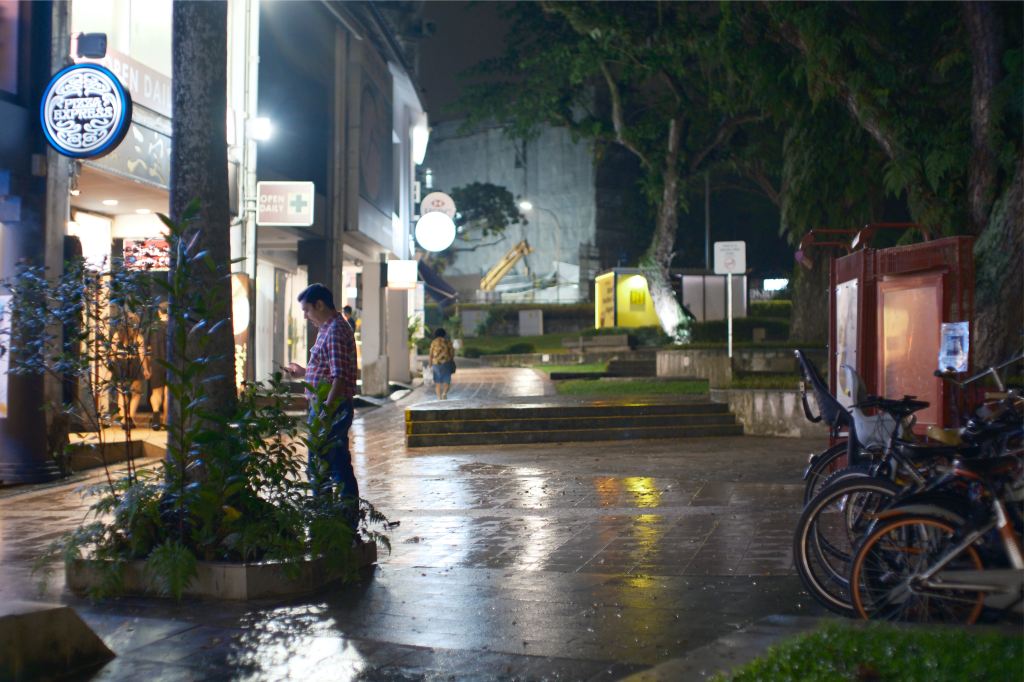
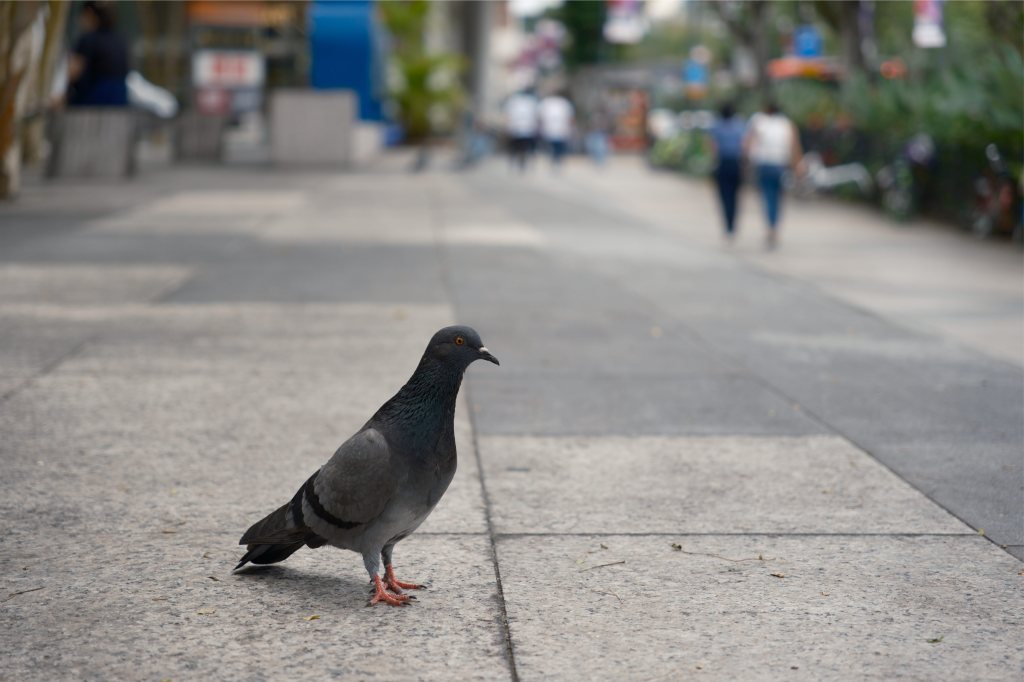
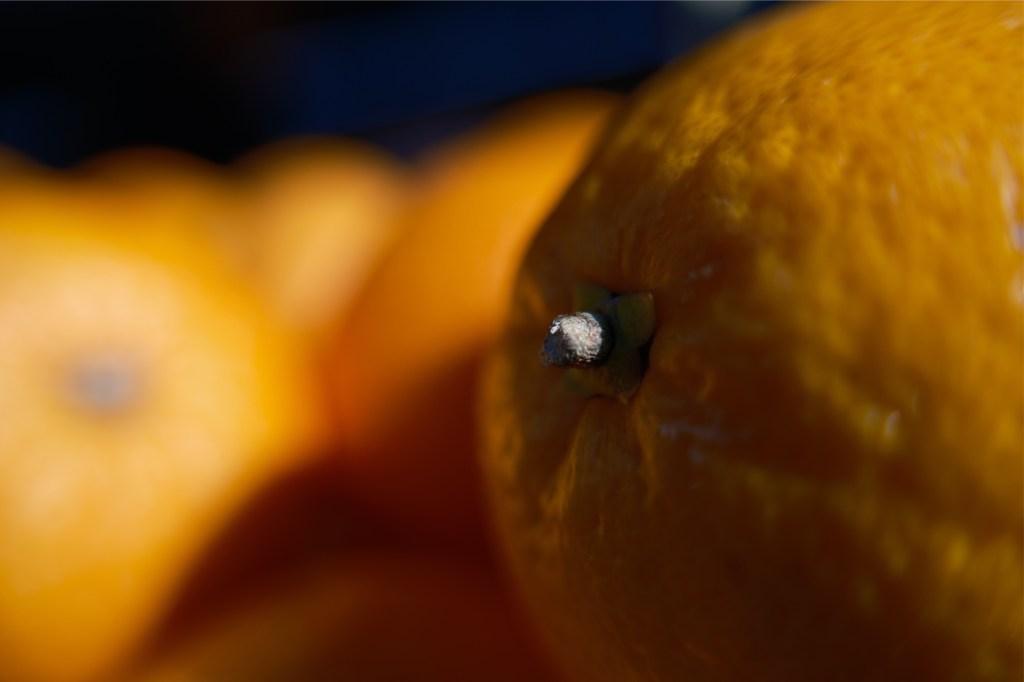
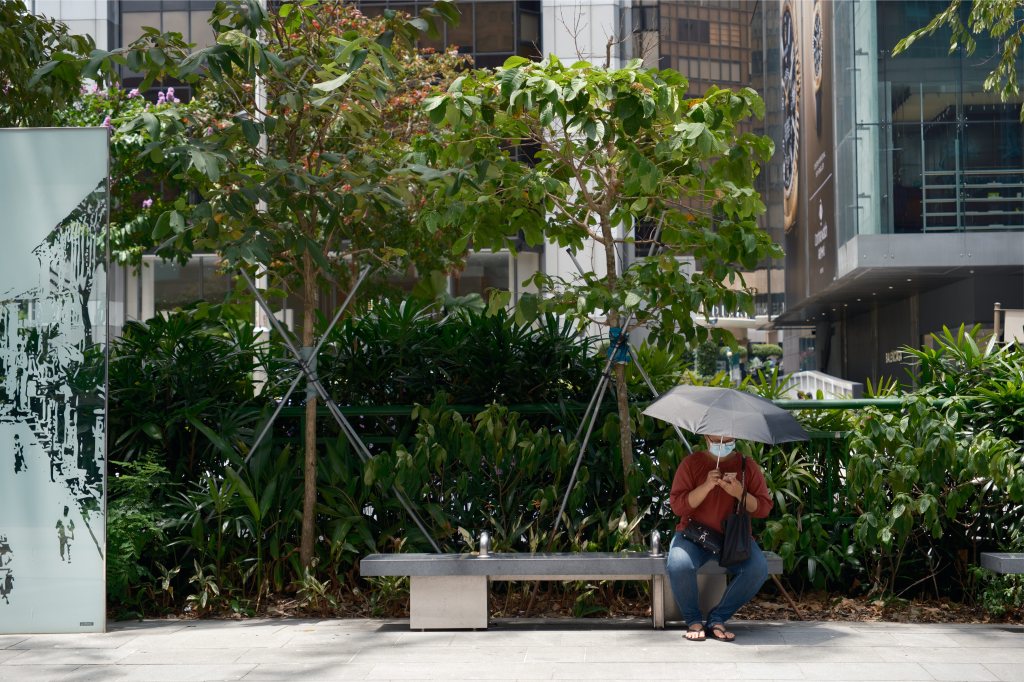
Left: Sigma 18-50mm f2.8 @ f2.8. Right: XF 18-55mm f2.8 – 4 @ f2.8. Shoot at approximately 50 cm. Both at 18mm.
Left: Sigma 18-50mm f2.8 @ f2.8. Right: XF 18-55mm f2.8 – 4 @ f2.8. Shoot at 30 cm. (XF 18-55mm minimim focus distance). Both at 18mm.Sigma 18-50mm @ f2.8 @ 18mm . minimum focus distance @ 12.1 cm
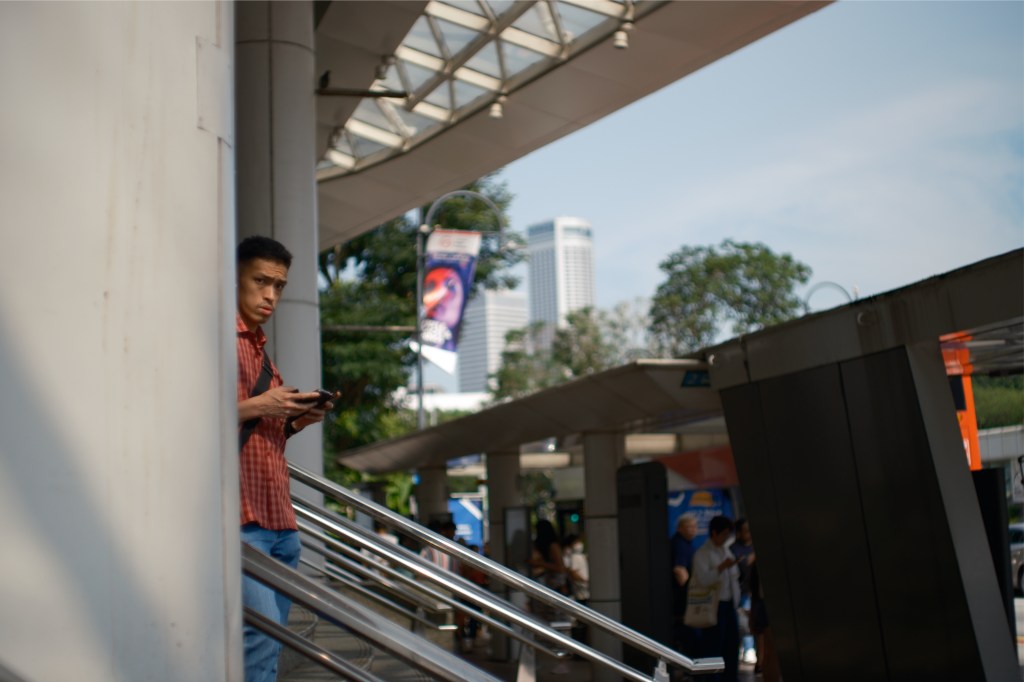
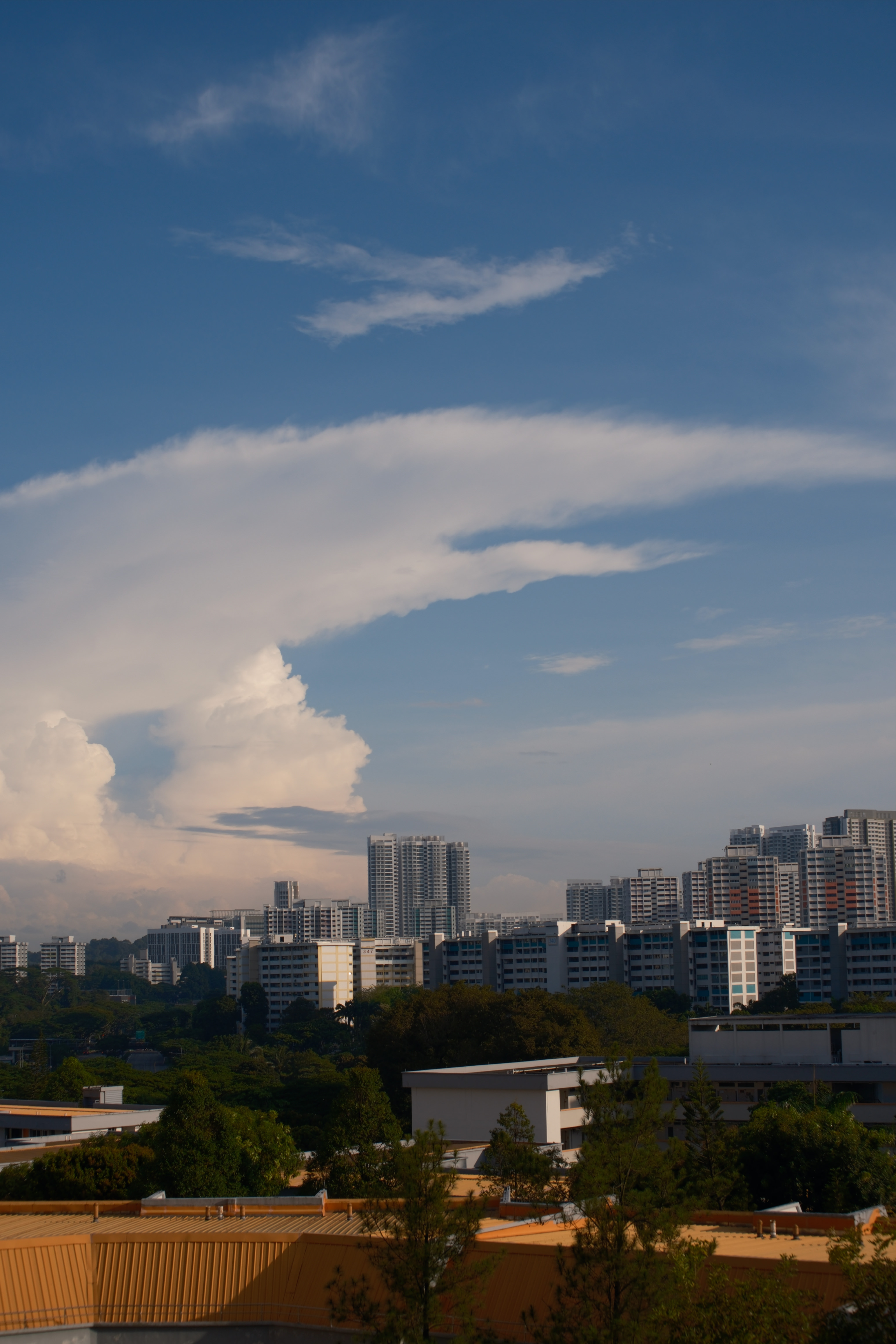
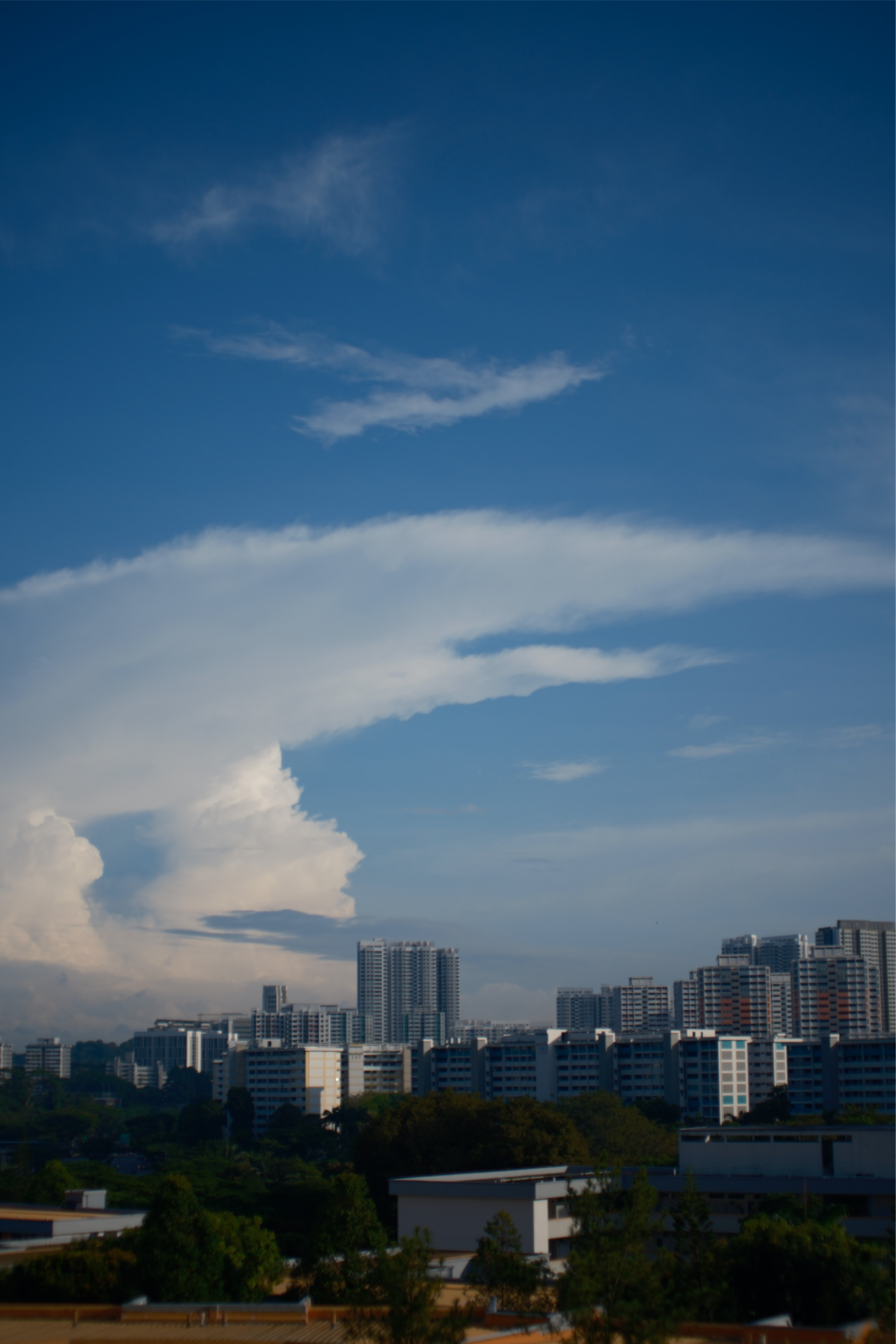
Left: Sigma 18-50mm f2.8 @ f2.8 @ 50mm. Right: XF 18-55mm f2.8 – 4 @ f4 @ 55mm. Shoot at approximately 100 cm.
Sigma 18-50mm f2.8 @ f2.8 @ 50mm. Shoot at approximately 100 cm.
In conclusion: Despite having 5mm shorter than the Fuji, Sigma has more versatility. All thanks to the capability of shooting at a much closer Minimum focus distance at both wide and tele ends. As for image quality, I think they come in quite close together. What do you think? Are you willing to sacrifice the aperture ring and the metal build lens to opt for a Sigma 18-50mm f2.8?
Thank you for reading.
Disclaimer: 1. All the shots taken here are shot by me. 2. All shots are straight out of the camera. 3. The opinions are based on my experience. If there is any mistake, please kindly drop me a message and I will gladly make the amendment. 4. I reserve ownership of these images, if you wish to use my images, please notify me.
If you like my works, please follow me on either one of the 2 Instagram accounts:
I can’t deny that 35mm (50mm in full-frame equivalent) is one of the favorite focal lengths among most photographers. And I see why the manufacturers are releasing this focal length at a higher priority and more frequently (with various aperture values) than any other focal length. Having said that, we, photographers, have so many options to choose from when it comes to this focal length.
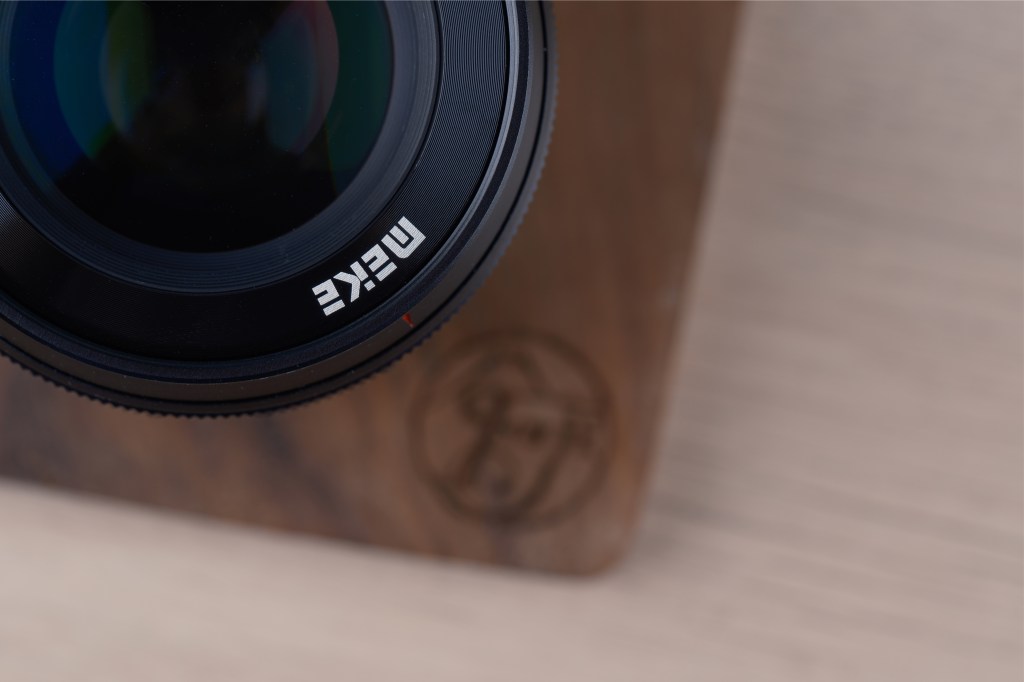
Meike 35mm f0.95
As far as I know, 4 manufacturers are producing 35mm f0.95 to date. Namely TTArtisan, 7Artisans, Mitakon (Zhongyi), and of course, the main character of this post: Meike.
Meike 35mm f0.95
Intro
This is my first time working with Meike and I appreciate Meike for sending me this lens for review. Having said that, this review is not biased but rather based on my true opinion.
I did a short research on the company. The Hong Kong-based manufacturer was established in 2007 and they are specialized in many videography and photography tools and equipment. They have many cine lenses and still lenses (both auto and manual lenses) in their business portfolio. In order words, they are very experienced in this field.
This lens was announced back in October 2022 and comes with massive 6 camera mounts: Sony E, Fujifilm X, Canon EF-M, Nikon Z, Canon RF, and Micro Four Thirds.
From the look of this lens, it has a very distinctive design. The manual focus ring has that unique pattern that not only helps the photographer to “identify” the which ring he/she is rotating. This design is inspired by Voigtlander lenses and some of the older Nikon manual lenses.
(Update 15 April 2023: Special thanks to a friend who pointed out that the Voigtlander and some of the Nikon lenses manual focus ring has the same design.)
Speaking of the focus ring, I shall share my experience with both the manual and aperture rings together. Both have a different texture but they are very comfortable and grippy to hold. Rotating them is a pleasure. They have a good balance of friction and you do not need to apply too much force to rotate.
At 380 grams, it is not as heavy as it seems to be. The weight of the lens is very well distributed and balanced. Also, it has a relatively small filter size. Only 52mm. For context, XF35mm f1.4 and XF18mm f2 are the same filter size.
Oh yes, this lens comes with a metal build body with a cap-on lens cap, which I feel is a quicker removal option than the screw-in lens cap. But a little pity is that the lens cap is made of plastic. Something I am not expecting from a high-quality built lens.
Maybe it is me, but it is a challenge to nail the shot well in wide-open with moving/motion subjects. At f0.95, the image quality has a certain level of softness, lacking some contrast, sharpness, and a very shallow depth of field. It also has some glowing effect on it which sometimes make me think I have taken an off-focused shot.
I also do observe pretty obvious chromatic aberration and vignetting at f0.95. I think that’s acceptable or rather within my expectations for manual lenses with a large aperture. As for overall image quality, I find it is okay and actually much more usable than I thought. If you are picky or pixel-peeper, you will probably not be in favor of the results.
Nonetheless, I can also see better image quality improvement from f2 onwards. But that is not the main purpose of having an f0.95 lens if you want to stop it down to f2 right?
For sunny star result, it gives a much contrast and sharp star result as compared to some of the manual lenses. And also, it introduces some flares as well if facing directly toward the light source.
For most of my other manual lens tests, I always observed that the result is always off-focus when I shoot at the infinity mark. I have to rotate the focus ring somewhere before the infinity mark to get the right infinity shot.
This is also the case for the Meike lens. In order to shoot at actual infinity, rotate to where the printed infinity symbol printed is and not where it’s labeled position.
From MFD to infinity, the focus throw is approximately 90°. Like most manual lenses, this gives a good amount of “distance” for precise focusing. I do have not much of a comment for this department.
0.39m is its MFD. Not the shortest MFD for its focal length but the image quality from this lens is pretty good. The MFD is very similar to the Ronkinon 35mm f1.2 but a few centimeters further than the average 0.35m from other lens manufacturers have for their lenses.
Compared with other f0.95 of the same focal length, this lens is priced at 259 USD. Do you think it is expensive? I think Meike priced it just right among the competitors and I think it is still a fair price to have that f0.95 aperture value.
Something interesting to note: it may be due to my camera or its settings. There is an obvious white balance change whenever I changed from other aperture values to f0.95. It does not have a real impact on me since I can change it under In-Camera Raw Processing.
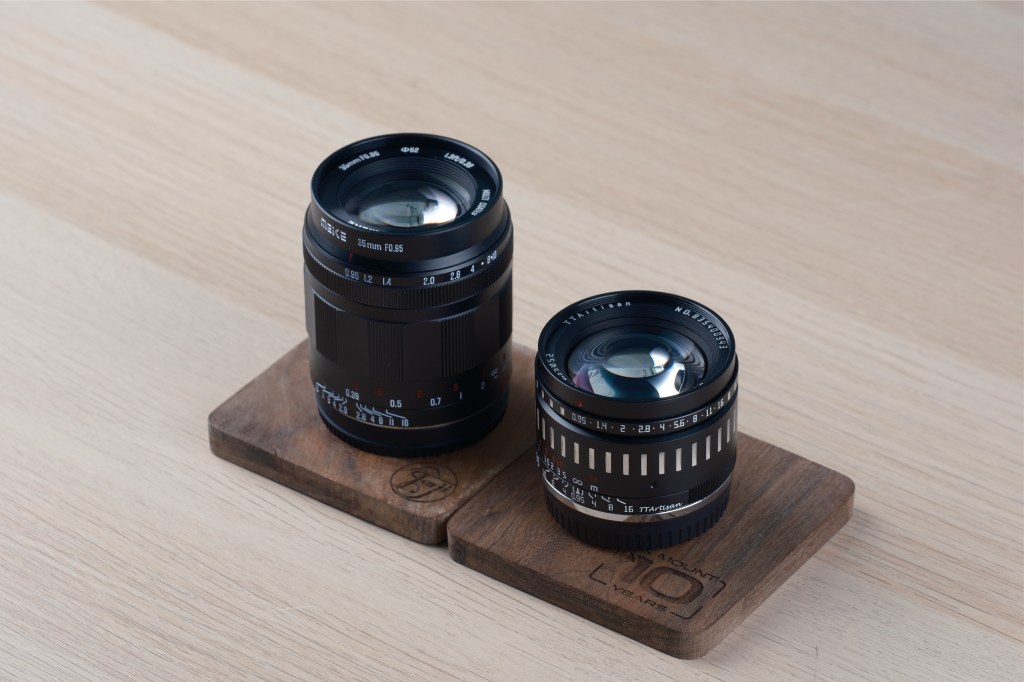
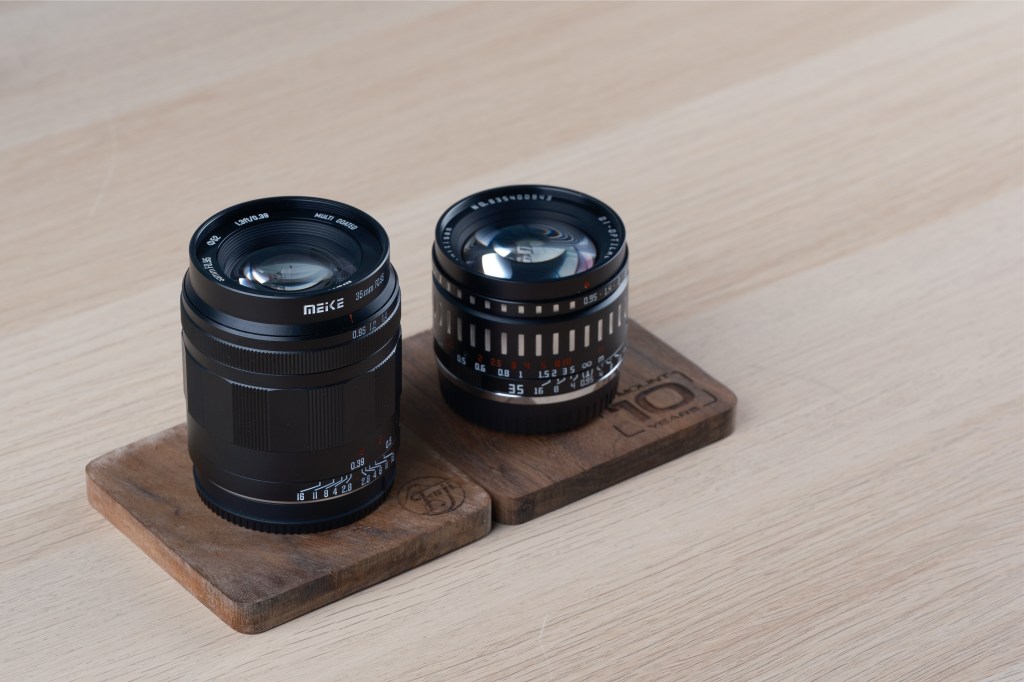
I have the TTArtisan 35mm f0.95 with me to compare with this lens. As you can see, they have very different designs, sizes, and approaches. So, which one do you prefer?
As a manual focus lens, it is targeted a very specific group of photographers who understand the pro and cons of owning this unique lens and knowing what they can achieve from this lens. Having said that, this is a focal length that is very suitable for many genres. And also, it is one of the focal lengths for new photographers to get adapt to easily, especially for first-timer prime lens photographers.
As for professional photographers, unless you know what you want to do with this lens, then you can consider getting one.
Conclusion
There are many manual lenses out in the market and we are spoilt for choice. But if you are planning to get into the brightest and fastest manual lens in the market with a fair decent price. Given that the shots taken wide-open are pretty usable, I think this is one of the lenses for your consideration.
This is my first time testing out this lens from Meike and it leaves me quite a positive impression. Although it shares quite a lot of similarities with other manual lenses in the market, it does stand out quite a bit from them too. Especially on the lens design and image quality at wide open.
Not forgetting that they have launched the first autofocus lens (85mm f1.8) for the Fujifilm community. I am excited to see more products released from them!
Disclaimer: 1. All the shots taken here are shot by me. 2. Most of the shots are straight out of the camera with some shots edited via In-Camera Raw Processing. 3. The opinions are based on my experience. If there is any mistake, please kindly drop me a message and I will gladly make the amendment. 4. I reserve ownership of these images, if you wish to use my images, please notify me.
If you like my works, please follow me on either one of the 2 Instagram accounts:
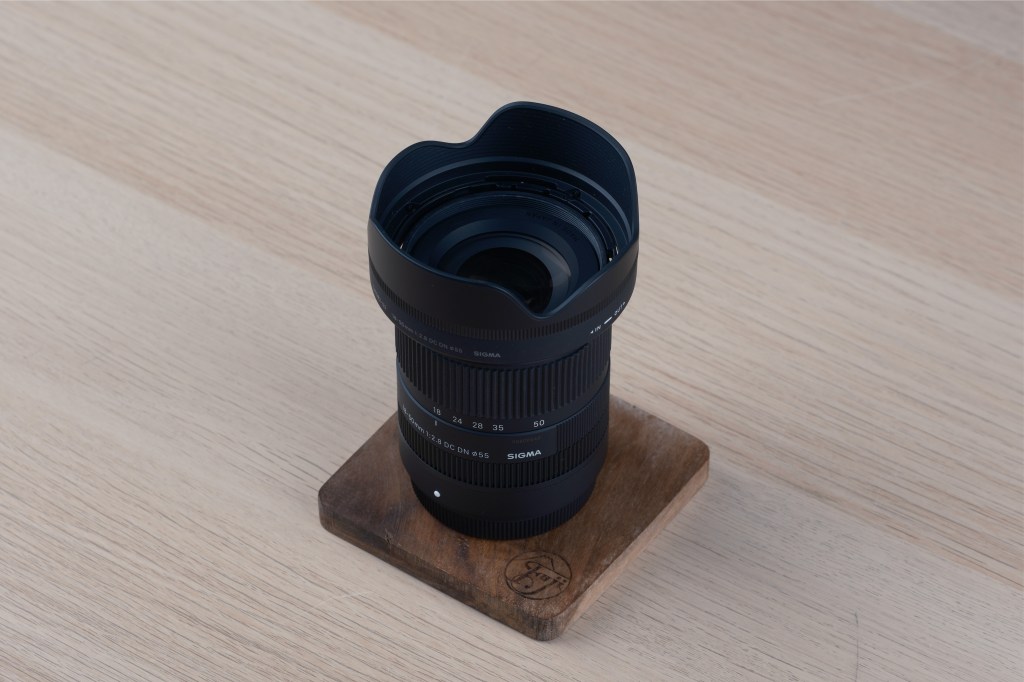
When it comes to third-party zoom lenses, Fujifilm photographers do not have many options. If I remember correctly, Sigma 18-50mm f2.8 DC DN Contemporary is the 3rd zoom lens (among the third-party lenses), and it is the first zoom lens from Sigma for Fuji available in the market.
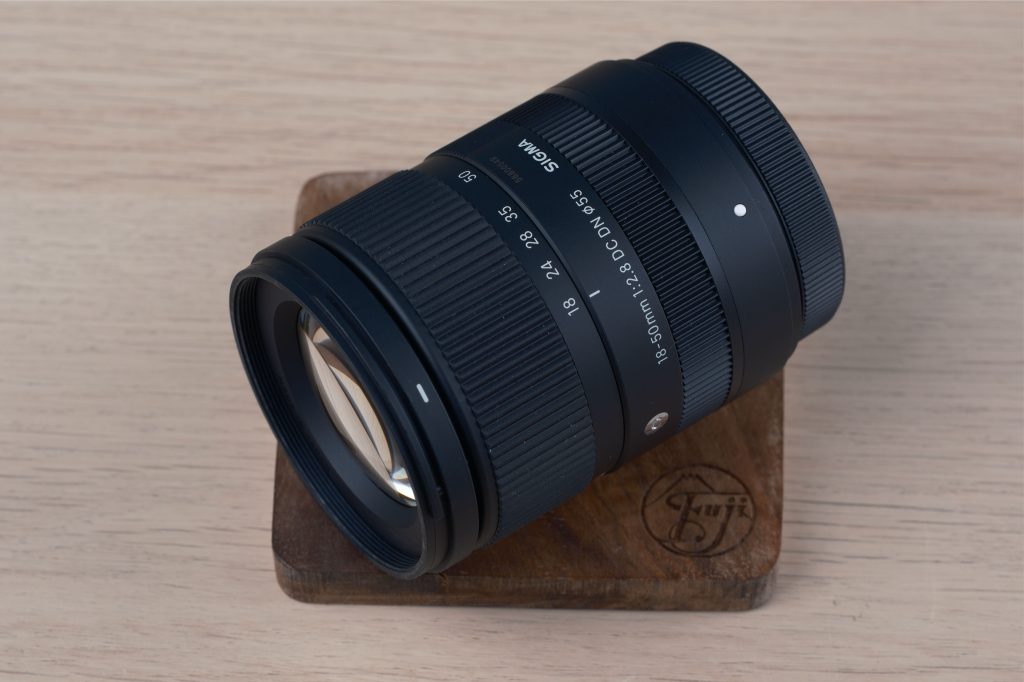
Sigma 18-50mm f2.8
Sigma 18-50mm f2.8 was announced way back in October 2021 but that was meant for L-mount and E-mount cameras. The X-mount version was only announced merely one year later.
When I think about a constant f2.8 zoom lens, my perception of the lens is that it should be a huge lens, a big filter size, and be heavy. Sigma did a wise choice by doing something different with this lens. It is totally the opposite of what I just mentioned. It is so compact and small. And I can’t help thinking this might be a perfect choice to bring for travel.
Sigma 18-50mm f2.8
Before I share further, allow me to thank Mr. Lawson from Sigma Marketing (Singapore) for loaning me the Sigma 18-55mm f2.8 Contemporary DC DN lens for review. I appreciate his support to make this review a reality.
Design and Build Quality
The overall design language of this lens shares a lot of similarities with Sigma 16mm f1.4, Sigma 30mm f1.4, and Sigma 56mm f1.4. It does not come with an aperture ring and the lens body is polycarbonate (also known as Thermally Stable Composite TSC) constructed.
Having said that, this 285 grams lens (it is just 5 grams heavier than the Sigma 56mm f1.4 and 10 grams heavier than the Sigma 30mm f1.4) is genuinely great to hold with and the built quality is very sturdy and it does not give out a sense of cheap feeling.
The 28-75mm (in full-frame equivalent) also comes with dust and splash resistant. This compact lens comes with a filter size of 55mm which is very decent and photographers who buy filters are delighted to know about it.
I have to say… The image quality coming out of this glass is great. The sharpness and contrast are great. At f2.8, the image is totally usable. The details are tremendous and resolve very well with my X-T5’s 40 megapixels sensor. This shows there are some quality and engineering works done with Sigma’s engineering team.
Although I am more of a prime lens user, I get to use or test with some zoom lenses. To be fair, prime lenses are still on better image quality, much sharper, and have better contrast. So if I am to compare the Sigma 18-50mm with the other zoom lenses, I think I am really impressed with this lens’ optic quality.
At wide open, the bokeh is very good with a very decent and gentle fall-off between the subject and background/foreground. I do observe very mild chromatic aberration and vignetting and I think it is within my acceptable range.
This lens comes with a stepper motor but, to be frank, the focusing performance surprises me. In good lighting conditions, it is really fast in focus locks onto the subject. Almost instantly. And I do not hear any sound produced by the focusing motor. It is silent.
However, I do occasionally experience slowing down and have the push-pull effect before it focuses on the subject. But it recovered quickly and the same behavior did not occur immediately.
As for challenging lighting conditions, I do see it struggle a little more before focusing on the subject. I think this is normal since most lenses have very similar behavior.
Minimum Focus Distance (MFD)
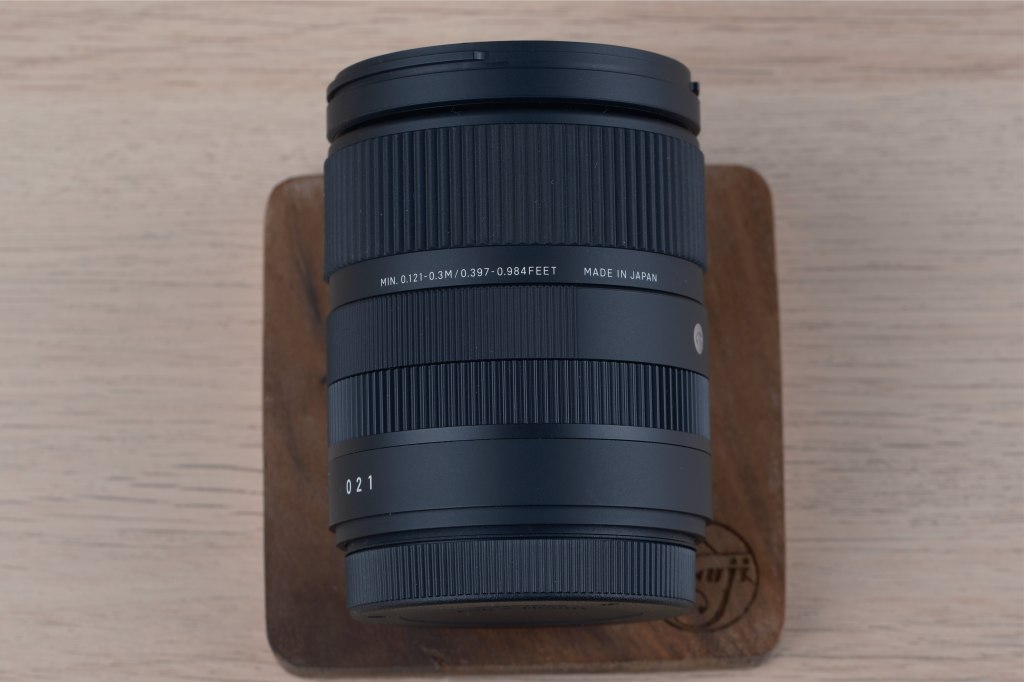
At 18mm, it has the shortest MFD of 12.1 cm. How close is that? You have to remove the lens hood to get that close. Otherwise, you will get the shadow of the lens hood in your shots.
At 50mm, it too has the shortest MFD for the same focal length. I haven’t come across any 50mm lens to have 30 cm MFD. With such a close MFD, it is very impressive to give me a new point of view.
At MFD, the shots retent their sharpness and contrast pretty well with a little bit of softness.
Price Point
This is probably the most important part. It is selling at SRP 549 USD. It is probably the best price-to-performance and size ratio in the market. It is probably the most affordable constant f2.8 lens on the market.
I can’t help but to compare this little beast with my very first lens and also the first zoom lens from Fuji, XF 18-55 f2.8- 4.
XF18-55mm f2.8 – f4 and Sigma 18-50mm f2.8
Physically, they are very close to each other with XF18-55mm being a tad bigger but you cannot tell the difference if you are not comparing them side by side.
XF18-55mm f2.8 – f4 and Sigma 18-50mm f2.8
Putting image quality and performance aside, if I were to choose between them, I will choose Sigma 18-50mm. The reason is simple: constant aperture. As I have an IBIS camera, I do not need an Optional Image Stabilizer lens.
Others
Unlike other third-party manufacturers, this lens does not come with a data-transfer port (i,e. USB-C) or docking station to update the firmware. It is simply downloading the lens firmware, transferring it to an SD card, and updating the firmware via the camera body. the same as how we do for Fuji lenses.
In general, if you want to use it for commercial works or shooting events, documentaries, etc, it is possible. The focal length is sufficient to cover most genres but I would like to suggest this lens to a specific group of photographers and that is travel photographers and budget photographers.
Travel photographers who want to travel lightweight (especially avoiding strain on your shoulder on long hours) or want to pack as compactly as possible but do not want to sacrifice too much on image quality. I think you can consider this lens for your next trip.
This lens also comes with a very attractive price point which I think is a good starter lens for the photographer who has a budget to work on.
Conclusion
Although this lens does not come with the widest possible focal length (like 16mm), this lens no doubt has great versatility which covers our most frequently used focal lengths. As a Fuji fanboy, I do miss the aperture ring. But let’s not forget that it does produce decent image quality, compact size, and reliable autofocus speed. And most importantly, it is priced very well for a constant aperture lens. What can I ask for? A better-built quality like the I series. I hope to see the X-mount variant someday.
Disclaimer: 1. All the shots taken here are shot by me. 2. Sigma 18-50mm f2.8 is running on firmware 0.99. At the time of this blog release, firmware 1.10 was released, but I have not had the chance to upgrade and test it. 3. Most of the shots are straight out of the camera with some shots edited via In-Camera Raw Processing or Capture One. 4. The opinions are based on my experience. If there is any mistake, please kindly drop me a message and I will gladly make the amendment. 5. I reserve ownership of these images, if you wish to use my images, please notify me.
If you like my works, please follow me on either one of the 2 Instagram accounts:
When I first saw the teaser post from Fuji rumors, my impression was that this is going to be hot selling one within the Fujifilm community if it is priced right. And the turn out to be quite true. At the price of 549 USD, Viltrox priced it so attractively and it sold out immediately on the Taobao platform and its online shop.
Viltrox 75mm f1.2
Intro
Viltrox is a name that we, Fujifilm photographers, are familiar with since the birth of its very first autofocus lens, 85mm f1.8 (MK I). Like many photographers, I am impressed by how the Viltrox engineers reverse engineered the X-mount design and work around it. To refresh everyone’s memory, Fujifilm did not open up their X-mount protocol to every third-party manufacturer and Viltrox make it!
Viltrox 75mm f1.2
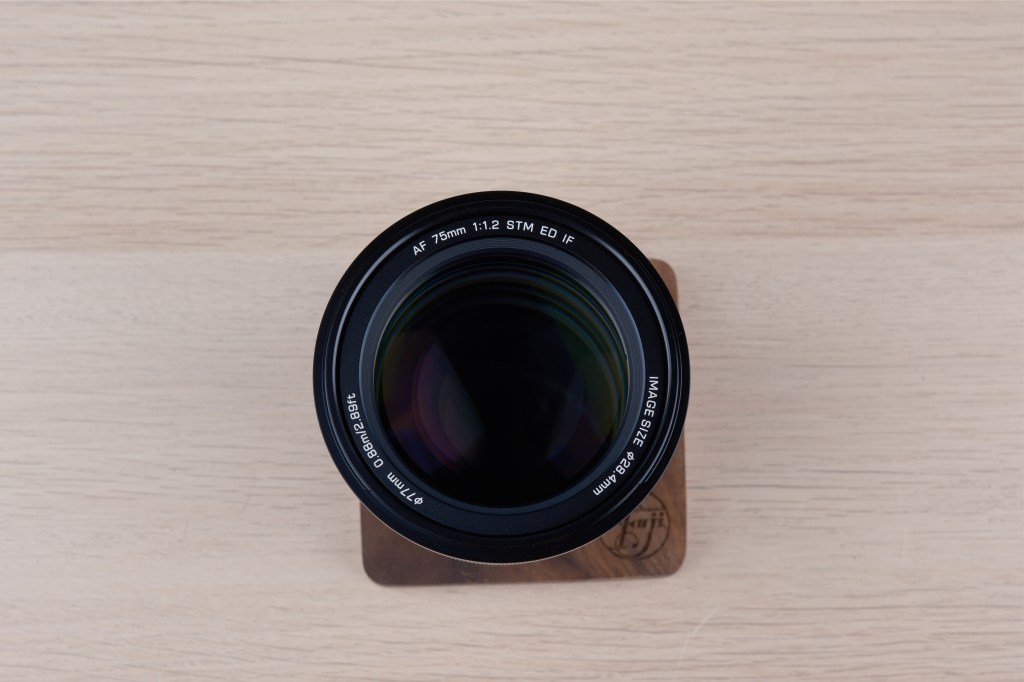
Viltrox 75mm f1.2 is an uncommon focal length at 112.5mm (in full frame equivalent). But I believe photographers, who are using XF80mm and XF90mm, easily adapt to this new focal length.
Viltrox 75mm f1.2
Design and Build Quality
There are two things you will get to notice when you hold the lens: the weight, and the build quality.
At 670 grams, I can feel the mass on my hand. It is definitely not light among most of the lenses. Every part of it is by no means cheap or cheap-built, you can feel that the build quality is belongs to the top tier.
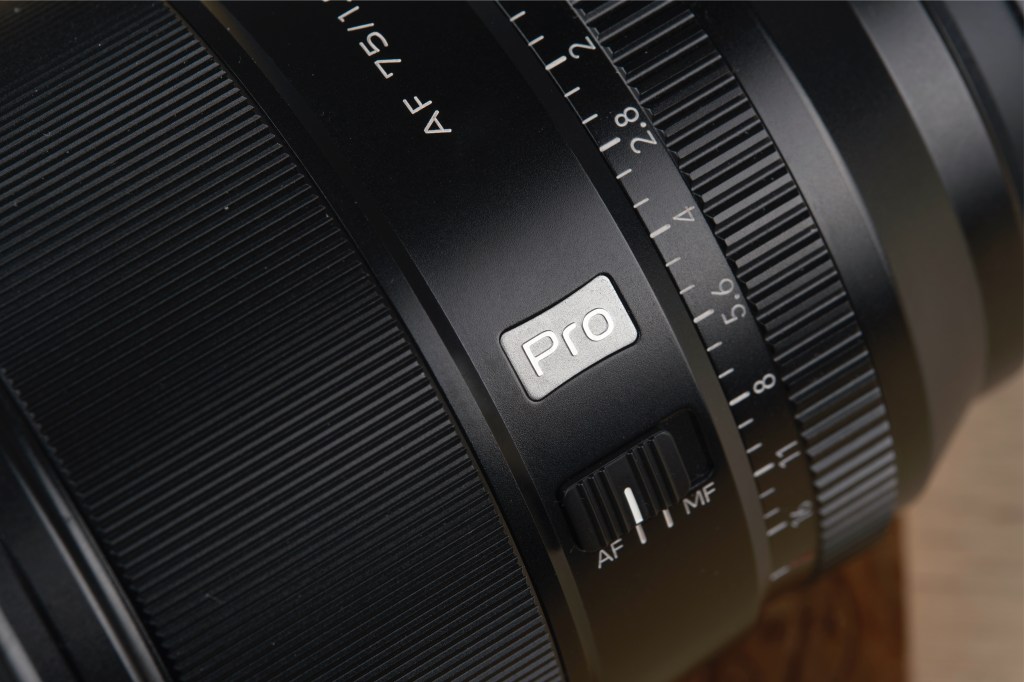
The aperture ring is the clickable one (it does not have de-click option) and it has that satisfying clicking experience whenever you rotate the ring. It also comes with a “A” for automatic aperture choosing by the camera but what missing here is the aperture ring lock release that prevents accidental switch.
Unlike the metal lens hood with Viltrox 33mm f1.4, this 75mm lens comes with the plastic lens hood and it is kind of loose when it is face-inside the lens barrel. But it locked up quite well when it faces away from the lens barrel.
Image Quality
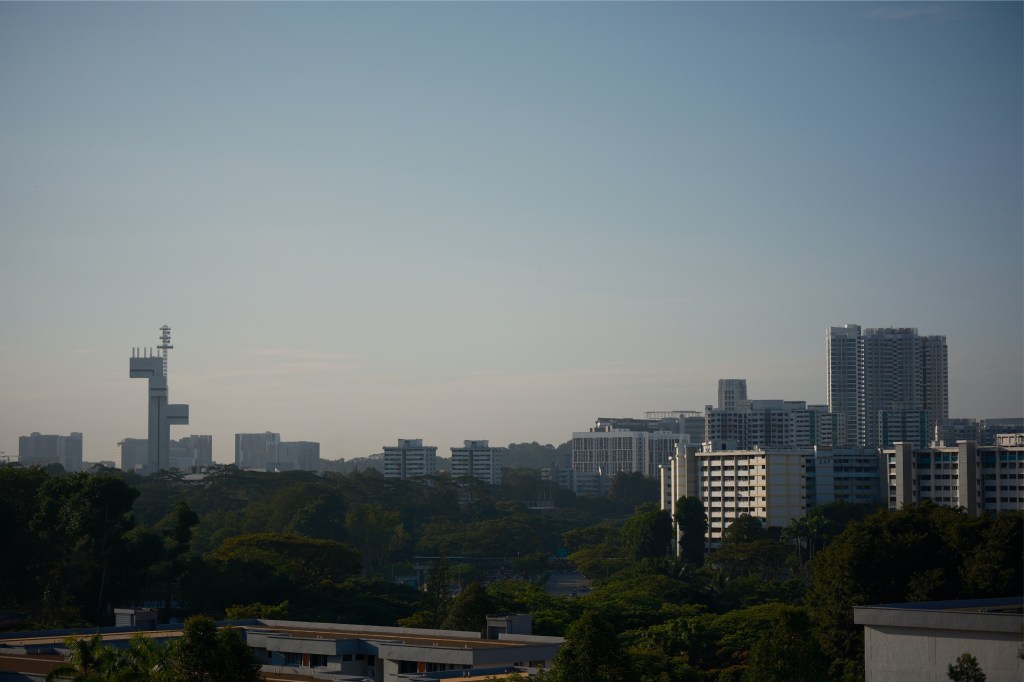
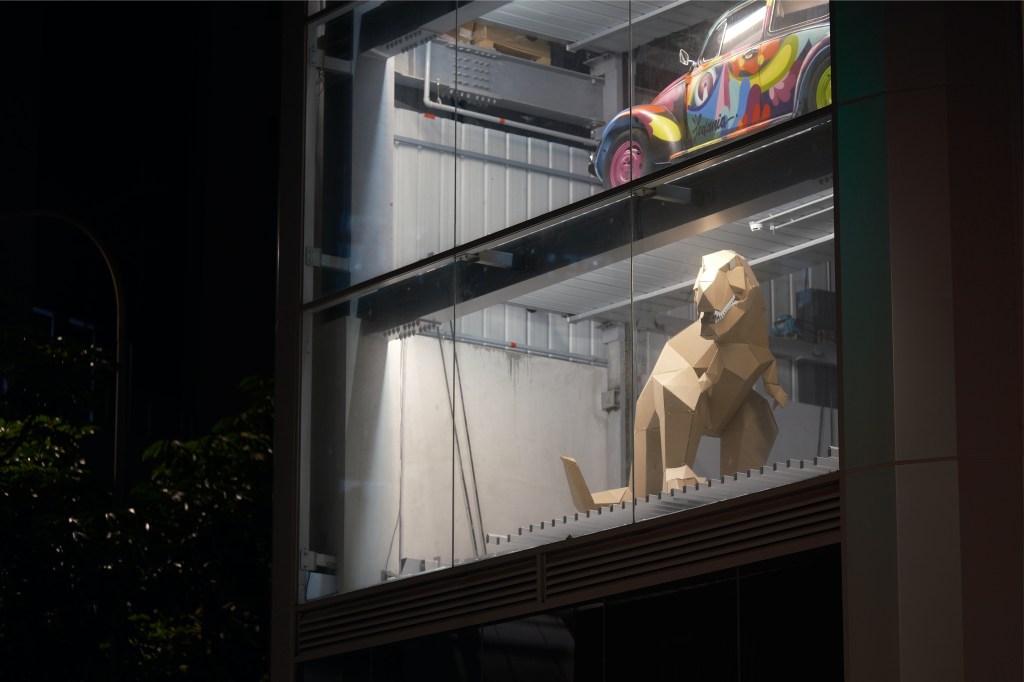
At f1.2, the image quality is really sharp. Probably one of the most clinical sharp lenses on the market out there. At wide open, the subject easily pops out from the background. The lens renders the bokeh well and quite smoothening. Even the fall-off is excellent too.
Is clinical sharp a bad thing or a good thing? In my opinion, it is not a good or bad thing. It is based on individual preference and I know some photographers end up de-sharpen in posts with the results from this lens. For me, this is how this lens performs and something, and it is better to have clinically sharp than characteristically soft because this is a pro-grade lens.
As for me, certain shots happen to be over sharpen for my liking but still within my acceptable range. This doesn’t happen in every shot I take. Probably many factors like light and shadow play a part too.
The chromatic aberration is very well-controlled and I did not notice anything. However, there is a small amount of vignetting at wide-open but it can be resolved via increasing of aperture value or in post-processing.
The lens (or focus) breathing is surprisingly good here. The focus distance did not change dramatically as you change the focus distance from MOD to infinity and vice versa. This can be a great deal for videographer.
Focusing
How should I put it? If I try to focus from the Minimum Focus Distance to anywhere far, I will experience some sluggish focusing. It will take quite a while to focus on the subject I want.
Two: Stepper Motor (STM) might be another factor as it is not the faster-focusing motor that is equipped with a lens. But we have seen some other lenses perform quite well with STM too.
If the focus distance and the subject are close to each other, it performs quite well. On the other hand, the eye-AF works quite well and behaves quite close to what the Fujifilm lenses can perform. (that is provided it does not encounter the sluggish focusing mentioned above.)
Minimum Focus Distance (MOD)
It has a MOD of 0.88m, which also means that it can’t really focus that close to the subject. If you are looking for a lens that can do a tight close-up shot, this lens is not designed for that.
I have to reiterate again that 549 USD for a fast autofocus prime lens with the metal build quality is really a good deal. So far, there is no one lens that can price match with Viltrox in this aspect.
Like other third-party manufacturers, there is always a kind of digital communication to support future firmware upgrades via SD card, dock, or USB port. In this case, there is a USB-C port located at the rear of the lens. I’m glad to see this than the micro-USB found in Viltrox 85mm f1.8 Mark II. Unfortunately, pardon the OCD, the design of the USB-C is not quite symmetrical to the red dot, I wish it is.
As a pro lens, it comes with an AF/MF switch, and if you need to switch to manual mode, you need to switch it from the switch. The Focus mode selector on your Fuji camera bodies will not enable the lens to manual focus. This might be a little hassle for photographers who need it but do take note.
Who is this for?
This is a portrait lens and of course, I have to recommend it to portrait photographers and pre-wedding photographers. Although this lens is slow in focusing return, it will not fail you with the image quality it produces. For product shoot photographers, you can consider this lens too.
As for the rest of the genres, I cannot really recommend using them. I mean it is a great lens but here are some of the downsides that make it not as versatile as other lenses offered in the market.
First, this lens is not ideal for street, documentary, and the like photography genres because of its size and weight. It attracts attention easily, and the weight will weigh you down over time. Basically, it is not a suitable candidate for such genres. But if you insist (like me), you can do so. Because image quality will pay off your sweat and effort.
Second, it does not have short (or close) MOD. So for a photographer like me who love to shoot as close to the subject as possible, this is kind of a bumper. But it still renders the image very well at MOD.
Conclusion
This is Viltrox’s first-ever pro-grade lens. I think it nails almost everything and this lens simply outperforms its pricing with image quality. To date, there is no one lens able to match it equally. This is definitely a good start for Viltrox venturing into the Pro series and Viltrox has indeed set a high benchmark for every manufacturer to follow. I cannot wait to see what Viltrox’s next Pro lenses will be. I am really excited.
Disclaimer: 1. All the shots taken here are shot by me. 2. Most of the shots are straight out of the camera with some shots edited via In-Camera Raw Processing or Capture One. 3. The opinions are based on my experience. If there is any mistake, please kindly drop me a message and I will gladly make the amendment. 4. I reserve ownership of these images, if you wish to use my images, please notify me.
If you like my works, please follow me on either one of the 2 Instagram accounts:
One fine day, Ivan posted the Rokinon deal on the Fujifanboys Facebook group. It was Rokinon 85mm f1.4 and it was quite a good deal at about 68 SGD (51 USD) or less. I was not tempted somehow. A moment later, Ivan posted yet another Rokinon deal and it was shared by Rayz Lee (a member of the Facebook group) to him.
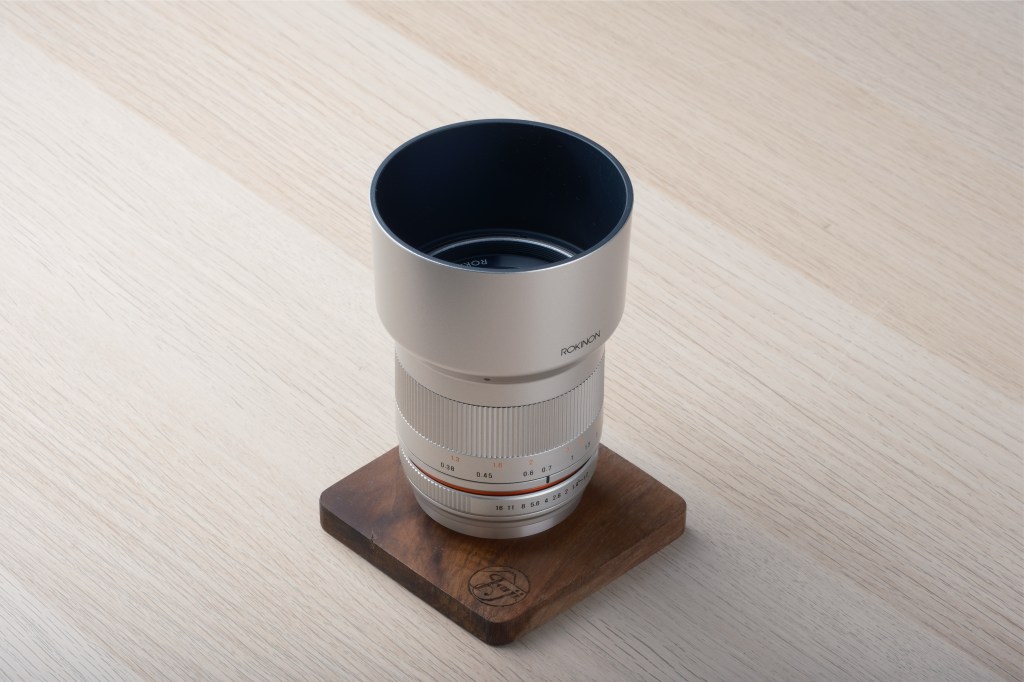
Rokinon 35mm f1.2Rokinon 35mm f1.2Rokinon 35mm f1.2 with lens hood
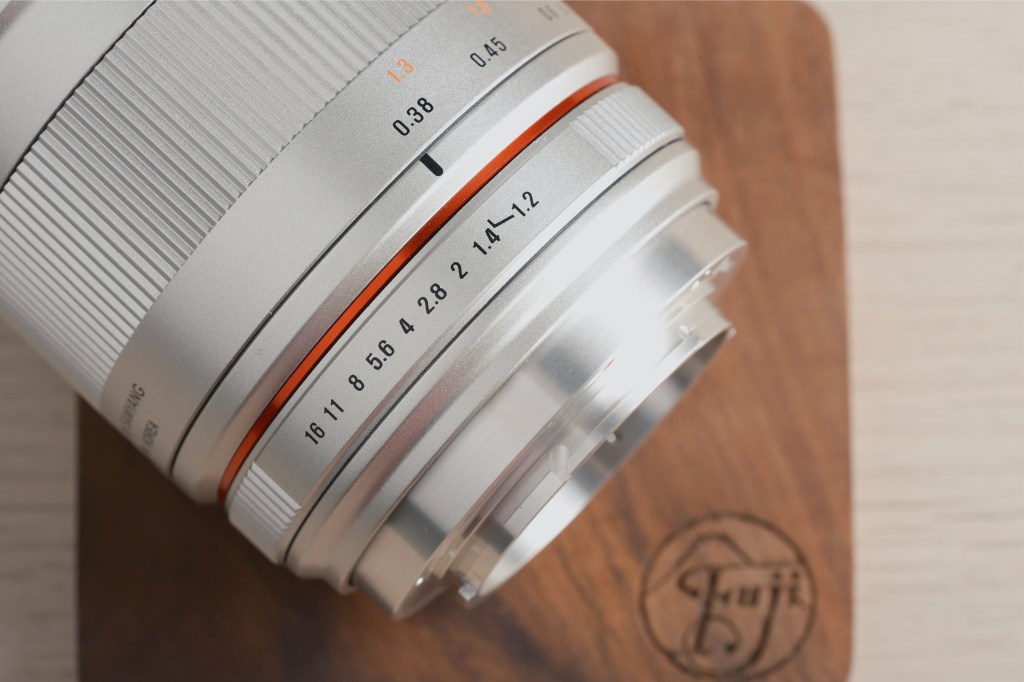
Based on the header of this post, no surprise here. I immediately placed my order for the Rokinon 35mm f1.2 and it was only 98 SGD (73 USD). In case you wonder, Amazon sells this lens between 300 SGD to 600 SGD (223 USD to 445 USD). That’s a huge discount for this Korean brand (also known as Samyang).
From the lens appearance, it isn’t as small as the XF35mm f1.4 and also evitably larger than what other 3rd party manual lens manufacturers are offering. And it is even bigger in size than the TTArtisan 35mm f0.95. To be fair, this Rokinon 35mm f1.2 was announced back in 2016, and the lens design is definitely improved over the years in the industry.
From left to right: Rokinon 35mm f1.2 . XF35mm f1.4 . TTArtisan 35mm f1.4 . TTArtisan 35mm f0.95Fuji X-T5 . Rokinon 35mm f1.2 @ 35mm . f4 . 1/30″ . ISO 3200 . Nostalgic Negative
The lens is made of plastic but it’s a high-quality one. Again this is a different approach from the usual metal build quality 3rd party manufacturers and I can probably understand why this is the approach. I will explain later.
The aperture ring on this 50mm (full frame equivalent) is clicky and not those de-click buttery smooth kind found in most recent new lenses from other manufacturers. However, it is a little stiff when I change the aperture. Not sure if it just happens to my unit but I have to use a little more force to rotate the ring than any of the lenses I have tried so far.
As for the lens cover, it is the typical pinch-to-release type of plastic cover. The lens hood is also made of plastic but it is painted to have the same color as the lens body. At least there is some attention to detail here.
Shooting wide open is unbelievably great and the image quality is totally usable with great contrast. With f1.2, it gives more separation between the main subject and others and allows the main subject to be more pop.
In my period of shooting, I do not observe any obvious chromatic aberration. Similar to vignetting, the corners are pretty mild and considered close to none.
At 38mm MFD, there is nothing to shout about for this focal length. It is not a show-stopper to prevent photographers to shoot in their favorite genres. Just that it is slightly further away than what current 35cm “standard” MFD that other manufacturers are providing.
According to its suggested retail price, it is selling at 499 USD. While Amazon and B&H do have some sales occasionally, with an average of about 349 USD.
Who is this for?
I won’t recommend this lens to someone who is looking for a budget fast prime lens because it is not that budget unless you found the same deal as mine.
Secondly, it is not a compact lens like others too. If you really like the image quality from this lens, then you can consider getting one for the genre of your favorite except for macro.
To be fair, this manual lens isn’t cheap and the size of this lens is bigger than any other lenses released in recent 1-2 years. But the image quality from this glass is undeniably great among the other lenses of the same category.
Despite having some shortfalls like build quality, size, weight, and not being the fastest lens on the market, I enjoy every shot taken with this lens especially taken wide open. It is just so awesome that I can simply accept these disadvantages.
After using so many metal-constructed lenses, I do miss the metal-build quality as it does make the lens feel more premium. I do hope this lens comes with one as well but the plastic build of this lens is there for a reason. It is to keep the weight down and reasonably balance with the camera body. I think Rokinon/Samyang has considered it as well.
Overall, this lens is easily categorized as one of the best manual lenses out there in the market.
Disclaimer: 1. All the shots taken here are shot by me. 2. Most of the shots are straight out of the camera with some shots edited via In-Camera Raw Processing. 3. The opinions are based on my experience. If there is any mistake, please kindly drop me a message and I will gladly make the amendment. 4. I reserve ownership of these images, if you wish to use my images, please notify me.
If you like my works, please follow me on either one of the 2 Instagram accounts:
I think TTArtisan loves “50mm” a lot. They have lots of choices for this mid-telephoto focal length. TTArtisan has the brightest 50mm, the most compact 50mm variants, and now they have introduced the 4th “50mm” and it has the most distinctive function among all their lenses; the tilt function.
TTArtisan 50mm Tilt f1.4
Similar to the compact 50mm, this lens is also designed as a full-frame lens. Does that mean the optical quality is better on the APS-C sensor? I think we can scroll down and see it for ourselves.
TTArtisan 50mm Tilt f1.4
Before you read further, this is my first time using a tilt lens. I will try to elaborate based on my experience with using this lens as much as possible. Also, I would like to thank TTArtisan for sending this lens to me. Without their kind support, this will not happen.
TTArtisan 50mm Tilt f1.4
Design & Build Quality
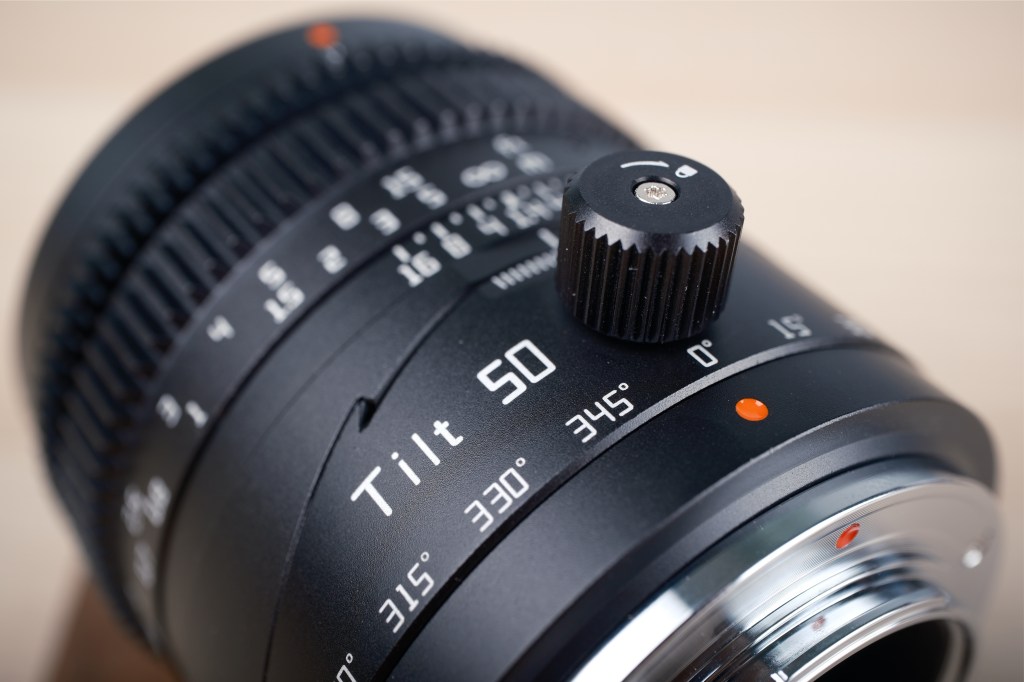
The first thing you will notice is the design of this lens. It has a completely different design language from the rest of the TTArtisan lenses. The most obvious 2 extra knobs on the lens body are the first thing I noticed and followed by the sort of zig-zag line across the lens. Obviously, they are important roles for the tilt function.
Despite all these new elements, you can rest assured of the build quality coming out from TTArtisan. As usual, still has the same well-built quality from them. You will not get any disappointment when holding this lens. It weighs 450 grams and it is the heaviest 50mm coming from TTArtisan thus far.
When comes to filter thread, this 75mm (full frame equivalent) lens has a “considerably” large 62mm filter thread that is compared to its 50mm siblings. Given the extra function in the lens, 62mm filter thread is considerably reasonable.
The black knob is to control the tilt mechanism with a tilt angle of ± 8°. For how I use them, I will unlock one knob at a time, adjust to the desired degree, lock it and then continue to adjust with the other knob. With the focus peaking, it helps me to visualize and easily noticeable on where my plane of focus is.
Unlike the usual TTArtisan lenses, this lens uses a click-less aprture, and honestly speaking, I missed the clicks experience that I always love. To make things worse, there are times when I rotate the aperture ring instead of the focus ring without realizing it. Only get to notice it after checking out the shots and looking at my lens. (Since this lens does not have any electronic contact with the camera, hence I cannot see the aperture value from the EVF / LCD.) Sometimes I even think that my camera or the lens is “broken”.
And like the 23mm f1.4, it comes with metal cap-on lens cap instead of the screw-in type found in most of the lens lineup. I love this approach and I hope TTArtisan will keep it this way for their future lenses.
In this category, I will split into 2 sections: “conventional lens” mode and “tilt lens” mode.
Before that, shooting wide open for both modes has a strong vignetting and chromatic aberration. And of course, these can be edited in post-process or lower down the aperture value.
For “conventional lens” mode, the image quality is slightly usable at wide open. The image quality tends to be soft and lacks contrast. And sometimes I cannot tell if my shots are in focus as the shots are too soft. This is based on my past experience with TTArtisan lenses and is usually not really within my minimum acceptance. Usually, I prefer f2 on most lenses. But for this lens, I preferred results at f2.8 as it is sharper and has better contrast.
For “tilt lens” mode, the image quality is not quite usable. Due to the tilt effect and shooting wide open, the focused subject can be very shallow (depending on the shooting angle) and very easily affected by chromatic aberration. Again, I preferred the results at f2.8 and f4 which give a better focus to blur off under the tilt effect. To note the tilt effect will be reduced further as the aperture value gets lower and that is pretty obvious from f5.6 onwards.
Like their other 50mm lenses, it maintains its MFD at 50cm. This is where I think the image quality is at its softest and lacking the contrast the most when shoot wide open. Again, shooting at 1 to 2 stops lower to gain better image quality.
When you shoot at infinity for normal shooting and tilt shooting, this lens has a common issue like most manual lenses. The result will be off-focused. Hence you need to rotate back a little before the infinity marking to get a fully focused result.
For 199 USD, it is priced very closely to the f0.95 lenses, which also means that it is priced on the higher side of the spectrum for the APS-C lenses category. Given the uniqueness of this lens, I think this is a decent price point.
There are not a lot of tilt lenses in the market. And not forgetting that back in those days, tilt and shift lenses are very expensive, and not many photographers will buy one and use it.
With this lens, the potential photographer can use it as a conventional portrait lens where it can be used for many genres like street, documentary, product shoot, archiecture, cityscape, landscape, etc. At times, the potential photographer can also use its tilt mode for more creativity, adventure, and extraordinary perspective.
Conclusion
I mentioned this before and I have to mention this again. TTArtisan never fails to surprise photographers with their new lenses. The overall usability of this lens is very versatile and probably even more practical than its f0.95 sibling.
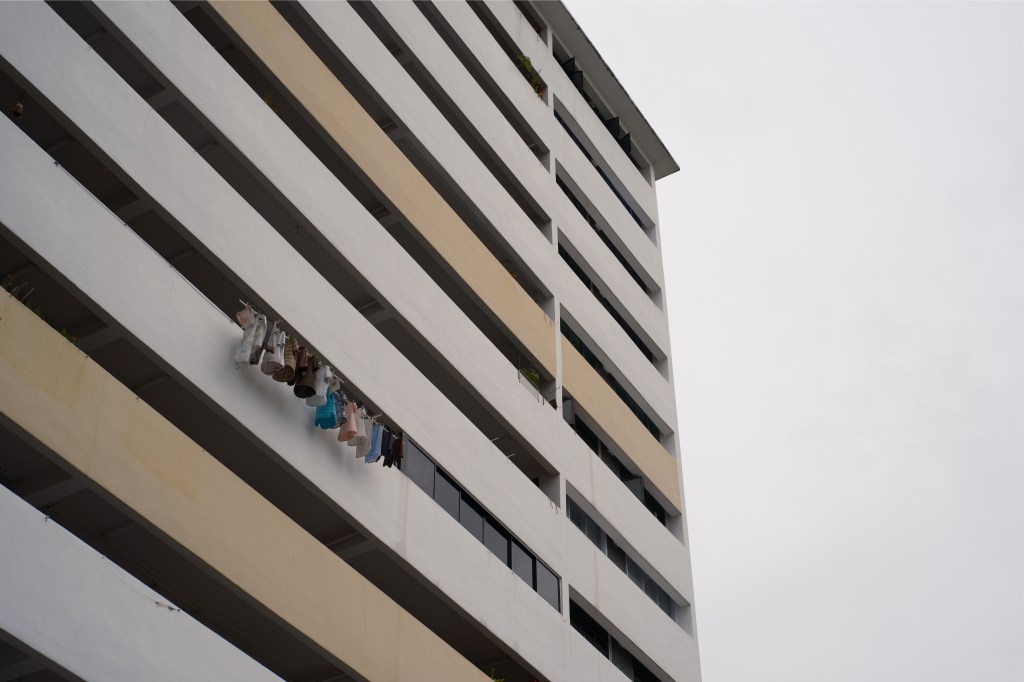
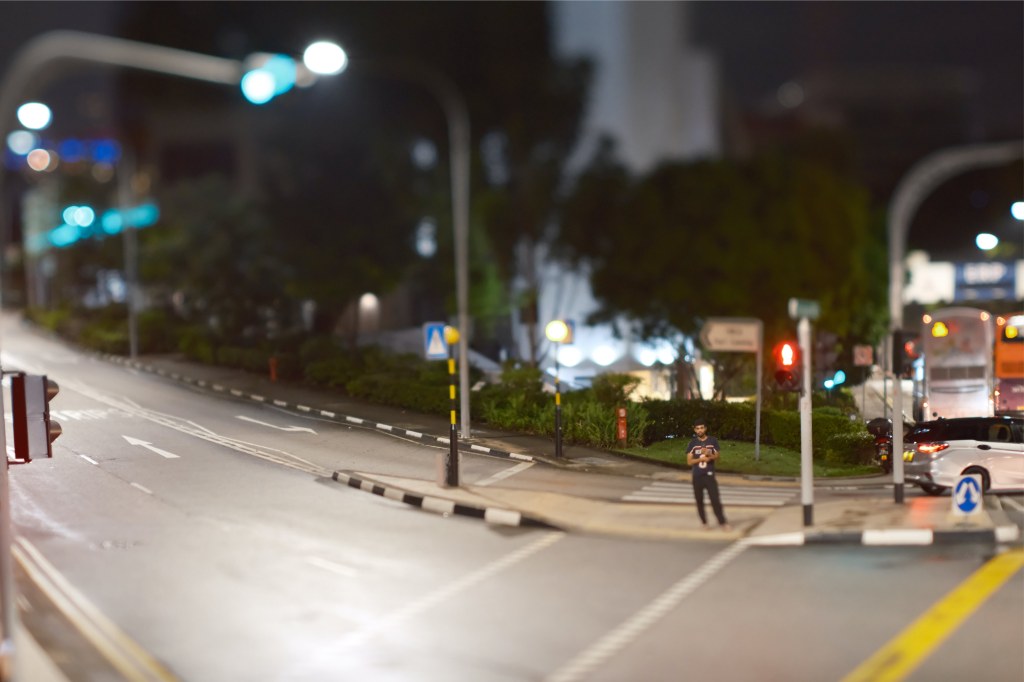
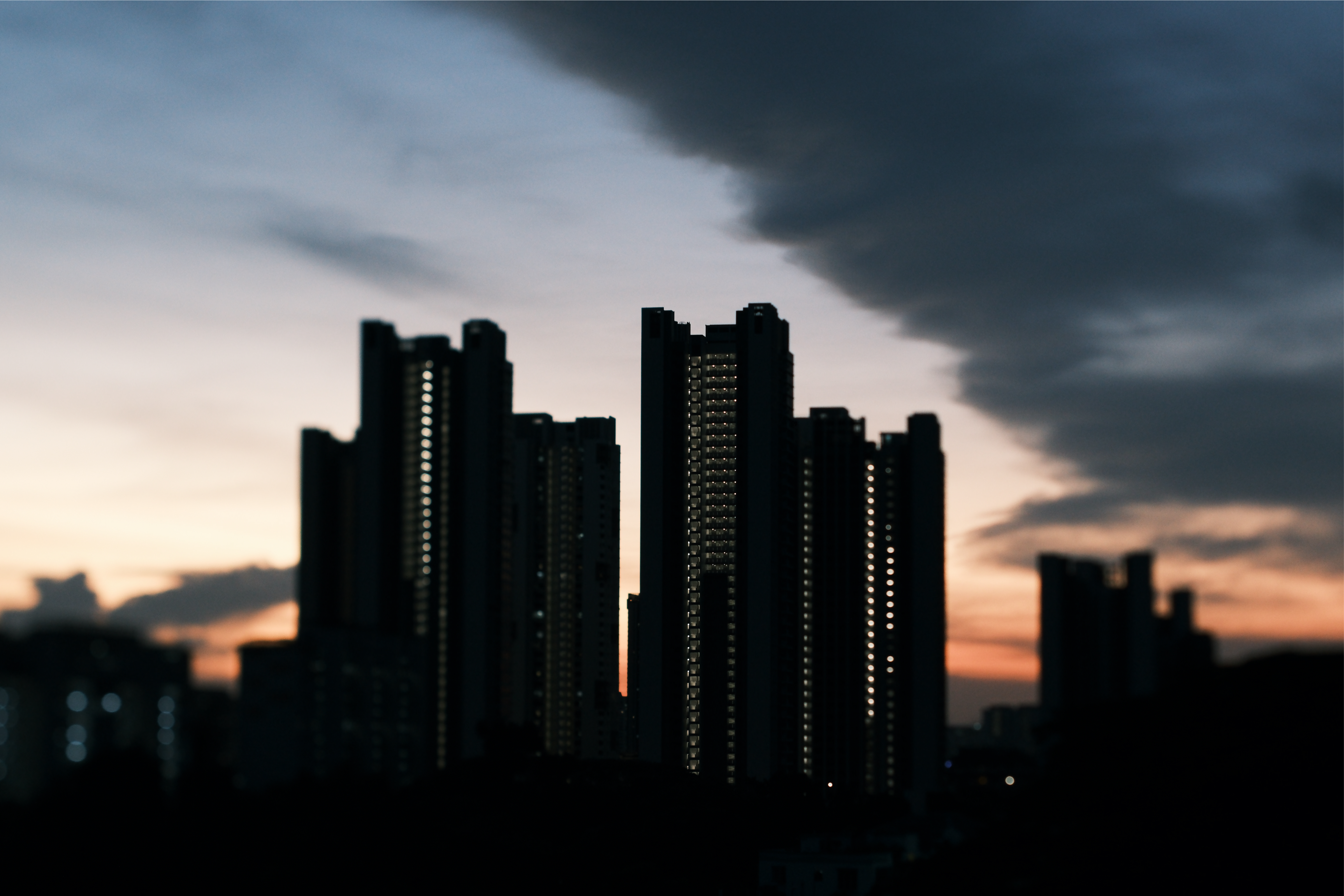
Personally, I like the tilt function as it helps me to create a good foreground and background blur especially for the cityscape shots and archiecture shots. It is also good in creating miniture effect too.
While the image quality at wide open has room to improve, I can tell that TTArtisan has been improving slowly with each new lens. I hope TTArtisan will continue with the new breakthrough and new unique lens to keep up with the excitement and of course, hope to see more tilt lenses in the future too.
Disclaimer: 1. All the shots taken here are shot by me. 2. Most of the shots are straight out of the camera with some shots edited via In-Camera Raw Processing. 3. The opinions are based on my experience. If there is any mistake, please kindly drop me a message and I will gladly make the amendment. 4. I reserve ownership of these images, if you wish to use my images, please notify me.
If you like my works, please follow me on either one of the 2 Instagram accounts:
We all know the function and purpose of a camera rear body cap. It is to cover and protect the sensor when it is not in use. That’s simple.
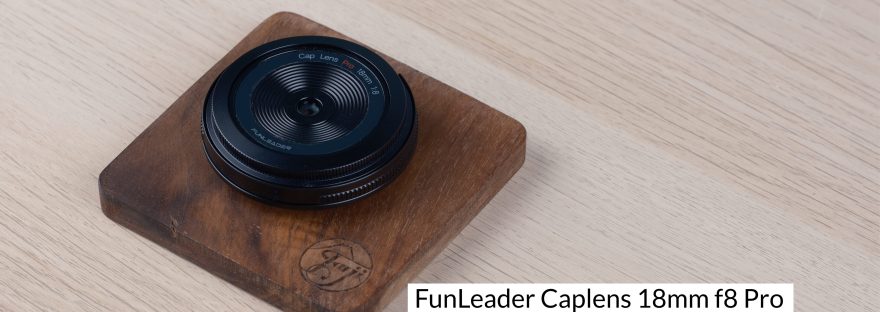
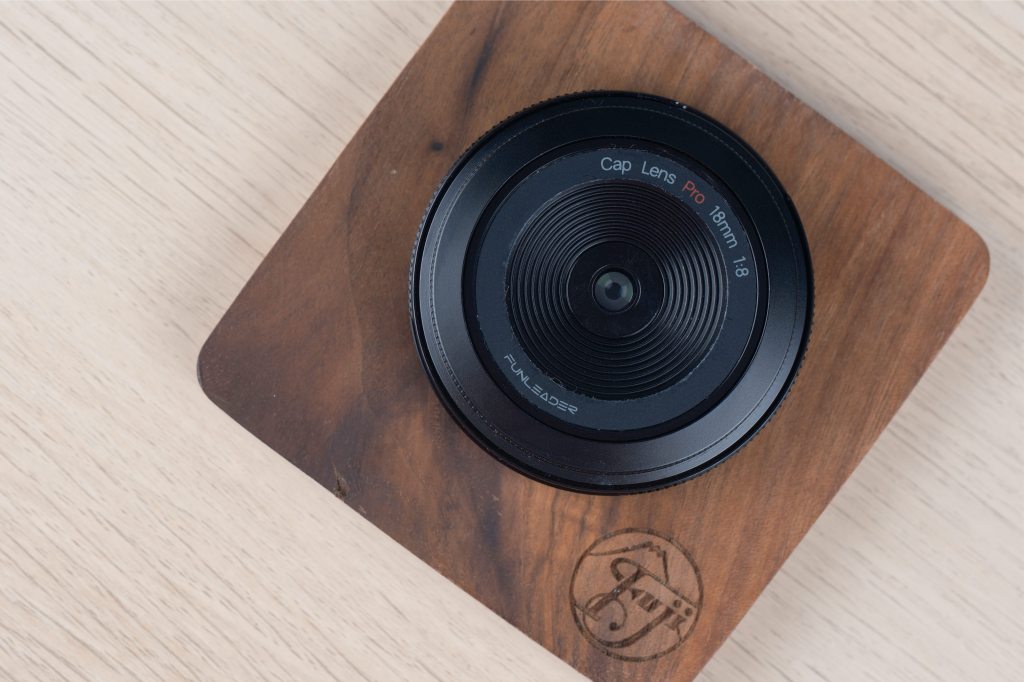
FunLeader Caplens 18mm f8 Pro
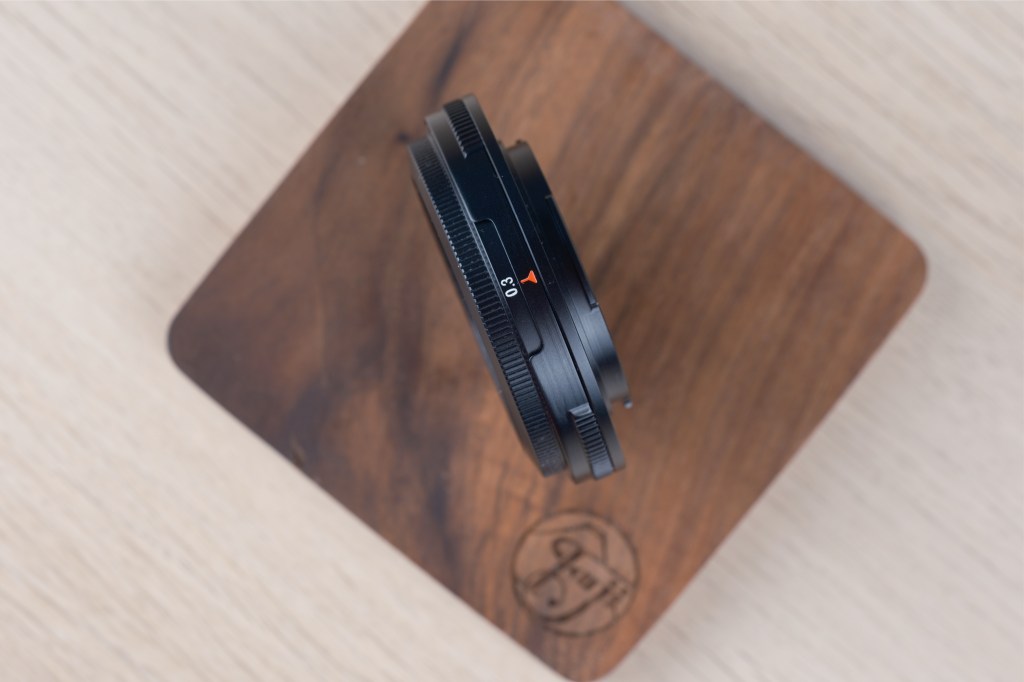
Some of us might even be aware of some interesting body caps such as Fujifilm XM-FL 24mm, 7artisans 18mm f6.3, or other pinhole body cap lenses. The purpose is to enjoy the fun of shooting and create very lomography kind of photo results.
FunLeader Caplens 18mm f8 Pro
Before I continue further, I would like to thank the good guy at FunLeader for sending this cap lens to me for review without any hesitation. I am grateful to them for supporting and believing in me. Nonetheless, this post is not biased and shared purely my experience with the cap lens.
Intro
FunLeader launched their first FunLeader Caplens 18mm f8.0 (a Kickstarter product) back in December 2019. It is still available on FunLeader’s website today! And now, FunLeader launches their upgraded cap lens and it is called FunLeader Caplens 18mm f8 0.3m-∞ Pro. From the name, we can tell there must be something different from their 2019 cap lens, and of course, the name has already given out the hint.
Fuji X-T5 . FunLeader Caplens 18mm f8 Pro @ 18mm . f8 . 1/1250″ . ISO 125 . Nostalgic Negative
This 27mm (in full-frame equivalent) wide-angle focal length is one of the popular focal lengths among street photographers. As the name suggested, f8 is its brightest aperture. In fact, f8 is the only aperture, and no other aperture options are available to choose from. So how is it going to perform as an f8 lens? Continue to scroll down.
Fuji X-T5 . FunLeader Caplens 18mm f8 Pro @ 18mm . f8 . 1/170″ . ISO 125 . Nostalgic Negative
Note: This cap lens comes with 2 mounts, E-mount and X-mount.
Design & Build Quality
It is an aluminum build cap lens. It is well constructed with unexpectedly sleek and decent built quality. It weighs 71 grams and is 17 mm thick! It seems light in number but you can feel the weight of the cap lens when you hold it in your hand.
Being a cap lens also means that there is no filter thread for you to mount your filters in and does not come with a lens cap.
Focusing
Fuji X-T5 . FunLeader Caplens 18mm f8 Pro @ 18mm . f8 . 1/2″ . ISO 125 . Nostalgic Negative
Like all cap lenses, it is a fixed aperture and non-electronic contact. The similarity stops here. FunLeader 18mm f8 pro comes with an adjustable focus dial with distances between 0.3m, 0.5m, 0.7m, 1m, 2m, and infinity. If you are aware, the usual body cap lenses do not provide such functionality.
Fuji X-T5 . FunLeader Caplens 18mm f8 Pro @ 18mm . f8 . 1/80″ . ISO 640 . Nostalgic Negative
The idea of having an adjustable focus distance is excellent. It allows photographers to have close to manual lens shooting experience.
And very similar to changing the aperture on some manual lenses, changing between the focus distances gives excellent clicky feedback.
I do not have the first-generation cap lens from FunLeader, hence, I am not sure how much the image quality has improved in this pro version. In my opinion, the image quality is within my expectation. That doesn’t mean the image quality is excellent but acceptable for a cap lens.
I noticed that the photos look better with any focus distance except for infinity. For most focus distances, the results look good, adequately sharp with decent contrast in it.
At infinity, the shots sometimes look unexpectedly soft, lacking a certain level of sharpness, and contrast. Vignetting is pretty strong with this cap lens. On the other hand, thanks to the small aperture value, I do not observe any chromatic aberration.
By the way, if you are looking to create a sunny star shot from this cap lens, you should probably look out for another lens because this cap lens does not come with any aperture blade.
Honestly, for a cap lens to have an MFD of 30 cm is impressive. It is a tiny, extremely compact “lens” than any other lens out there in the market. For comparison, XM-FL 24mm has an MFD of 1 meter, 7artisans 18mm f6.3 is 35cm and the original cap lens is 80 cm.
Fuji X-T5 . FunLeader Caplens 18mm f8 Pro @ 18mm . f8 . 1/150″ . ISO 125 . Nostalgic Negative
Fuji X-T5 . FunLeader Caplens 18mm f8 Pro @ 18mm . f8 . 1/85″ . ISO 125 . Nostalgic Negative
As I mentioned earlier, the results at 30 cm are pretty usable. The sharpness and contrast are pretty good here.
Fuji X-T5 . FunLeader Caplens 18mm f8 Pro @ 18mm . f8 . 1/420″ . ISO 320 . Nostalgic NegativeFuji X-T5 . FunLeader Caplens 18mm f8 Pro @ 18mm . f8 . 1/180″ . ISO 320 . Nostalgic Negative
Other
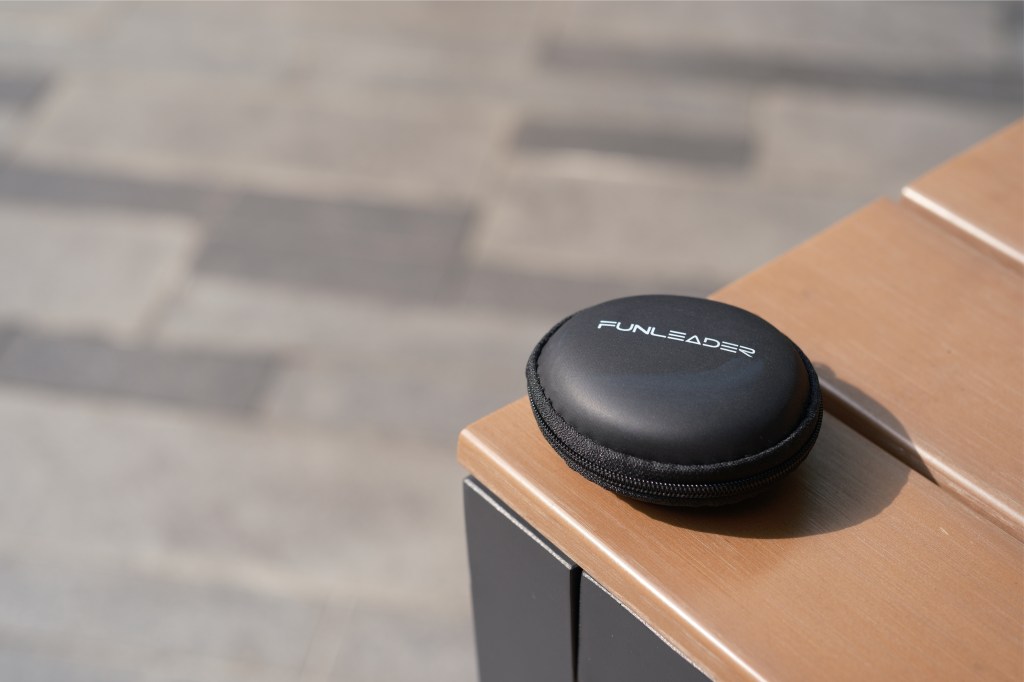
FunLeader is a thoughtful company. Knowing that most photographers will stick the cap lens to their camera, FunLeader still includes a pouch for the cap lens when it is not in use. “Lens” protection in a way.
Cap lens pouch
Something to note and maybe it is only me (user problem). I do encounter some dust trapped around the cap lens, especially the gap between the focus dial and the non-movable area. Some of the dust can be easily removed but some are just stubbornly stuck there.
Secondly, due to its slim design, the focus dial is slim too. Hence, it is a little hard to grab with big fingers. But I get used to it after a little familiarization.
Fuji X-T5 . FunLeader Caplens 18mm f8 Pro @ 18mm . f8 . 1/20″ . ISO 3200 . Nostalgic Negative Fuji X-T5 . FunLeader Caplens 18mm f8 Pro @ 18mm . f8 . 1/120″ . ISO 3200 . Nostalgic NegativeFuji X-T5 . FunLeader Caplens 18mm f8 Pro @ 18mm . f8 . 1/200″ . ISO 125 . Nostalgic Negative
Although it is not able to create a sunny star shot, it does have some flares when you are facing the sun.
For the price of 139 USD, it is not cheap as there are many fully functional manual lenses around this price or even cheaper. But if you want it, you will get it, right?
Fuji X-T5 . FunLeader Caplens 18mm f8 Pro @ 18mm . f8 . 1/6400″ . ISO 320 . Nostalgic Negative
Who is this for?
This wide-angle cap lens covers quite a good coverage of photography genres such as landscape, cityscape, and street.
Like all cap lenses, this cap lens comes with one and only one aperture, f8. If you are looking for challenging yourself shooting street with a fixed aperture lens, for the “Lomographic” fun and enjoying straightforward results, then this cap lens might be suitable for you.
Fuji X-T5 . FunLeader Caplens 18mm f8 Pro @ 18mm . f8 . 1/56″ . ISO 3200 . Nostalgic Negative
Also, the holiday season is coming and I think it is a great gift to your fellow photographer friends.
Conclusion
From this Caplens 18mm f8 Pro, I can see innovation from the company. FunLeader had made some good improvements from the first-generation cap lens such as improved MFD, lighter weight, and most important of all, focus dial. This focus dial is the first of its kind and no one else actually did it, except FunLeader.
If you are interested in getting this cap lens, the good guy at FunLeader has given me the coupon code “ALWINKOK” and you can enjoy 5% off with your purchase at checkout.
Thank you for reading.
Disclaimer: 1. All the shots taken here are shot by me. 2. Most of the shots are straight out of the camera with some shots edited via In-Camera Raw Processing. 3. The opinions are based on my experience. If there is any mistake, please kindly drop me a message and I will gladly make the amendment. 4. I reserve ownership of these images, if you wish to use my images, please notify me.
If you like my works, please follow me on either one of the 2 Instagram accounts:
TTArtisan has just announced yet another fast, bright lens. The TTArtisan 35mm f0.95 is the second lens after TTArtisan 50mm f0.95. If you are a fan of TTArtisan or somehow followed them closely, you will notice that they are slowly expanding and differentiating their product line-up. While they focus on compactness and portability lenses like the TTArtisan 25mm f2, they have another product line-up that goes “all-in” by creating the fastest, brightest lens they can. Can this lens do as good as its sibling? Let’s find out.
TTArtisan 35mm f0.95TTArtisan 35mm f0.95
Before I continue with my sharing, I thank TTArtisan for sending this lens to me. To the readers passing by this blog post, you can rest assured that I give my honest opinions on this lens, similar to the rest of the TTArtisan products that I have shared.
Intro
This is TTArtisan’s second 35mm (or 50mm in full-frame equivalent focal length) lens for the APS-C sensor. This focal length is also one of my favorite focal lengths, especially for street shots and simple portraits, and I believe there are many photographers who love this focal length too.
TTArtisan does a good job of distinguishing its lens design and this design element maintains the same as the TTArtisan 50mm f0.95. The zebra-like design, however, has received mixed opinions among photographers and some discussions are made among the groups.
The aperture ring is as good as the rest of the TTArtisans lens lineup. It gives a very comfortable clicky experience when you rotate the aperture ring. I do enjoy changing apertures because of that even when I am just holding my camera in my hand.
When I have this lens, there is no information about its specification and also its weight. So I use my wife’s kitchen weighing scale to weigh. It is 243 grams (258 grams with the lens cap). It is 168 grams lighter than the sibling so it is not the heaviest manual lens.
When you hold this lens, the first thing you will feel is the weight. Secondly, you can also feel how well the full metal and glass built quality are.
Image Quality
The depth of field of f0.95 is really very shallow and thus gives me an issue nailing the shots. When I manage to hit a focused shot, this lens can give a kind of soft and glowing character which gives us a kind of dreamy feel to the photos.
On the other hand, chromatic aberration and vignetting are observable, especially at wide open. This is an expected result (at least to me) but it can fix in post-processing.
In my test, nonetheless, shooting at f2 meets my minimum acceptance of a good level of sharpness and contrast. Again, this is my personal preference and yours might be different from me.
The focus throw is approximately 180° which gives an ample amount of “distance” for more precise and easier focus. This really helps a lot, particularly for photographers who are not getting used to manual focus.
Minimum Focus Distance (MFD)
Similar to most 35mm lenses out in the market, the MFD is 35 cm. In my opinion, nothing to complain about the MFD. Shooting at this MFD allows better subject-background separation but if you shoot wide open, you will get to see heavier dreamy soft shots than any other focus distance.
Given that it is one of the fastest lenses in the market, at 199 USD, I think the lens is well-priced and also slightly cheaper than its sibling. Moreover, the price is highly competitive as compared to its competitors.
This lens is a lens you can consider if you are a dreamy and soft photo lover and you know what you want to achieve with this lens. It is also lighter than its sibling, making it a better option if someone wants that fast and bright lens.
If you are a first-timer with manual lenses and you are unsure if you want to invest in them or are ready for the world of manual focusing lenses, then I think you can consider many other TTArtisan lenses that are an even lighter and more affordable option.
if you are like me who prefers the results taken at f2, shouldn’t it make sense for me to choose the other f2 lenses instead of this one? Yes, you can consider that but photographers always say that it is always to have such a lens on standby with you. Because you never know when you will need it.
Conclusion
Both siblings share a lot of common things like image quality, built quality, and the character of the lens. Everything I expect from this lens is within my expectation, which is a good thing. If choosing between the 2 siblings, I will prefer to get this lens over the other, all because of the weight and versatility.
TTArtisan shows no sign of stopping here and I am sure these benefits photographers like us as we have more lens options to choose from. My guess is that they are probably going to launch the 3rd lens for this category and I hope that 23mm will be the one. I am excited and looking forward to what TTArtisan has up its sleeve in the year 2023.
Thank you for reading.
Disclaimer: 1. All the shots taken here are shot by me. 2. Most of the shots are straight out of the camera with some shots edited via In-Camera Raw Processing. 3. The opinions are based on my experience. If there is any mistake, please kindly drop me a message and I will gladly make the amendment. 4. I reserve ownership of these images, if you wish to use my images, please notify me.
If you like my works, please follow me on either one of the 2 Instagram accounts:
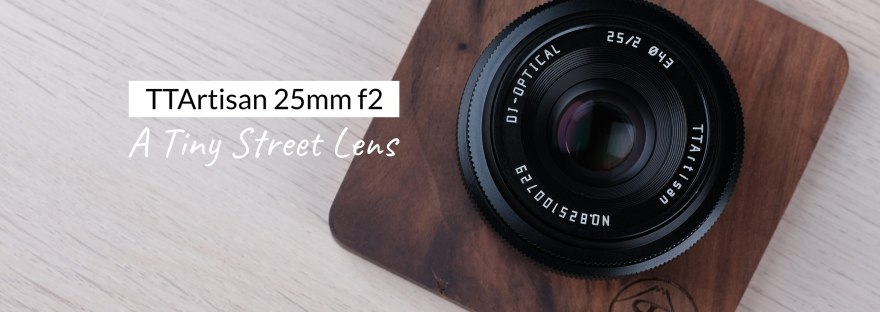
TTArtisan focuses very much on portability and compactness and TTArtisan 25mm f2 is another product born from this idea.
TTArtisan 25mm f2
Before I begin, I thank TTArtisan for their tremendous support towards me. For readers out there, you can rest assured that I am and always give my honest opinions for their products and that’s including this lens.
TTArtisan 25mm f2TTArtisan 25mm f2
Intro
At 38mm full-frame equivalent focal length, it reminds me of the point-and-shoot film camera back in those days. I remember it was just a fixed focal length and I think it was quite common back then before it goes wider and wider and wider…
The design element of this TTArtisan 25mm f2 follows exactly the same as the TTArtisan 50mm f2. Modern, minimalistic, and sleek are probably the best words to describe this lens.
The aperture ring still comes with that enjoyable and satisfying clicky experience. As for the manual focus ring, it is still as smooth as the other TTArtisan lenses. Basically, you are assured that this lens’s quality is maintained at TTArtisan’s standard.
The lens cap is the screw-in type. It is up to individuals to love it or hate it. As for me, more like I have to get used to it.
At 167.4 grams, the weight of this lens is really good to hold. Although it is not as light as the newly announced TTArtisan AF 27mm f2.8, it is still the lightest among their manual lens lineups.
There is one thing that I have never mentioned in all my manual lens reviews. In case you wonder, the lens does protrude a little when you rotate the focus ring to the Minimum Focus Distance (MFD).
It has a small filter size of 43mm. If you are looking for a hood to put it on, it is still able to find one online. Please note that no hood is included.
Image Quality
The image quality from this lens is surprisingly good and I meant it. Who would expect a lens that is so affordable yet has decent image quality? Typically we expect some will cut corners somehow.
Also, you will also observe some vignetting for wide-open shots. This is a common behavior for TTArtisan lenses and this applies to other third-party lenses too.
From MFD to infinity, the focus throw is approximately 160°. In my view, this compact lens gives quite an ample amount of “distance” for more precise focusing.
Like most manual lenses, the result is might not at its sharpest at the infinity marking. Rotate slightly backward on the focus ring to get a better result.
This lens has an MFD of 25 cm which means it can do quite a close-up shot if you want to. You will also notice some softness when shooting at MFD wide-open. I think it is acceptable and pretty much-expected behavior.
While I thought that the TTArtsian 50mm f2 is the cheapest lens, this 25mm has set a whole new record of 55 USD. Yes, this is how much this lens costs. It can go even lower with occasional promotion from TTArtisan.
There are always pros and cons for all lenses. This lens is no exception. Well, it depends on how you see this negative thing. If you point the lens facing to a light source at a specific angle at f2, you will have a light-blooming effect. Some people love it, and some people don’t. As for me, I kind of love it as it gives an additional special character to the lens. The blooming effect will get reduced with a smaller aperture. But beyond the light-blooming effect, it can also introduce some unique flare. So please beware. Lens hood might be able to solve this problem. If you happened to own this lens and a compatible lens hood, please let me know if it does solve it.
This is easily one of the most affordable and usable lenses to consider if you want to experience what it is like using a fully manual lens. The focal length of this lens is very easy to adapt to and is very suitable for genres like street, journalist, documentaries, landscapes, cityscapes, and even portraits.
For photographers who want to let their older Fujifilm cameras have their “second life”, you can consider getting one too. It might spice up your love with the cameras again.
TTArtisan surprised me once again with this lens. At USD 55, this is the cheapest manual lens ever produced by TTArtisan yet. But they do not compromise on both build quality and image quality. In fact, I am surprised by how usable the images are at wide open and the build quality is as good as other TTArtisan lenses. This is easily a recommendation from me to a photographer wanting to experience manual lenses.
I love to see more of this compact lens series with an affordable price point in the near future. Please continue to give us some surprises.
Thank you for reading.
Disclaimer: 1. All the shots taken here are shot by me. 2. Most of the shots are straight out of the camera with some shots edited via In-Camera Raw Processing. 3. The opinions are based on my experience. If there is any mistake, please kindly drop me a message and I will gladly make the amendment. 4. I reserve ownership of these images, if you wish to use my images, please notify me.
If you like my works, please follow me on either one of the 2 Instagram accounts:
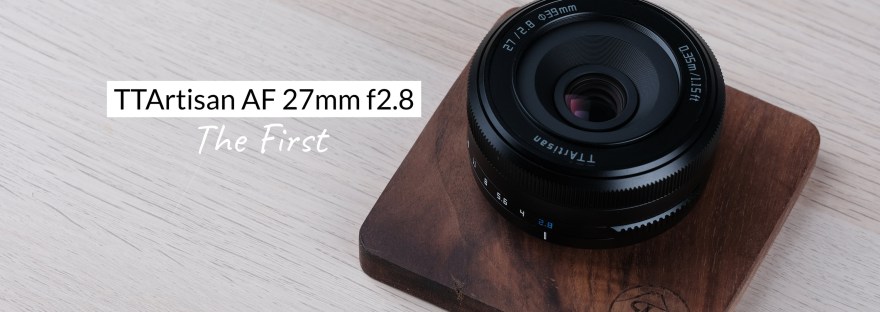
TTArtisan had been teasing us about their very first autofocus (AF) lens since September 2021. While there was very little information shared about the 32mm f2.8 lens, the only thing we know is that it will be available for various camera systems.
TTArtisan AF 27mm f2.8
However, the much anticipated AF lens did not arrive in many systems except for the Nikon Z mount. What I have understood from TTArtisan is that they faced some challenges in the process of manufacturing it and they did not share more in-depth about it. Nevertheless, I am glad they have finally announced their first AF lens and release for sale!
Before I share my experience with this lens, I would like to thank TTArtisan for sending this lens for my review. I appreciate their support to make this post a reality.
Intro
I believe this focal length has caught almost everyone by surprise and that’s including me. Why TTArtisan released this 40mm full-frame equivalent focal length as their first AF lens for Fujifilm and not the 35mm or 50mm equivalent focal length?
According to TTArtisan, they are focusing a lot on portable and compact lenses. Considering the size of this lens, it suits well with the retro style of Fuji camera bodies and together in a smaller package for easy to carry around for street photography.
Design and Build Quality
Just like the other TTArtisan lenses, it comes with a metal-built body (made of aviation aluminum). But I have to say that when I first hold it, it feels very light. Unlikely the usual weighty lenses, this lens is unbelievably light. According to my wife’s kitchen weighing scale, it weighs at 89 grams only (and 93 grams with the lens hood).
Considering how compact the lens is, the build quality is good. Over here, TTArtisan does not take a shortcut, it does come with a clickable aperture ring and a manual focus ring. The click, however, seems to be stiffer than the other TTArtisan manual lenses. But I accept it since it is so compact.
On the other hand, the manual focus ring is buttery smooth as usual.
One interesting thing to note, TTArtisan has finally come with a lens hood and it is a light small metal piece of protection like the one found in XF27mm.
The lens cap is no longer metal built and unlike screw-in types like 50mm f0.95 or capped-on types like 23mm f1.4. Now it is the pinch-to-release type and it is made of plastic. The good thing is that it can cover the lens with and without the lens hood on.
For a note, it comes in 2 colors: Black and Titanium. From the official post, I think the Titanium looks good.
At wide open, you will notice the heavy vignetting at the corners and it is more obvious when focusing at infinity. It seems to be inherent in the same characteristic as many other TTArtisan lenses. But it can be easily corrected via post-edit.
If you know me, I usually increase 1-stop of the aperture instead of using the widest aperture on most of the TTArtisan manual lenses. But the image quality results from this lens at f2.8 are actually nice, sharp, and totally usable.
This lens comes with Stepper Motor (STM) which is also stated to adopt the “STM+leading screw”. I am unsure what that actually means, but to my surprise, this lens has a very silent and smooth focusing system. But how fast is this lens performing?
Based on my test with 2 camera bodies (X-E3 and X-Pro 3), this lens’s autofocus (AF) speed is very much dependent on the camera bodies. On X-E3, its AF is quite slow as compared to X-Pro 3. After all, the camera body does play a part in the lens focusing speed. So to be fair to the lens, it performs pretty decently fast and it is internal focusing!
Minimum Focus Distance
The Minimum Focus Distance is 35 cm. In real life scenario, it is not as close as I thought it would be. In spite of that, it does help to separate the main subject from the others very well.
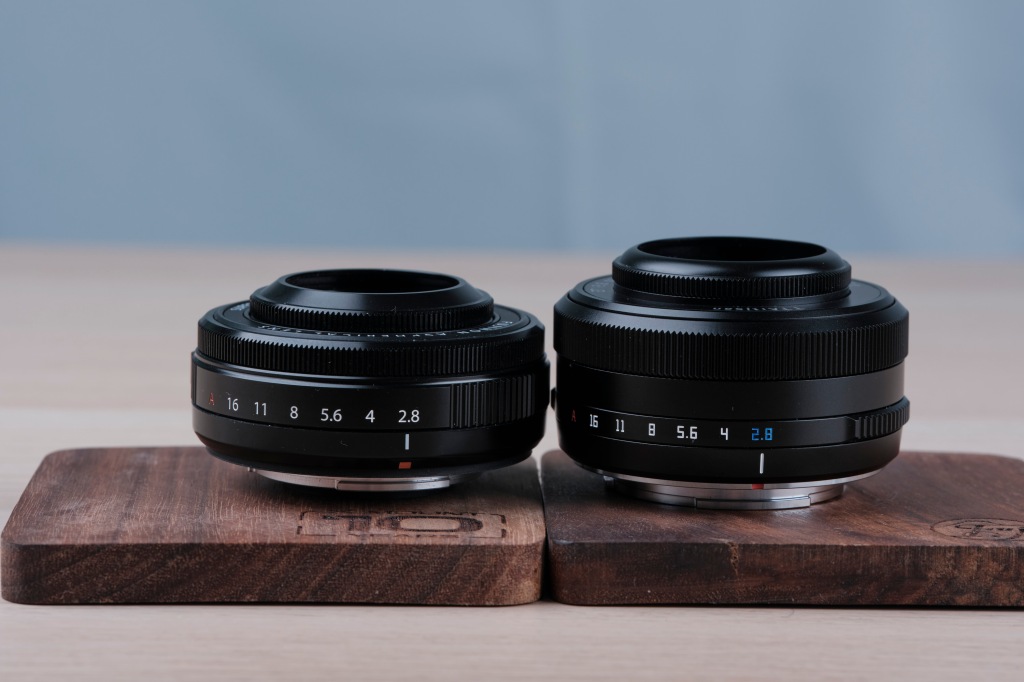
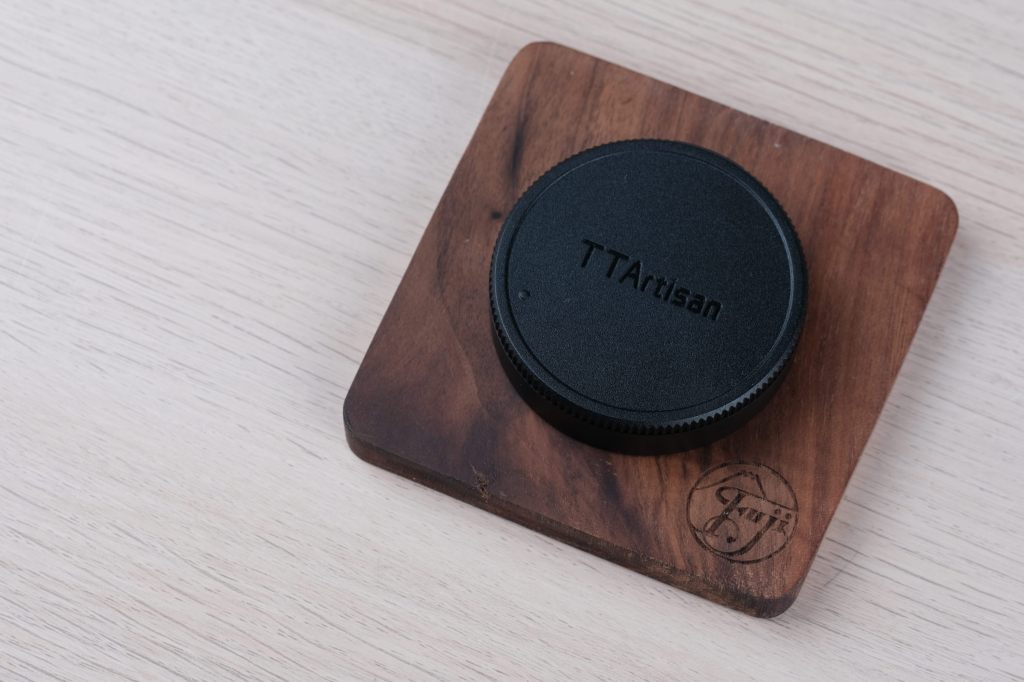
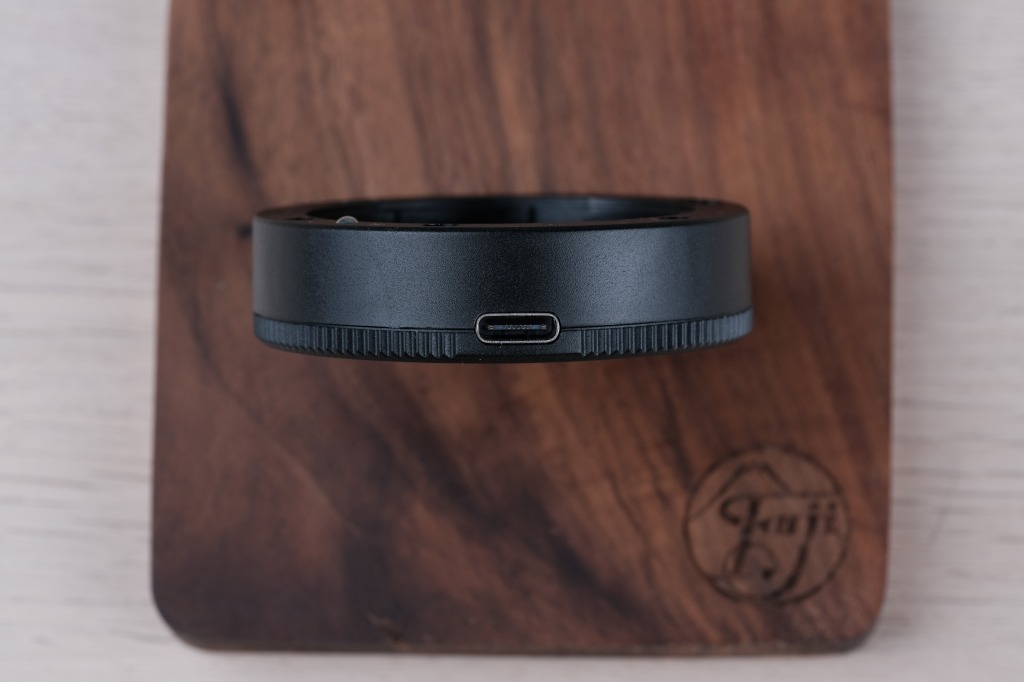
This lens comes with a unique rear lens cover. It is actually a dock with a built-in USB C port (yeah!) connection that allows firmware upgrading in the future. That’s sweet.
Rear lens cover (also docking station)Left: USB-C port Right: TTArtisan AF 27mm f2.8 with docking station
My suggestion is to leave the rear dock cover at home and use another rear lens cover to cover it or just stick it with the camera body.
Oh yes, this lens is not weather resistant but given the price of this lens, I accepted that.
Who is this for?
It is a street lens. Having said that, I could recommend everyone to get one. Especially one who wants to try out what a 40mm focal length is like, use it as a lens cap, give this manufacturer’s lens a try or gift your photographer friends (the Christmas season is around the corner).
With the release of this lens, it means TTArtisan is the latest manufacturer joining other manufacturers like Sigma, Tamron, Tokina, Viltrox, and Rokinon/Samyang in offering third-party autofocus lenses for the Fuji X-mount system.
At the price of 149 USD, I can’t help to think it is the cheapest option to get as an AF lens in the market. It is, even more, cheaper than the XF27mm f2.8 WR which costs 399 USD. I mean I cannot find any reason not to recommend this lens to everyone. It is a nice small and compact lens that can go easily with any Fuji camera.
TTArtisan really makes a bold move in this and this is a good start. I am happy to see them onboarding into this X-mount journey and giving us photographers one more option to choose from.
As I mentioned earlier, TTArtisan is working toward portable and compact lenses. It’s a good hint of what will be TTArtisan’s next AF lens to be there for us in the near future. I am hoping for an 18mm f2 lens (or similar), what will be your wish lens?
TTArtisan AF 27mm f2.8 with square hood
Thank you for reading.
Disclaimer: 1. All the shots taken here are shot by me. 2. Most of the shots are straight out of the camera with some shots edited via In-Camera Raw Processing. 3. The opinions are based on my experience. If there is any mistake, please kindly drop me a message and I will gladly make the amendment. 4. I reserve ownership of these images, if you wish to use my images, please notify me. 5. Thank you Ivan Wong from Lightsmith Co for lending me the X-Pro 3.
If you like my works, please follow me on either one of the 2 Instagram accounts:
























































































































































































































































 Alwin Kok