In recent years, we’ve seen a steady rise in the popularity of what many call the “flash look”, a style that embraces the direct, on-camera flash aesthetic. This has sparked a growing demand for compact, budget-friendly flashes from a range of manufacturers. I still remember when Godox was among the early pioneers of this trend, especially with their Lux series. Back then, these flashes were mostly manual, but clearly, the evolution hasn’t stopped there.
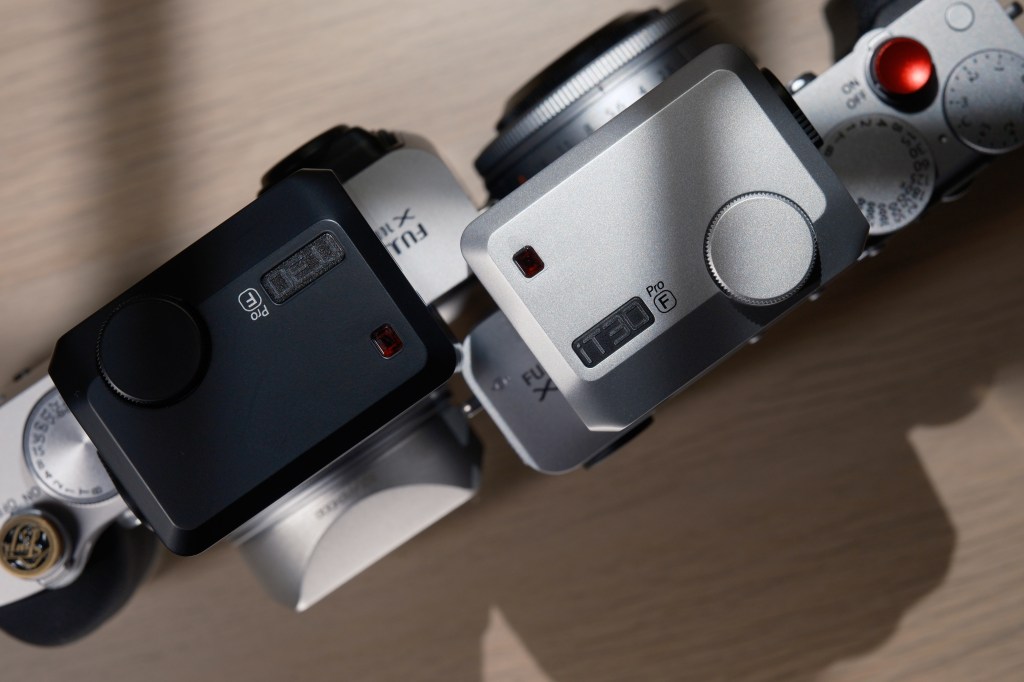
Black and Silver Godox iT30 Pro – Top view
Intro
Announced on May 24, 2025, the Godox iT30 Pro is the latest entry in their new iFlash series, and it took me by surprise. I always believed a TTL-capable compact flash would arrive eventually, but I didn’t expect it to come this soon.
Black and Silver Godox iT30 Pro
Now, to be fair, Godox isn’t the first to bring TTL into a compact form factor. We’ve seen it before in the Leica SF 60 and Nissin i40 (but they are now “bigger” than the iT30). But what sets the iT30 Pro apart is that it’s Godox’s first TTL flash that supports direct, on-camera use in such a small footprint.
Before diving into the review, I want to extend a big thank you to the kind folks over at Godox for generously sending not one, but two iT30 Pro units my way. That said, as always, all thoughts and opinions shared here are entirely my own, honest and unbiased.
Design and Build Quality
First impressions? It’s slightly thicker than your typical compact flash, but noticeably shorter in depth. It’s not exactly pocketable, but it still fits easily into most camera bags without hogging much space.
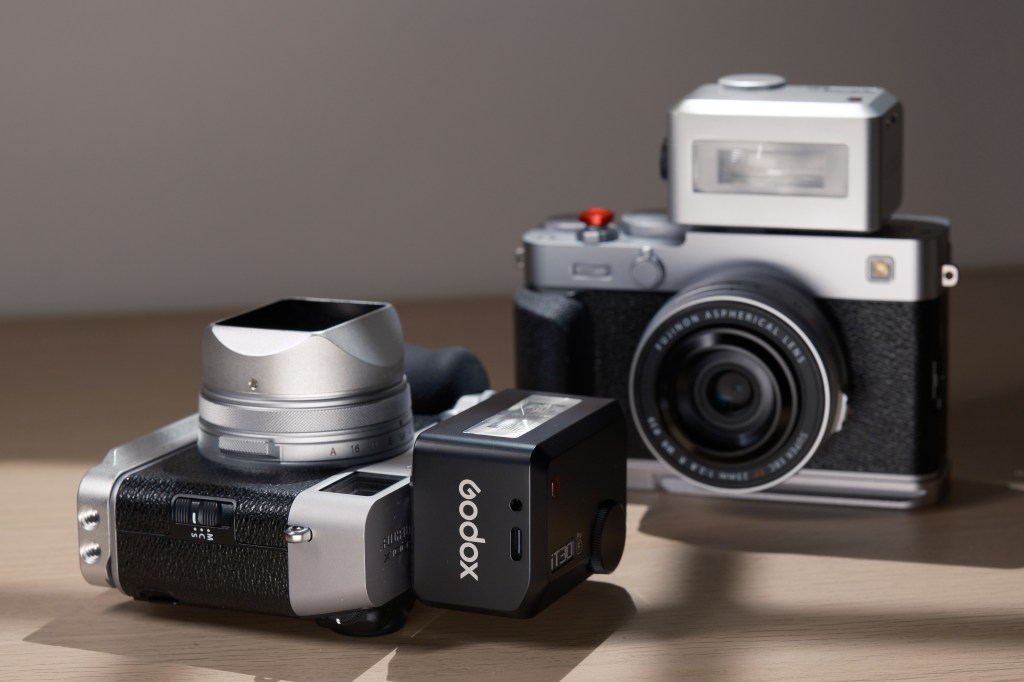
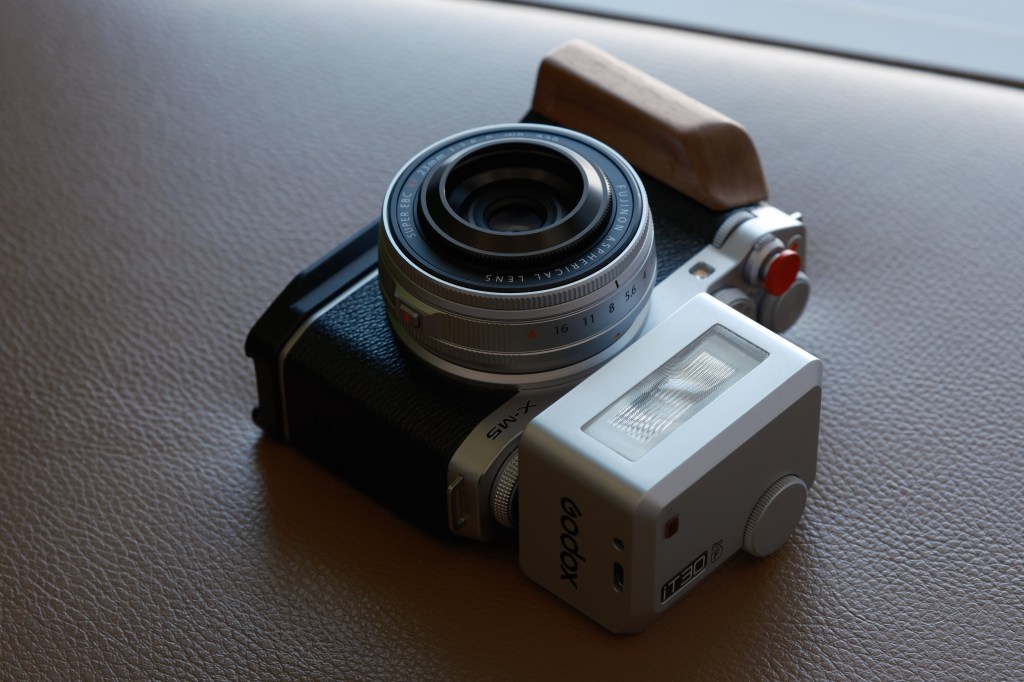
X100VI with Black Godox iT30 Pro and X-E5 with Silver Godox iT30 Pro
At 120 grams, it feels a bit heavier than I expected, especially when compared to the Viltrox Vintage Z1 (116 grams). The weight, I suspect, comes down to the dense build and internal battery. That said, the construction feels solid. The body is made of high-quality plastic, and it’s available in two finishes: black and silver. Personally, I find the silver version to be a perfect visual match for any silver Fujifilm body, it just looks right.
X100VI with Black Godox iT30 Pro and X-E5 with Silver Godox iT30 Pro
Control
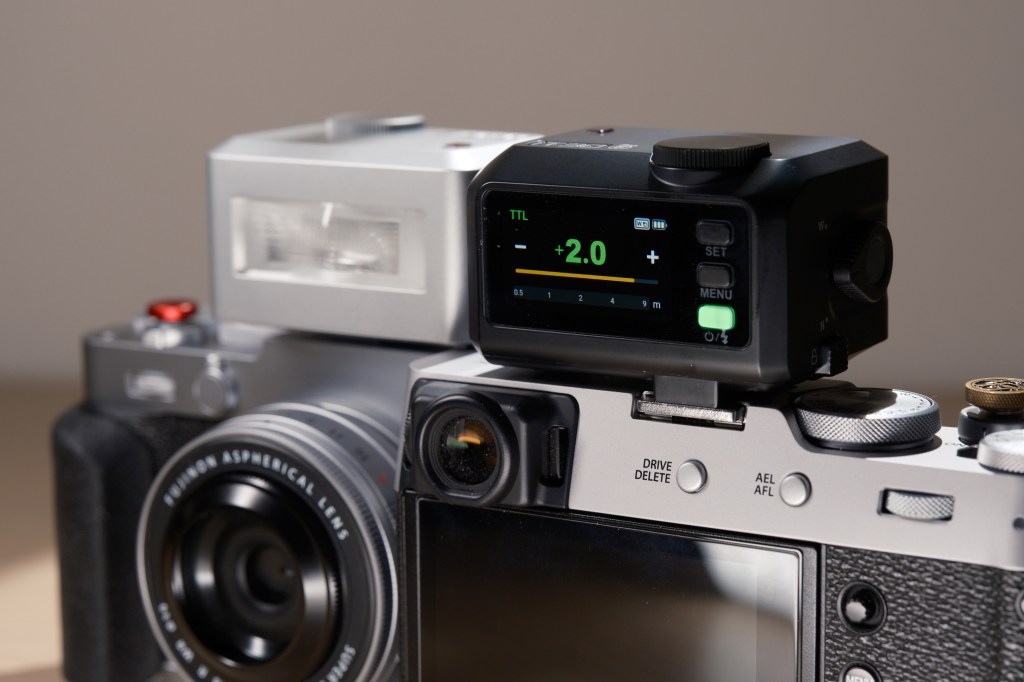
The iT30 Pro keeps things simple. It features a 2.8-inch touchscreen, which is where most of your interaction happens. The interface is responsive, and it’s intuitive enough for both beginners and experienced users.
Black and Silver Godox iT30 Pro – 2.8inch screen
Aside from the screen, there are a few physical controls: a rotary dial, three function buttons next to the screen, a release button, and a WN (Wide/Narrow) switch.
Black and Silver Godox iT30 Pro – Rotary dial
The rotary dial mirrors the touchscreen in functionality and is a thoughtful addition for those who prefer tactile control or if you’re shooting with gloves on and can’t reliably tap a small screen.
The WN switch controls the built-in diffuser. In “W” mode, the diffuser spreads the light for more even coverage at closer ranges. In “N” mode, the beam is more focused, ideal for subjects at longer distances.
WN switch
The three physical buttons are clearly labeled and do exactly what you’d expect, no confusion here.
Flash Power
The iT30 Pro has a Guide Number of 15 at ISO 100. That’s not earth-shattering, but it’s more than adequate for typical use cases like street photography, travel, or casual portraits.
Black and Silver Godox iT30 Pro – Base
Price Point
At just 75 USD / 100 SGD, the iT30 Pro is very competitively priced — especially for a flash with TTL capability and wireless triggering support. For what you’re getting, this flash delivers solid value.
Others
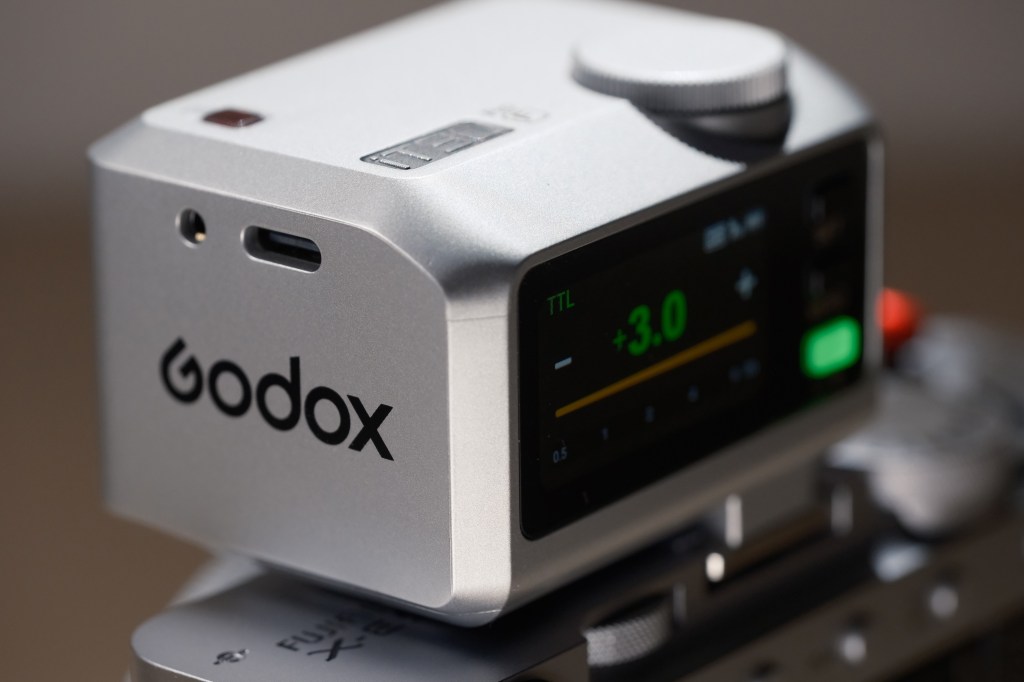
Powering the flash is a built-in 900mAh battery, which charges via USB-C. In my tests, it took slightly less than an hour for a full charge, pretty reasonable.
Black and Silver Godox iT30 Pro – USB-C port
Godox claims it can deliver up to 560 flashes on a full charge, which is quite impressive for a compact unit. Even if you take a conservative estimate and reduce that by 20%, you’re still looking at enough juice to last an entire day of casual shooting.
Black and Silver Godox iT30 Pro
What really caught my attention, though, is its full wireless functionality. You can pair it with other iT30 Pro units or any Godox flashes using the same wireless system. That opens up a lot more creative possibilities. Imagine setting up a few of these around a room and syncing them all together. Pretty wild for something this small.
Travel Photographers: Its small size, built-in battery, and USB-C charging make it a perfect companion on the go. No need for bulky chargers or spare battery packs.
Beginner Photographers: If you’re just starting out with flash photography, TTL makes the learning curve less intimidating. You can focus on composition without worrying about manual power settings.
Pros?: While I don’t expect commercial photographers to rely on this for big assignments, some might find it useful as a lightweight fill or backup flash. It really depends on their workflow.
The Godox iT30 Pro is a solid little flash with a surprising amount of functionality packed into a compact body. With TTL, wireless control, and a friendly price tag, it ticks a lot of boxes for hobbyists, travelers, and beginners alike. It may not replace your full-size speedlight, but it’s a great addition to any kit, especially if you’re a Fujifilm shooter who appreciates matching aesthetics. Godox clearly isn’t done innovating in the compact flash space. If this is what they’re doing now, I can’t wait to see what the next iFlash series has in store.
X-M5 with Silver Godox iT30 Pro
Thank you for reading.
Disclaimer: 1. All the shots taken here are shot by me. 2. Most of the shots are straight out of the camera with some shots edited via In-Camera Raw Processing. 3. The opinions are based on my experience. If there is any mistake, please kindly drop me a message and I will gladly make the amendment. 4. I reserve ownership of these images, if you wish to use my images, please notify me.
If you like my works, please follow me on either one of the 2 Instagram accounts:
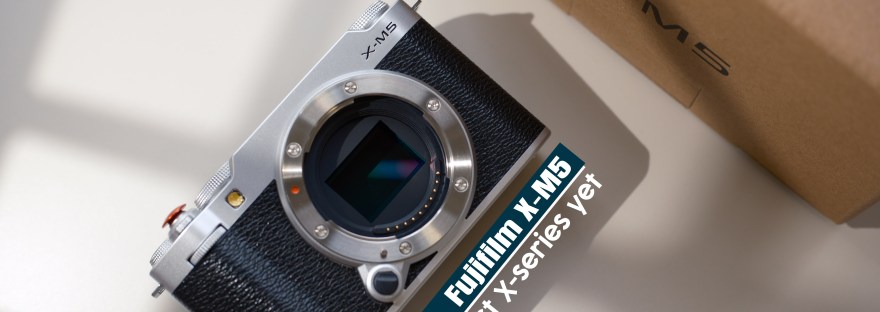
It’s been 11 years since the X-M1 was unveiled. Although many fans of the X-M series have little hope for its future and may believe that this series has come to an end, suddenly, the rumor mills start to share bits and pieces that the X-M series is being reignited. Today, Fujifilm skips the numbers 2 to 4 and decides to name this X-M1 successor as X-M5. It makes sense as we are into the 5th generation of the X-Trans sensor, hence, the “5” in the X-M5.
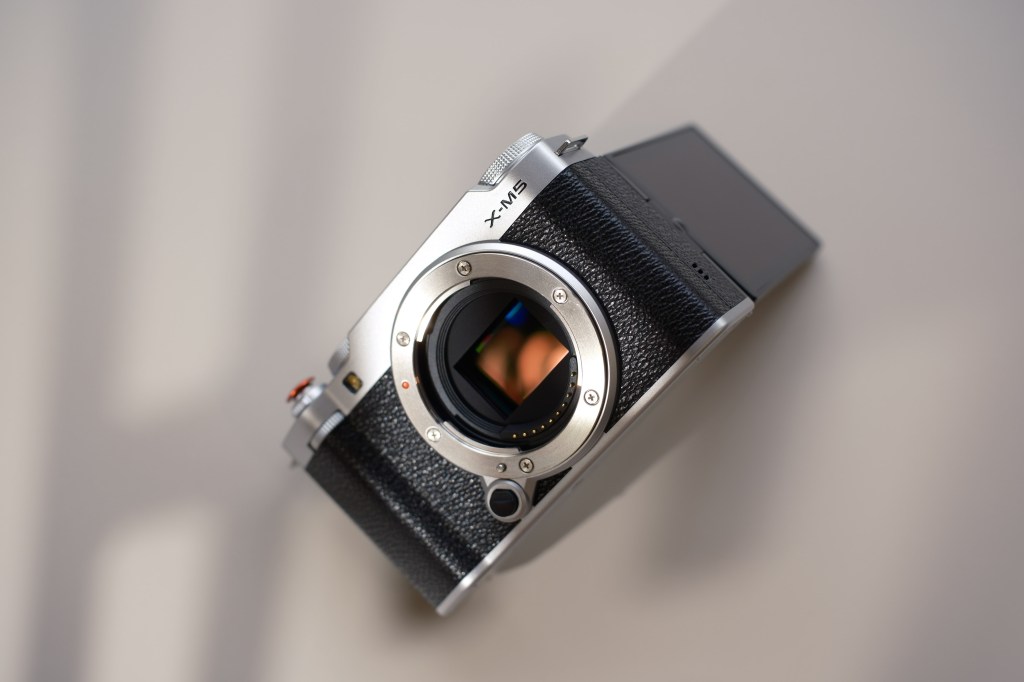
Fujifilm X-M5
Intro
The Fujifilm X-M5 was announced together with XF16-55mm f2.8 MK II and XF500mm f5.6 in the X Summit Clay Studio 2024. From the announcement, it is stated that X-M5 is the smallest X-series, even smaller than X-E4. What are the pros and cons of being the smallest? Is there anything been compromised? I’m sure it has but can we accept them?
Fujifilm X-M5
The X-M5 is clearly aimed at vloggers, especially the new young generation of vloggers with limited budgets. But it is also a great tool for young photographers. In this blog, I will share my experience with this camera from a photographer’s point of view.
Before I proceed further, I would like to mention all the lenses that I have tested with it.
The camera features a rangefinder-style design and is incredibly compact—smaller than its predecessor, the X-M1. According to the official specs, the X-M5 is 5mm shorter in length, 1mm thinner in depth, and maintains the same 67mm height. However, it is slightly heavier, weighing 355 grams compared to the X-M1’s 330 grams.
The build quality is decent for an entry-level camera, with a plastic body that feels solid, though you can tell it’s made of plastic when you hold it. As for handling, it’s not the most comfortable for larger hands like mine. The camera is so small it fits in my palm, so for a more secure grip, I prefer using an additional grip or holding the lens instead of the body.
The shutter sound is loud for a small and compact camera. Not an issue to me but I do prefer the shutter sound from the X-T5 (or maybe I have gotten used to it).
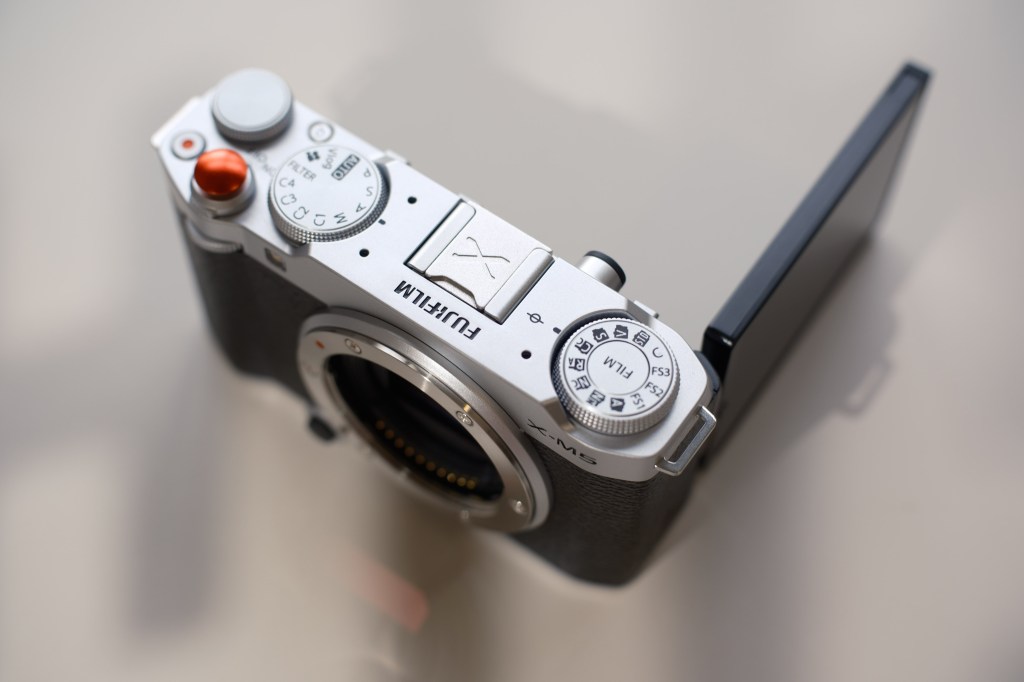
It comes with 3 command dials (film simulation dial, mode dial, and rear command dial) and 1 front command dial. Quite a number of dials for an entry-level camera.
The film simulation dial is first introduced in X-T50. I know there has been a lot of feedback about this dial since its introduction, and I agree it to a certain point. But this is actually beneficial to photographers who are not similar to Fujifilm and it’s film simulations. Changing the film simulations via the dial and witnessing the change of colors can allow new photographers to get hold of the film simulations, find one that they love the most, and enjoy the Straight-Out-Of-Camera end results.
If you have noticed, out of the 4 dials, 2 dials are fixed. That said, we have left with 2 dials that are available to customize (such as exposure compensation control, ISO control, and aperture control for those lenses that do not come with an aperture ring) to suit our shooting behavior.
Oh yes, I like the less stiff, tactile feedback from the rear command dial. Personally, I prefer this to the one on the X-T5.
Sensor and Processor
Like the X-S20, it comes with an X-Trans 4 CMOS sensor and X-Processor 5 combination. Is this a bad combination? No. In fact, it is probably my preferred combination. I explained in the X-S20 post that I preferred 26 megapixels over 40 megapixels. The resolution is a sweet spot for my memory space and storage space since I hardly do photo cropping.
Having X-Processor 5 actually does help battery efficiency and focusing performance. More on these later. But do note that the base ISO is 160 and not 125 as that can only be found in the X-Trans 5 HR sensor.
Image Quality
I have no complaints about the image quality here. If the image quality from this sensor is poor, I guess it won’t be the flagship sensor for X-T3 and X-T4. I am glad that Fujifilm decided to keep this sensor and extend its longevity further.
The autofocus algorithm seems to improve quite a lot. The eye-AF tracking is more sticky and picking up the subject is faster than my X-T5 with the firmware 2.03 (I’m lazy, don’t judge me).
I can feel that my hit rates has gone higher than before and more reliable.
The camera uses the NP-W126S battery. Will it offer poor battery life? From my experience with the X-T50, I was able to get around 550 shots before the battery drained. With this camera, I managed to capture about 530 shots, which meets my expectations and is better than the CIPA rating of 330 shots. If you find the battery life insufficient for a full day of shooting, it’s a good idea to carry one or two spare batteries.
Every camera isn’t perfect, and there is always room for improvement. X-M5 is not exceptional.
I name a few of them as I deem them more important to me.
The screen resolution is low by today’s standard (at 1,040,000 dots). It has the same screen resolution as the X-T3 which was first announced in 2018 and even worse than the X-E4 (at 1,620,000 dots). I’m not saying low screen resolution is terrible but sometimes it gives me a little bit of wrong judgment.
I was surprised that Fujifilm did not release an optional hand grip like they did for X-E4. But this is not an issue, as many third-party accessory makers are making one for X-M5.
The “Q” Quick Menu button is positioned between both the mode dial and the rear command dial and it is a pretty small button. This gives me a problem to press the “Q” button as I have a pretty big finger. I wonder why they do not include the “Q” button beside the AEL/AFL button. Oh yes. the playback and AEL/AFL button can be bigger.
Finally, the absence of an EVF (Electronic Viewfinder) is likely the most common complaint from Fujifilm users. I can relate, as I missed having the EVF when reviewing my shots or shooting in bright sunlight. It would be great if Fujifilm could offer an external EVF as an optional accessory, as I believe most X-M5 owners would gladly purchase one.
Price Point
At 800 USD, this is the most affordable interchangeable X camera released, and it took the crown from X-E4, which was once the cheapest X camera ( priced at 850 USD).
While the X-M1 features a built-in pop-up flash, the X-M5 replaces it with a film simulation dial. Is this change worthwhile? Personally, I think it’s a great trade-off. The film simulation dial not only benefits newcomers but also makes it easier for me to switch between my favorite film simulations. While the “Q” button also lets me change film simulations, having a dedicated dial provides a more tactile, hands-on experience.
Oh yes, this is probably the best affordable camera to experience 20 film simulations with 8 film simulations allocated on the dial with 3 presets available. I remember my X-T3 had only 16 film simulations and that’s it.
The last one is the mechanical shutter, where X-M5 can only go as fast as 1/4000s, whereas 1/8000s on X-T5.
Who is this for?
Like I mentioned earlier, this camera is aiming at vloggers with limited budget. But that does not mean this is not a capable camera by any means. It is a very decent entry level camera which using very capable sensor and processor.
Fuji X-M5 . Brightin Star 50mm f1.4 @ 50mm . f1.4 . 1/750″ . ISO 320 . Classic NegativeLeft: Fuji X-M5 . Brightin Star 50mm f1.4 @ 50mm . f1.4 . 1/480″ . ISO 320 . Classic Chrome Right: Fuji X-M5 . SBrightin Star 50mm f1.4 @ 50mm . f1.6 . 1/1600″ . ISO 320 . Classic Chrome
If you are new to photography and attempt to step one step up from mobile photography, I think this is a good camera to buy and take photos with. You will not be disappointed with the results and get to explore the magic of the Fujifilm film simulations.
Conclusion
I do not share the other benefits of the X-M5, and that is the videography portion. I have very minimal videography knowledge, and I do not think I am the right person to share. Nonetheless, this camera comes with a 6.2k open gate recording in 10-bit. This is a huge move for an entry-level camera, or at least I have not encountered one yet from any brand. It also comes with a good-positioned microphone/remote release connector.
The camera’s compact design does come with a few compromises. The handling is not ideal, but this can be improved with an additional grip. The absence of an EVF can be addressed with an optical viewfinder, though it works best with 27mm focal length lenses. The lack of IBIS can be compensated by using lenses with OIS, and Fujifilm offers a solid selection of OIS lenses beyond the kit lens, such as the XF16-80mm, XF80mm macro, and XF70-300mm. That said, I’m personally fine without IBIS, as my shooting style hasn’t changed significantly, and I shot with the X-T2 and X-T3 for a long time without major issues.
Fuji X-M5 . Brightin Star 50mm f1.4 @ 50mm . f1.4 . 1/250″ . ISO 320 . Nostalgic Negative
What I miss the most are the dials found on my X-T5, like the ISO dial and shutter speed dial. I really appreciate those dials because they provide quick access and setup for certain unique shooting situations. As a result, I don’t miss many important moments. That said, I usually preset my camera settings and stick to them most of the time, so I rarely need to adjust the dials during a shoot. As for X-M5, there are options to reconfigure or remap the command settings using the available buttons, so I recommend assigning your most frequently used functions to the buttons you use less often.
Despite these compromises, the X-M5 is still a great camera, offering excellent value for those looking to try Fujifilm. It provides a fantastic introduction to the beautiful film simulations Fujifilm is known for. With the new X-Processor 5 and the improved autofocus algorithm, the autofocus performance and the subject tracking are impressive. Additionally, the X-Trans 4 sensor continues to deliver excellent image quality.
Disclaimer: 1. All the shots taken here are shot by me. 2. All of the shots are straight out of the camera with some edited via In-Camera Raw Processing. 3. The photos are resized to 30% of the original size except for cropped ones. If you wish to see the original file, contact me and I will be happy to share it with you. 4. I reserve ownership of these images, if you wish to use my images, please notify me. 5.The opinions are based on my experience. If there is any mistake, please kindly drop me a message and I will gladly make the amendment.






































 Alwin Kok