
Reviews

Viltrox 35mm f1.7 – Spicing Up The Budget Segment

Viltrox has been very active this year. If you’ve been keeping up with their releases, they’ve introduced several lenses, such as the Viltrox 56mm f1.7, Viltrox 28mm f4.5, Viltrox 135mm f1.8 Lab, and two others. With the announcement of the Viltrox 35mm f1.7 today, the company has now released six lenses. That’s a notable number of launches in a single year, although not all of them are X-mount lenses.

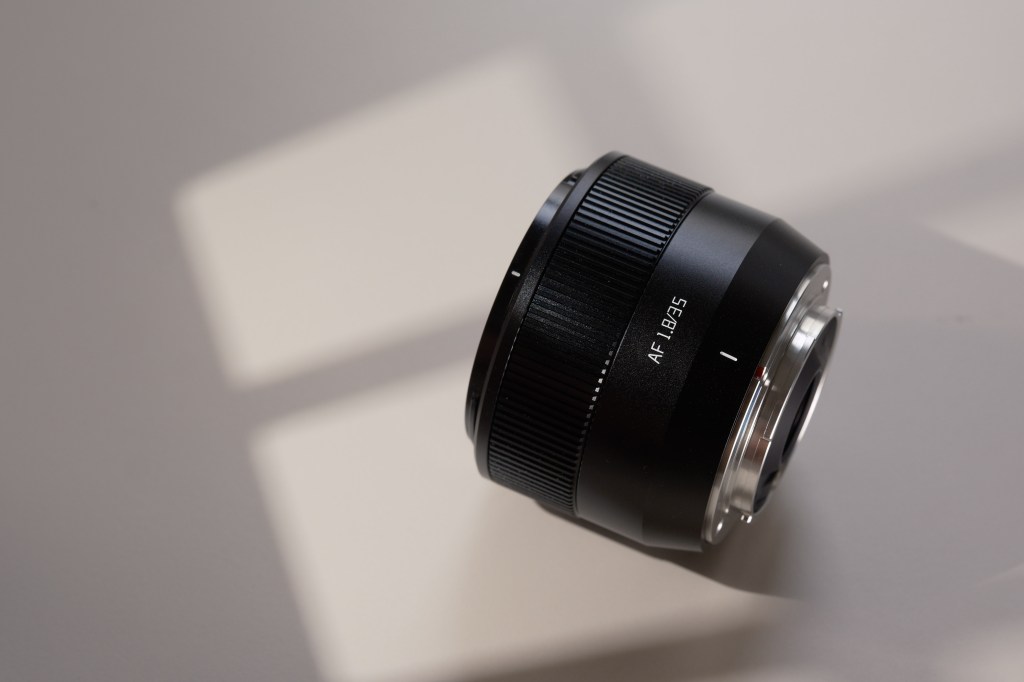
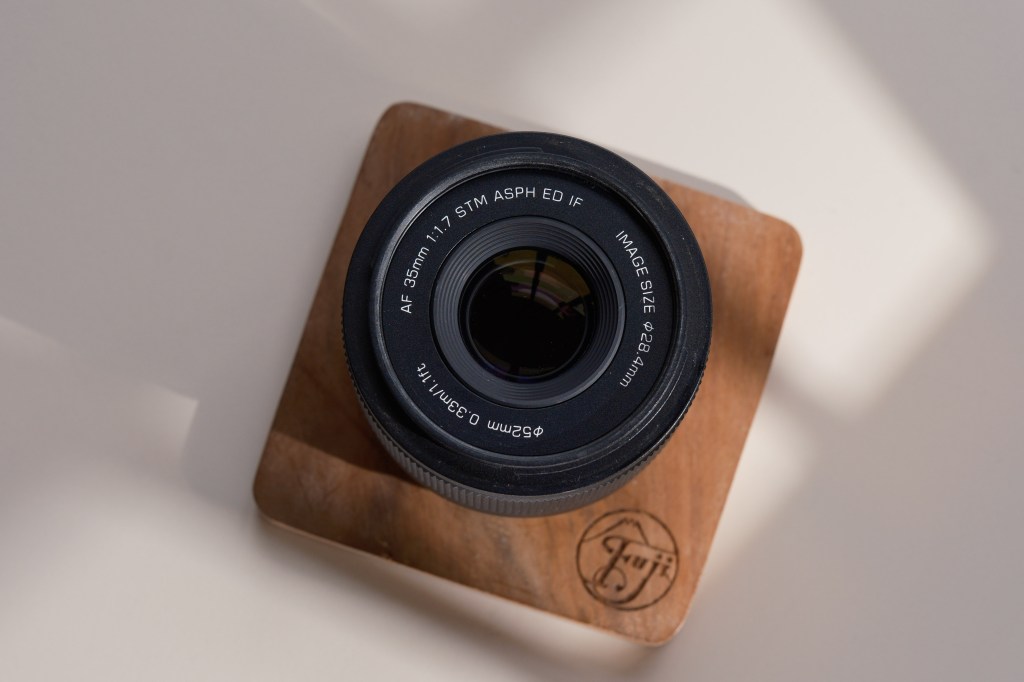
Viltrox 35mm f1.7

Intro

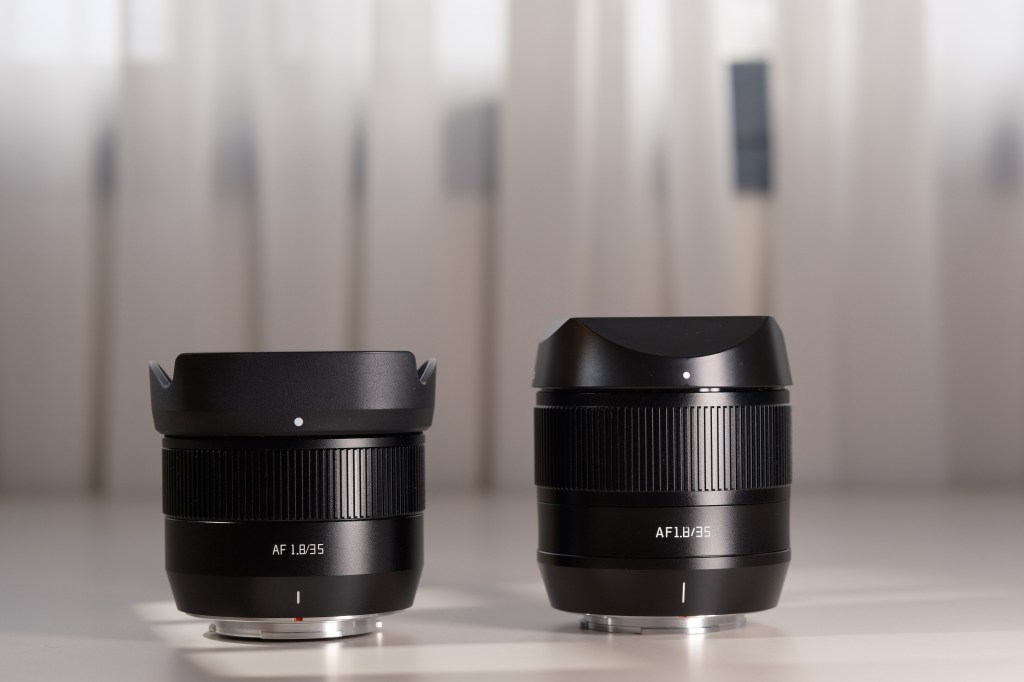
Viltrox has previously released a similar focal length, but it was brighter, heavier, and more expensive. There was a gap in the entry-level segment, which Viltrox recognized, leading to the introduction of their Air series, starting with the Viltrox 56mm f1.7.

Viltrox 35mm f1.7

Viltrox has been quite open about their new Air series lens, sharing updates and organizing one giveaway on social media leading up to the release. On December 18, 2024, they introduced the second lens in the Air series, the 35mm f1.7. The 50mm (full-frame equivalent) is a favorite among professionals, and this new lens complements it, designed to attract a broader audience of aspiring photographers.

Viltrox 35mm f1.7

Design and Build Quality

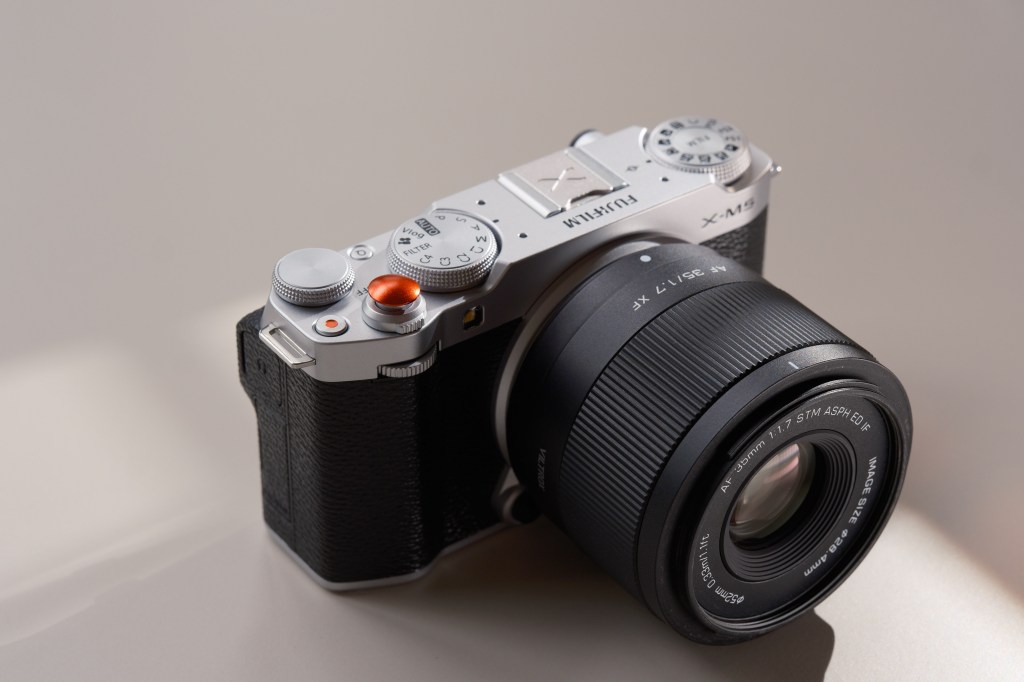
The design of this lens is identical to its sibling, Viltrox 56mm f1.7. Simple, minimalistic, and clean. That said, it does not come with an aperture ring. In my opinion, the lens design is somewhat similar to the Sigma Contemporary prime lenses, i.e. Sigma 30mm f1.4.

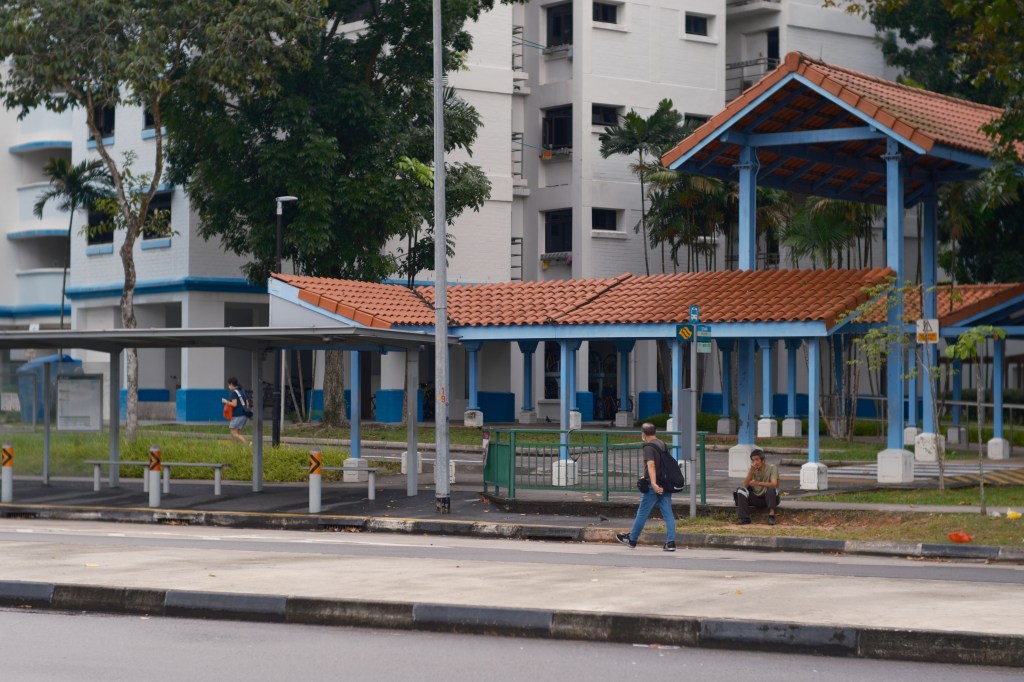
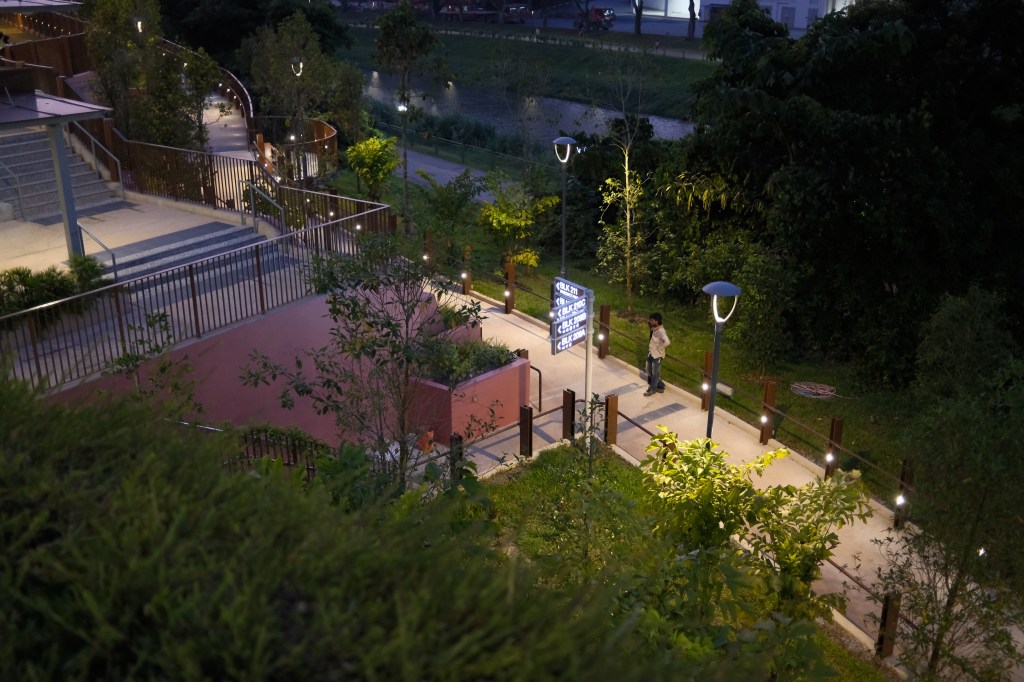
Fuji X-M5 . Viltrox 35mm f1.7 @ 35mm . f1.7. 1/340″ . ISO 320 . Nostalgic Negative

This lens has a plastic construction, but surprisingly, the build quality is quite good. It doesn’t feel cheap when held. I also found it interesting that the plastic material appears to be resistant to fingerprints.

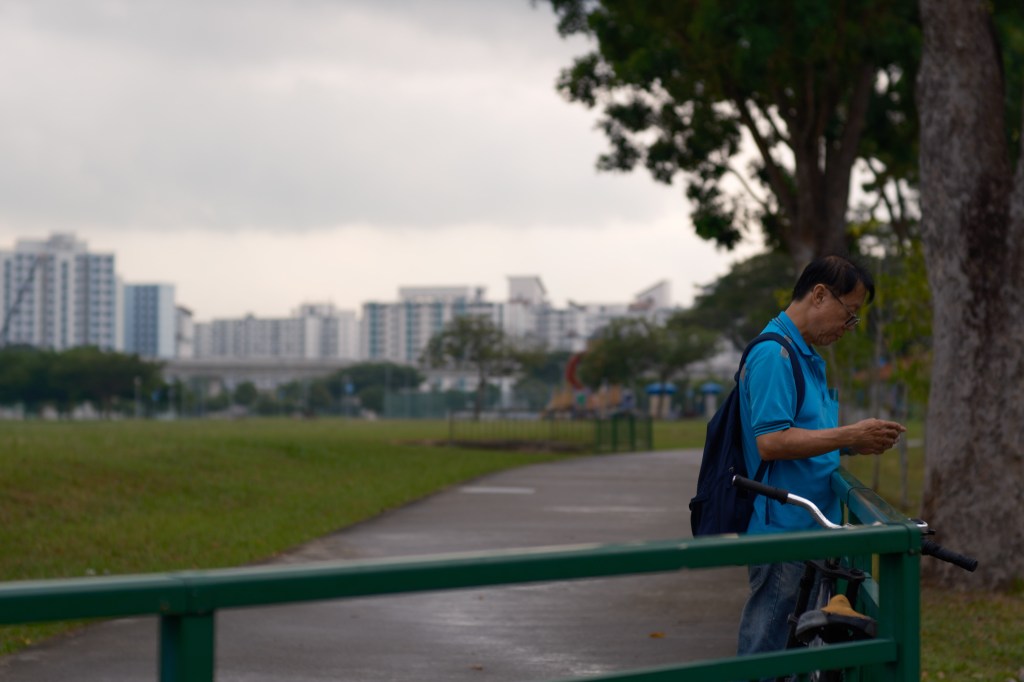
Fuji X-M5 . Viltrox 35mm f1.7 @ 35mm . f1.7. 1/80″ . ISO 320 . Nostalgic Negative

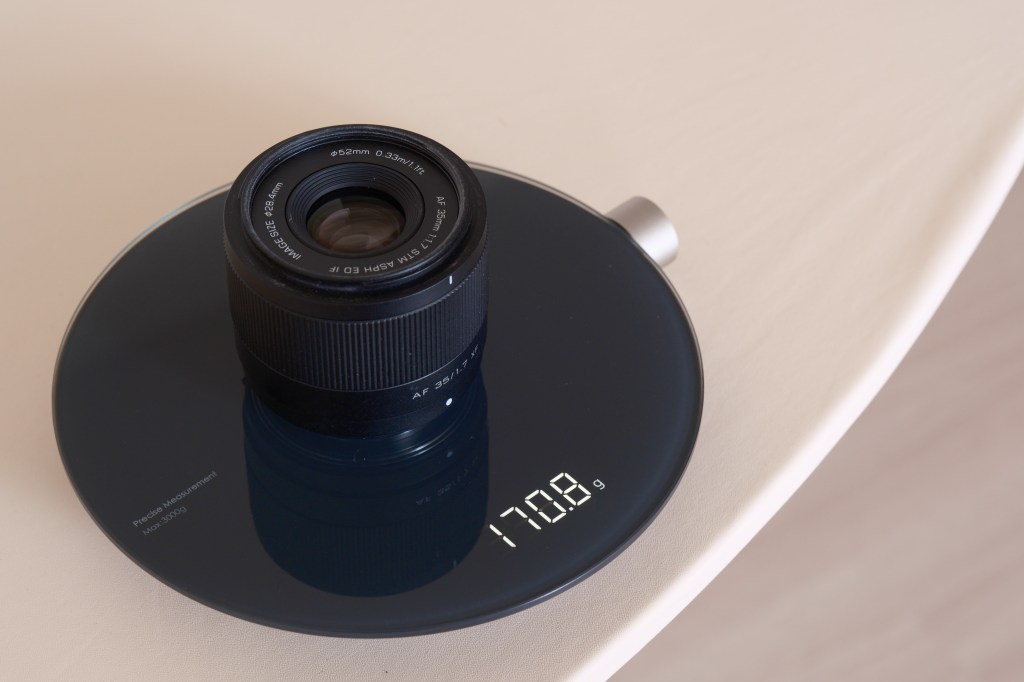
As for weight, it is just 170 grams and comes with a small 52mm filter size. It’s quite lightweight and easy to handle, and I have no problems using this lens. It does come with a petal-like lens hood, and it is made of plastic.

Viltrox 35mm f1.7

Image Quality

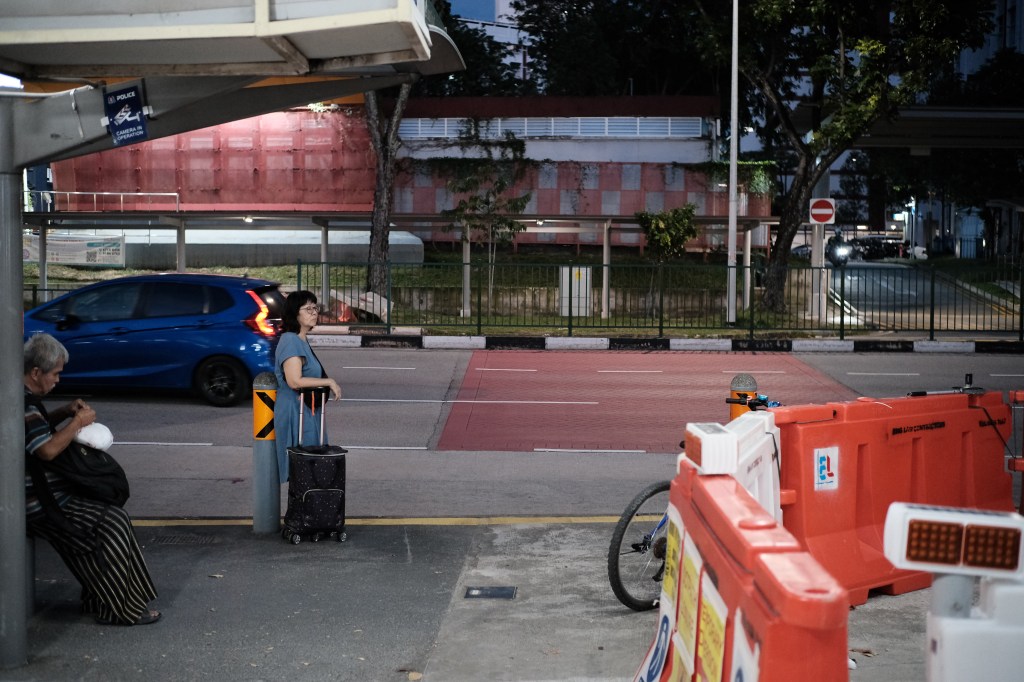
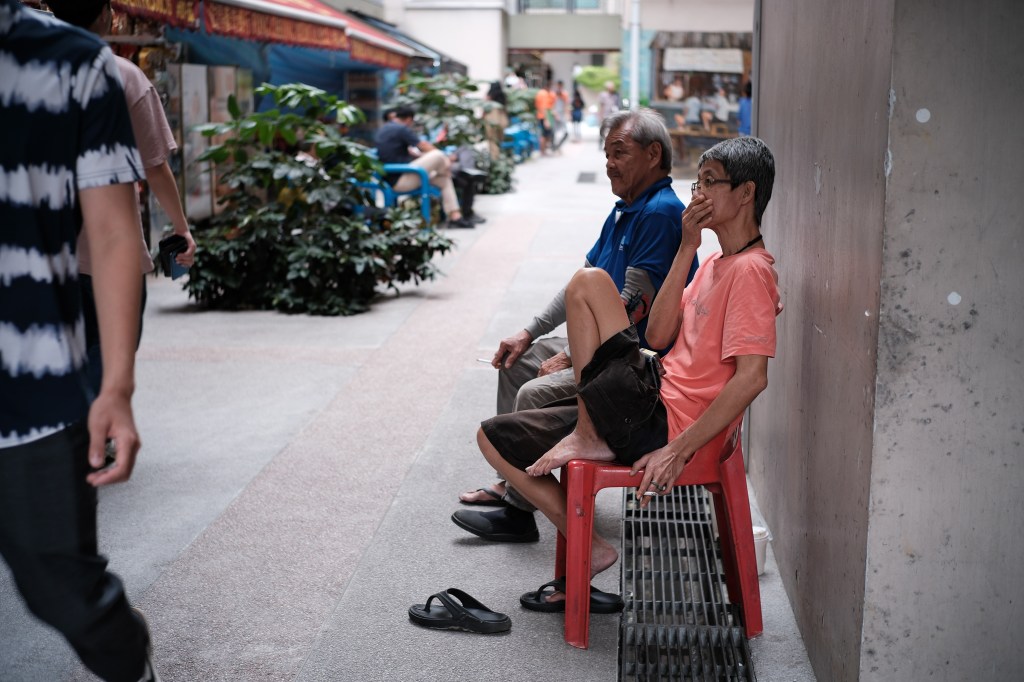
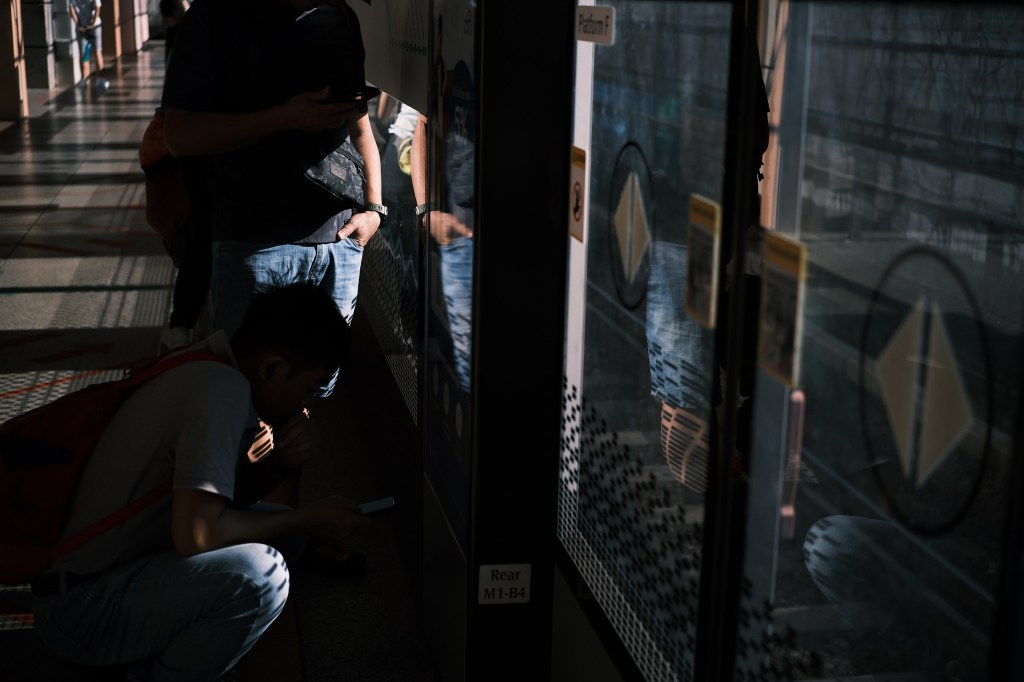
The image quality is sharp at wide-open but not as tad sharp as XF33mm f1.4, and the contrast is punchy. Vignetting is there and it may seem mild to me, but it can be obvious to some. For chromatic aberration, it isn’t obvious to my eyes. This exceeds my expectations of an entry-level. That said, I feel it is quite usable for most photographers. If you do pixel peeps, I suggest the Fujifilm prime lenses will not go wrong, especially the XF33mm f1.4.

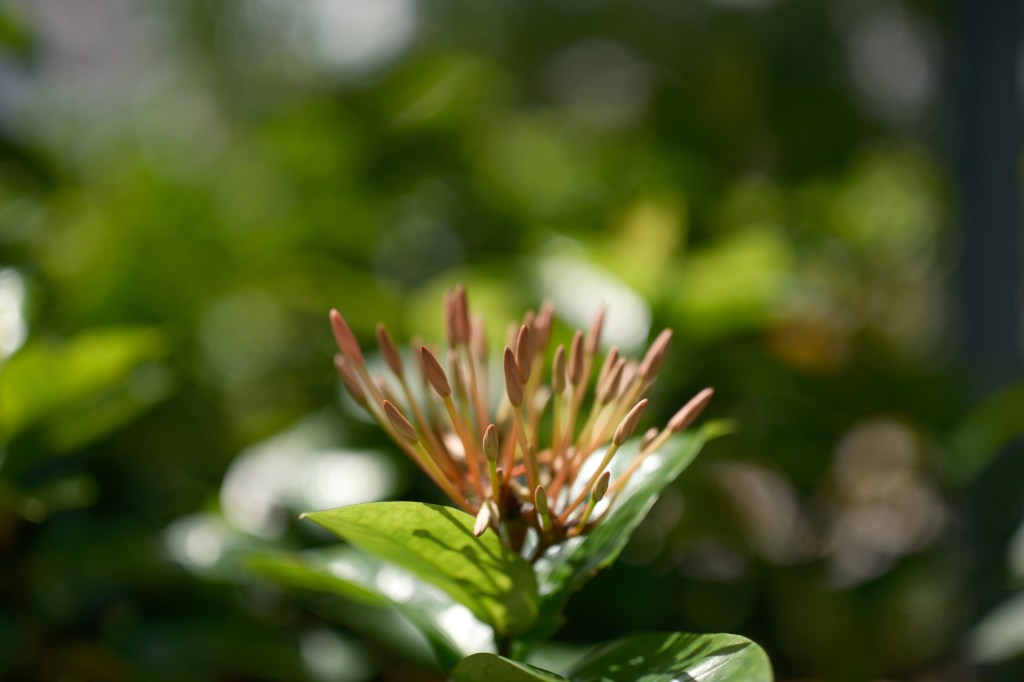
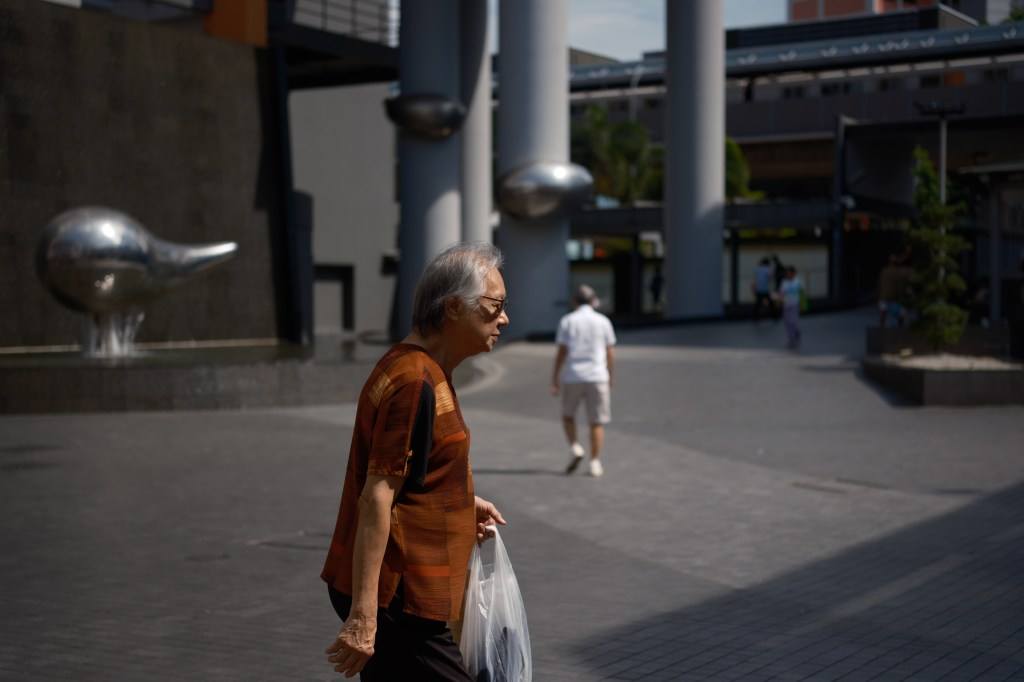
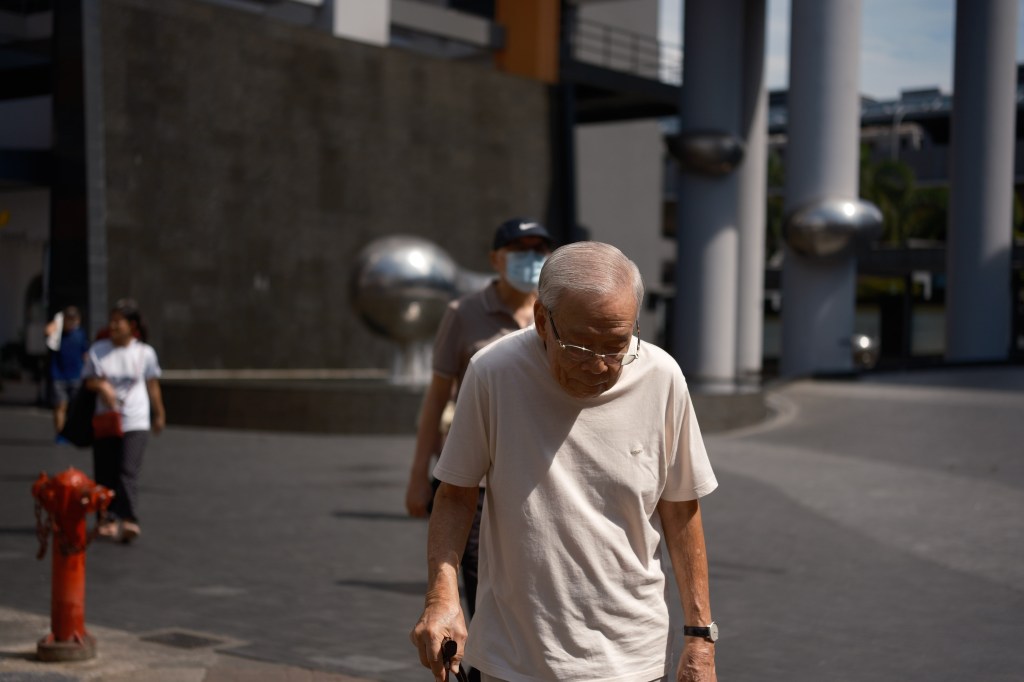
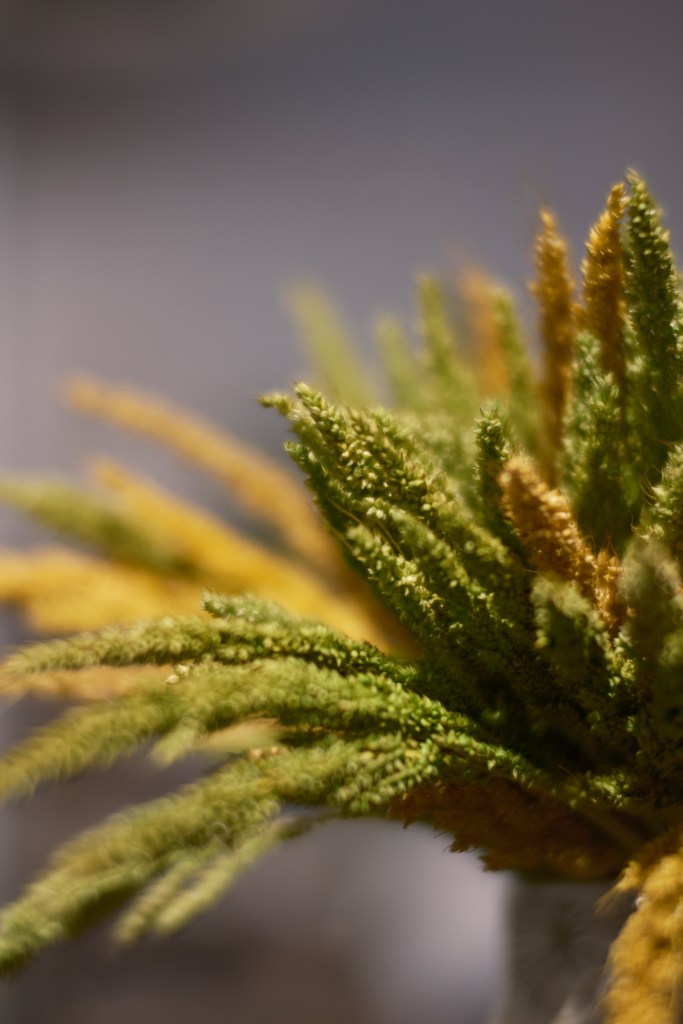
Fuji X-T5 . Viltrox 35mm f1.7 @ 35mm . f1.7. 1/80″ . ISO 160 . Nostalgic Negative

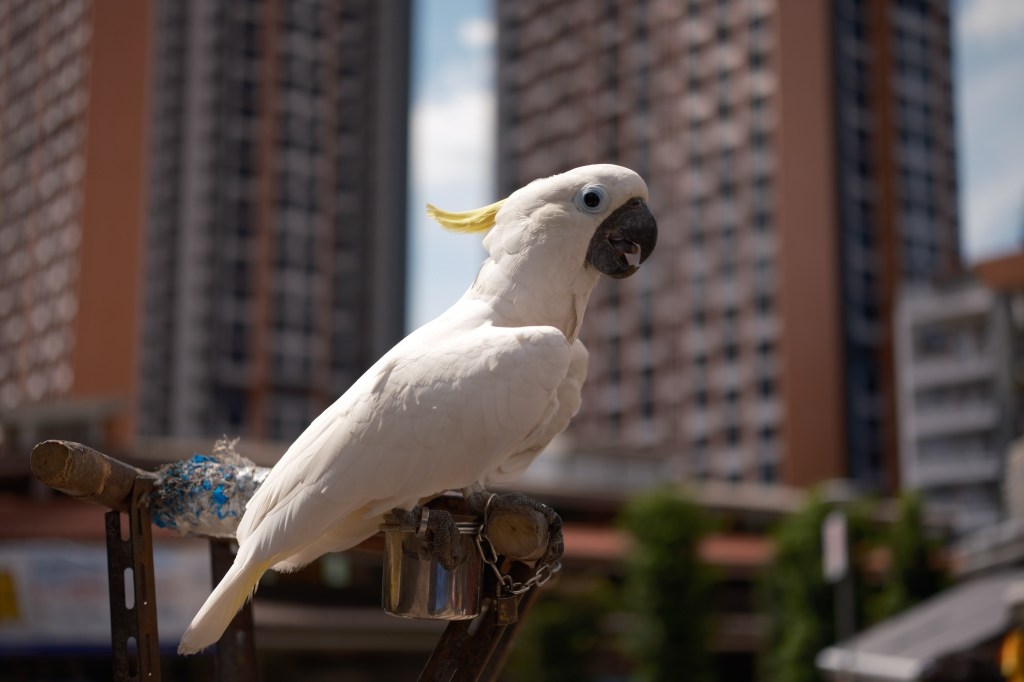
I like how the rendering of the background blur is not messy and does not disturb the main focused subject.

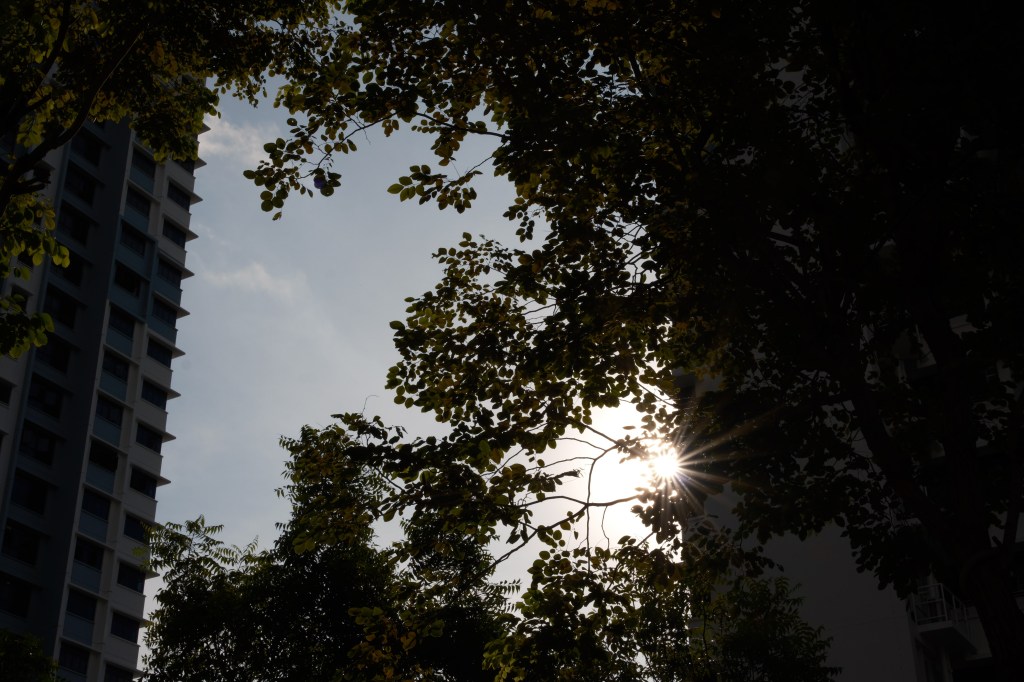
For sun star lovers, the result of this lens is not so usable, at least in my opinion. It lacks defined lines and is kind of a bit messy. But I think this is not important as this is not what many photographers are looking for.

Fuji X-T5 . Viltrox 35mm f1.7 @ 35mm . f16. 1/340″ . ISO 125 . Nostalgic Negative

Minimum Focus Distance (MFD)

This lens has a 33cm MFD, which is pretty decent for an entry-level lens. I did not see much degradation in the image quality as well, but a little lost in contrast.

Fuji X-T5 . Viltrox 35mm f1.7 @ 35mm . f1.7. 1/2500″ . ISO 125 . Nostalgic Negative

Focusing

Like all third-party autofocus lenses, it comes with a Stepper Motor (STM) to drive the focusing system. However, the focusing speed may be a little slow if you are shooting from MFD to infinity and vice versa. It will have that split-second undecisive focusing moment before its focus is locked successfully. The good thing is that I did not experience any misfocus in my shots.

Fuji X-T5 . Viltrox 35mm f1.7 @ 35mm . f1.7. 1/1500″ . ISO 125 . Nostalgic Negative

When it comes to lens breathing, there is a small breathing gap between the MFD and infinity. Videographers probably need to take note about it.

The eye tracking from both X-T5 and X-M5 works fine with this lens. No major abnormal behavior is observed during my testing. However, I do have some misses where the lens decides to give me a pull-focusing when the subject is in focused.

Fuji X-T5 . Viltrox 35mm f1.7 @ 35mm . f3.6. 1/320″ . ISO 125 . Nostalgic Negative

Price Point

At 180 USD, it is priced the same as its sibling and very competitive. For reference, XF 35mm f2 is priced at 399 USD, XC 35mm f2 is priced at 199 USD, Sirui 33mm f1.2 is priced at 280 USD, and Meike 33mm f1.4 is priced at 230 USD.

Fuji X-T5 . Viltrox 35mm f1.7 @ 35mm . f2.8. 1/30″ . ISO 800 . Nostalgic Negative

Others

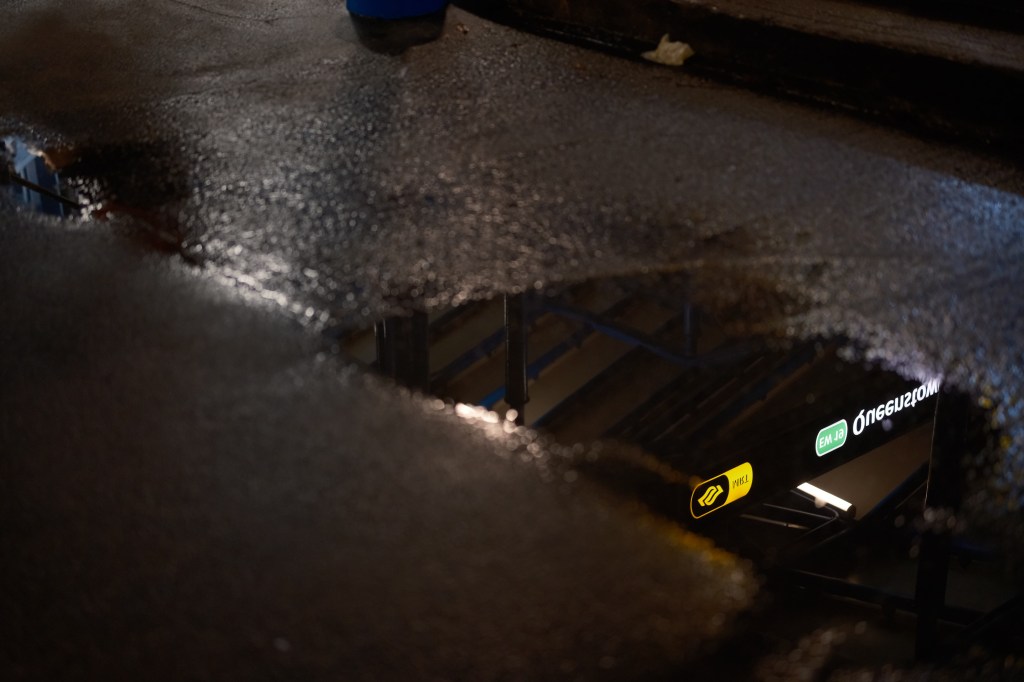
At this price range, it comes with a waterproof coating. Mind you, it is not weatherproof resistant. So I assume that this lens is fine when facing drizzling.

Fuji X-T5 . Viltrox 35mm f1.7 @ 35mm . f1.7. 1/80″ . ISO 1250 . Nostalgic Negative

Also, the official stated it comes with an Anti-Fouling layer. While it does not give more information about this other than “Keeps your lens clean and clear,” so my another assumption is it could have some coating in the front lens element that helps to prevent some level of smudge.

Fuji X-T5 . Viltrox 35mm f1.7 @ 35mm . f1.7. 1/3200″ . ISO 125 . Nostalgic Negative

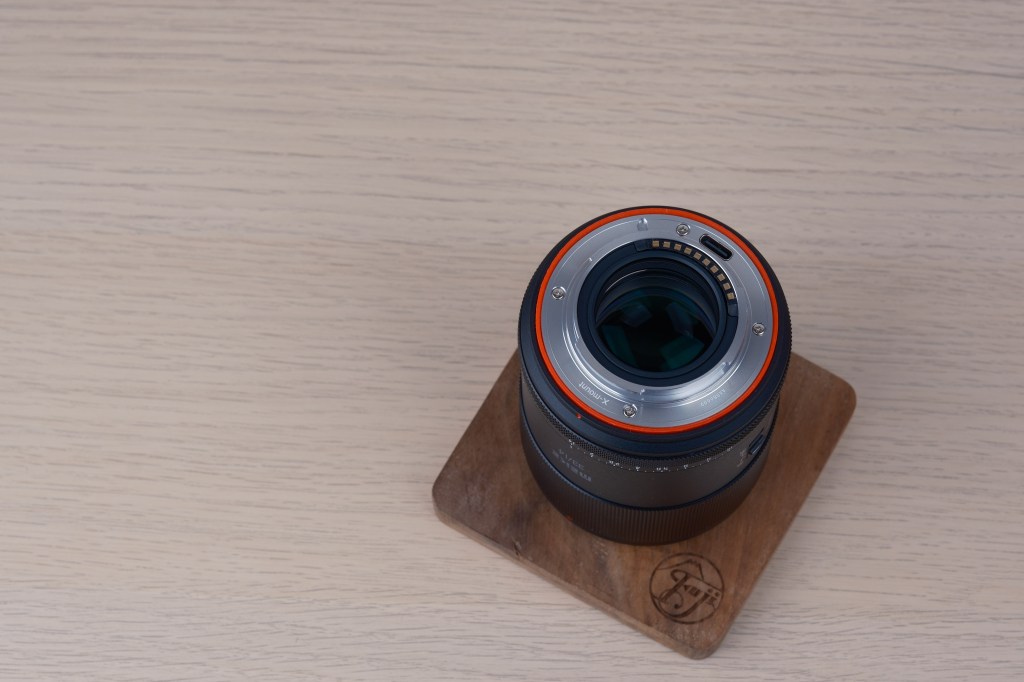
Lastly, similar to all Viltrox lenses, it comes with a USB-C port solely for one purpose; firmware upgrades.

Viltrox 35mm f1.7 rear with USB-C port

Who is this for?

At this price point, this lens is perfect for budget-conscious photographers who don’t want to compromise on image quality. It’s versatile enough for various genres, including portraits, street photography, documentary, landscapes, and everything in between. Additionally, it can serve as a backup lens for full-time photographers who are just starting out or for professionals seeking a lightweight gear setup during their days off or vacations.

Fuji X-T5 . Viltrox 35mm f1.7 @ 35mm . f1.7. 1/6000″ . ISO 125 . Nostalgic Negative

Conclusion

Viltrox has made impressive strides, excelling not only in their Pro series, like the Viltrox 75mm f1.2 and Viltrox 27mm f1.2 but also in this segment. It seems they aim to capture a broad market and become the top third-party manufacturer.

Fuji X-T5 . Viltrox 35mm f1.7 @ 35mm . f1.7. 1/5000″ . ISO 125 . Nostalgic Negative

This is a highly capable budget lens that raises the bar for competition in this category. For those seeking a solid prime lens without a hefty investment, this is definitely worth considering. While we have seen 2 of the 3 focal lengths released, I am not surprised that Viltrox will release the 23mm focal length to fill up the Trinity lens set-up.

On a separate note, I look forward to seeing the white version of this lens, along with its sibling for the X-mount.

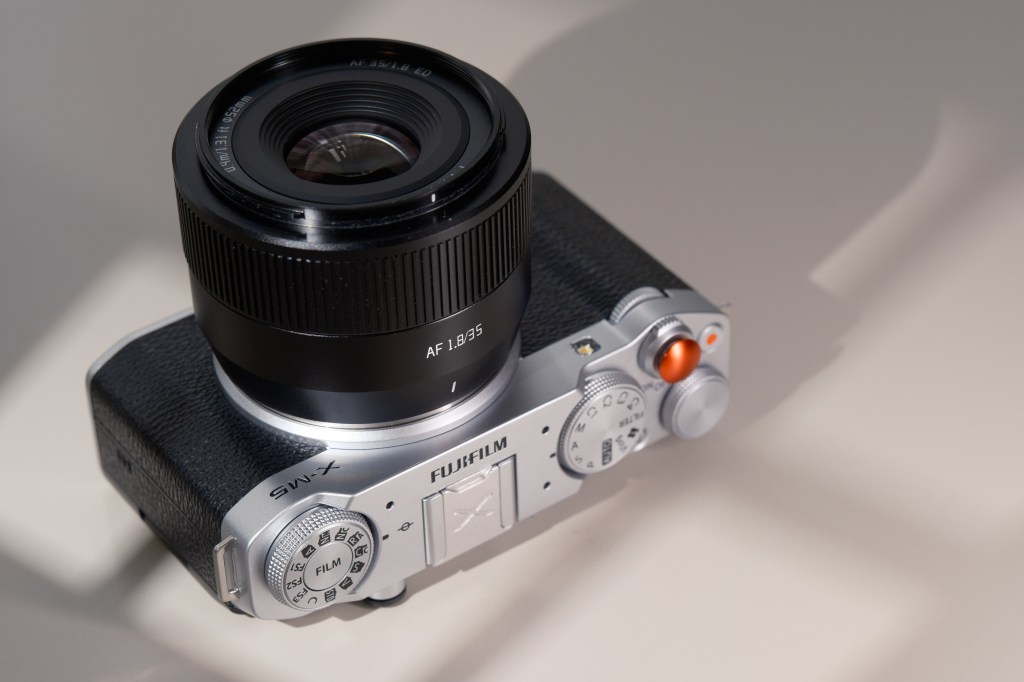
Fujifilm X-M5 with Viltrox 35mm f1.7

Thank you for reading.

Disclaimer:
1. All the shots taken here are shot by me.
2. Most of the shots are straight out of the camera with some shots edited via In-Camera Raw Processing.

3. The opinions are based on my experience. If there is any mistake, please kindly drop me a message and I will gladly make the amendment.
4. I reserve ownership of these images, if you wish to use my images, please notify me.

If you like my works, please follow me on either one of the 2 Instagram accounts:

If you have a Facebook account, feel free to join Fujifanboys FB group.

If you like my content and you want to show some support and keep this blog alive, you can buy me a coffee here.

Reviews

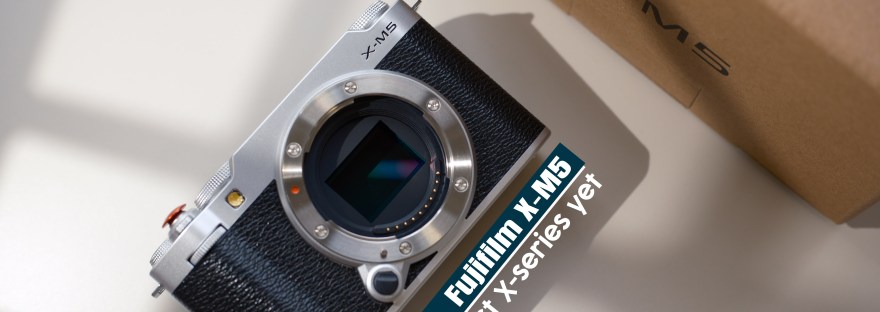
Fujifilm X-M5 – The Smallest X-series yet

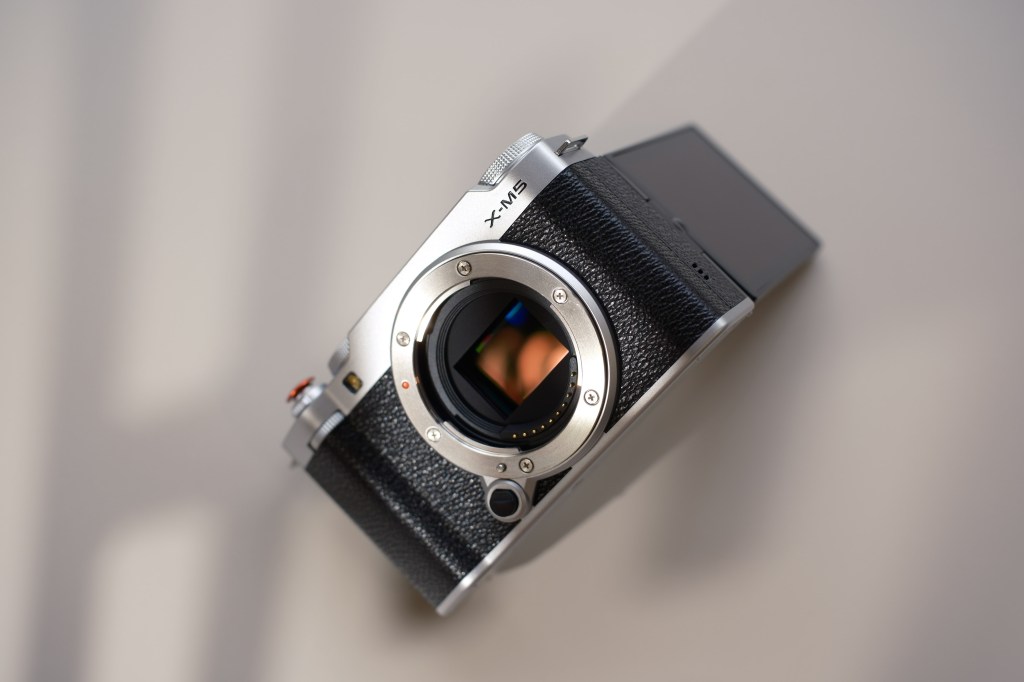
It’s been 11 years since the X-M1 was unveiled. Although many fans of the X-M series have little hope for its future and may believe that this series has come to an end, suddenly, the rumor mills start to share bits and pieces that the X-M series is being reignited. Today, Fujifilm skips the numbers 2 to 4 and decides to name this X-M1 successor as X-M5. It makes sense as we are into the 5th generation of the X-Trans sensor, hence, the “5” in the X-M5.

Fujifilm X-M5

Intro

The Fujifilm X-M5 was announced together with XF16-55mm f2.8 MK II and XF500mm f5.6 in the X Summit Clay Studio 2024. From the announcement, it is stated that X-M5 is the smallest X-series, even smaller than X-E4. What are the pros and cons of being the smallest? Is there anything been compromised? I’m sure it has but can we accept them?

Fujifilm X-M5

The X-M5 is clearly aimed at vloggers, especially the new young generation of vloggers with limited budgets. But it is also a great tool for young photographers. In this blog, I will share my experience with this camera from a photographer’s point of view.

Before I proceed further, I would like to mention all the lenses that I have tested with it.

Fujifilm X-M5

Design, Build Quality, Handling & The Shutter…

The camera features a rangefinder-style design and is incredibly compact—smaller than its predecessor, the X-M1. According to the official specs, the X-M5 is 5mm shorter in length, 1mm thinner in depth, and maintains the same 67mm height. However, it is slightly heavier, weighing 355 grams compared to the X-M1’s 330 grams.

Fuji X-M5 . XF27mm f2.8 @ 27mm . f2.8 . 1/50″ . ISO 3200 . Classic Negative

The build quality is decent for an entry-level camera, with a plastic body that feels solid, though you can tell it’s made of plastic when you hold it. As for handling, it’s not the most comfortable for larger hands like mine. The camera is so small it fits in my palm, so for a more secure grip, I prefer using an additional grip or holding the lens instead of the body.

The shutter sound is loud for a small and compact camera. Not an issue to me but I do prefer the shutter sound from the X-T5 (or maybe I have gotten used to it).

Fuji X-M5 . XF35mm f1.4 @ 35mm . f2 . 1/420″ . ISO 320 . Classic Chrome

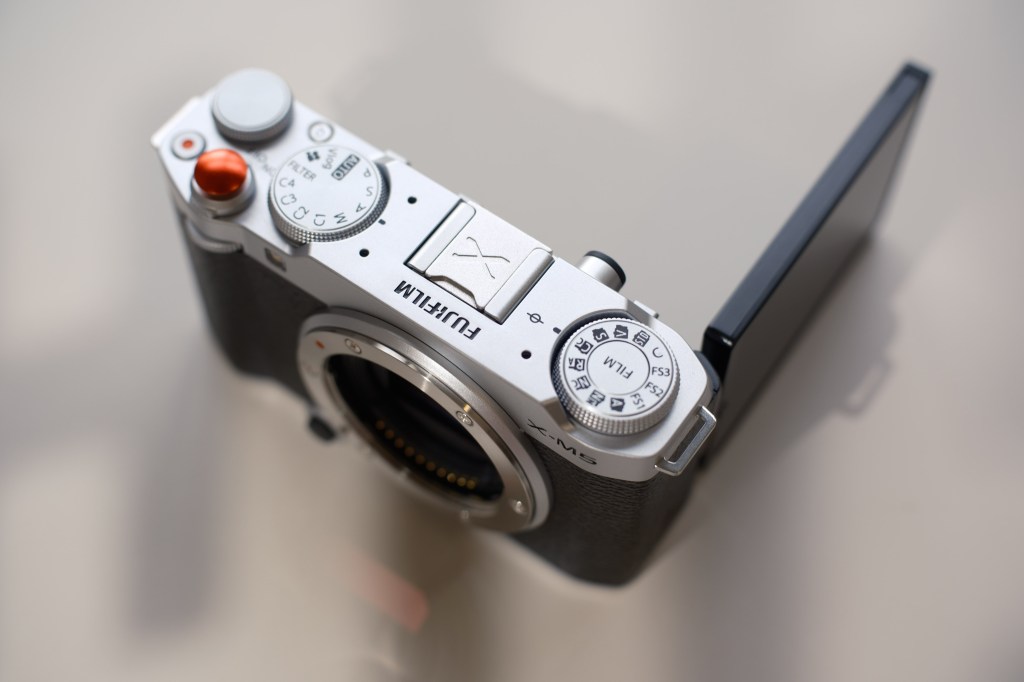
It comes with 3 command dials (film simulation dial, mode dial, and rear command dial) and 1 front command dial. Quite a number of dials for an entry-level camera.

The film simulation dial is first introduced in X-T50. I know there has been a lot of feedback about this dial since its introduction, and I agree it to a certain point. But this is actually beneficial to photographers who are not similar to Fujifilm and it’s film simulations. Changing the film simulations via the dial and witnessing the change of colors can allow new photographers to get hold of the film simulations, find one that they love the most, and enjoy the Straight-Out-Of-Camera end results.

Fuji X-M5 . Meike 55mm f1.4 @ 55mm . f1.4 . 1/8500″ . ISO 160 . Classic Chrome

If you have noticed, out of the 4 dials, 2 dials are fixed. That said, we have left with 2 dials that are available to customize (such as exposure compensation control, ISO control, and aperture control for those lenses that do not come with an aperture ring) to suit our shooting behavior.

Fuji X-M5 . XF 70-300mm f4-5.6 @ 300mm . f6.4 . 1/550″ . ISO 320 . Classic Chrome
Fuji X-M5 . XF 70-300mm f4-5.6 @ 300mm . f5 . 1/2000″ . ISO 320 . Classic Chrome

Oh yes, I like the less stiff, tactile feedback from the rear command dial. Personally, I prefer this to the one on the X-T5.

Sensor and Processor

Like the X-S20, it comes with an X-Trans 4 CMOS sensor and X-Processor 5 combination. Is this a bad combination? No. In fact, it is probably my preferred combination. I explained in the X-S20 post that I preferred 26 megapixels over 40 megapixels. The resolution is a sweet spot for my memory space and storage space since I hardly do photo cropping.

Fuji X-M5 . TTArtisan 56mm f1.8 @ 56mm . f1.8 . 1/3500″ . ISO 320 . Classic Chrome

Having X-Processor 5 actually does help battery efficiency and focusing performance. More on these later. But do note that the base ISO is 160 and not 125 as that can only be found in the X-Trans 5 HR sensor.

Image Quality

I have no complaints about the image quality here. If the image quality from this sensor is poor, I guess it won’t be the flagship sensor for X-T3 and X-T4. I am glad that Fujifilm decided to keep this sensor and extend its longevity further.

Fuji X-M5 . TTArtisan 56mm f1.8 @ 56mm . f1.8 . 1/80″ . ISO 800 . Classic Chrome

Performance

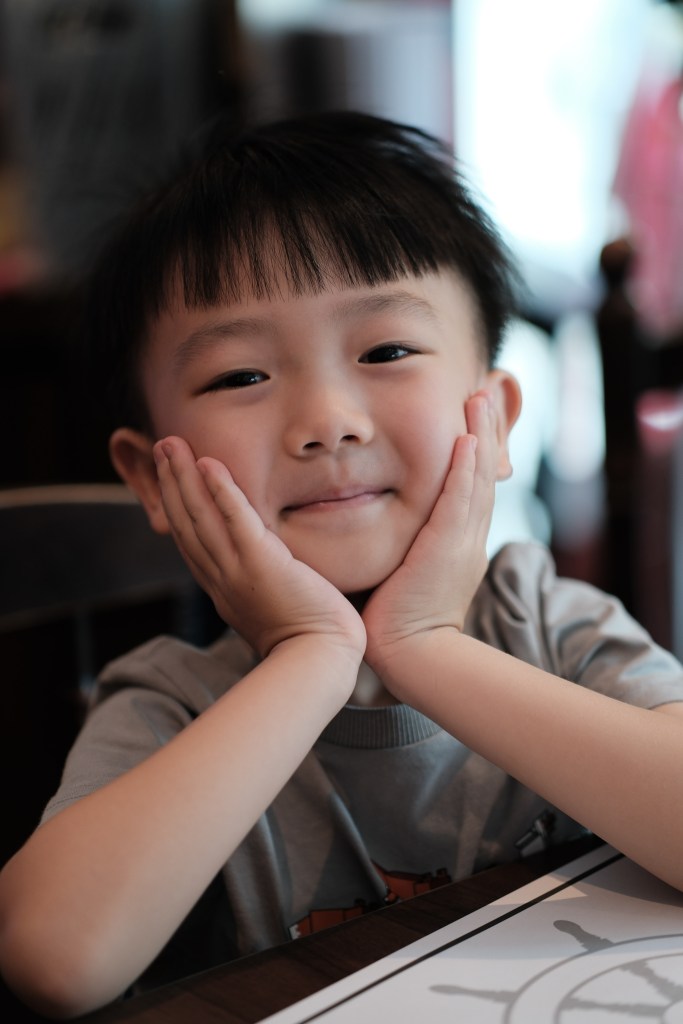
The autofocus algorithm seems to improve quite a lot. The eye-AF tracking is more sticky and picking up the subject is faster than my X-T5 with the firmware 2.03 (I’m lazy, don’t judge me).

I can feel that my hit rates has gone higher than before and more reliable.

Fuji X-M5 . Sigma 10-18mm f2.8 @ 17.3mm . f2.8 . 1/1700″ . ISO 320 . Classic Chrome

Battery Life

The camera uses the NP-W126S battery. Will it offer poor battery life? From my experience with the X-T50, I was able to get around 550 shots before the battery drained. With this camera, I managed to capture about 530 shots, which meets my expectations and is better than the CIPA rating of 330 shots. If you find the battery life insufficient for a full day of shooting, it’s a good idea to carry one or two spare batteries.

Feedback

Every camera isn’t perfect, and there is always room for improvement. X-M5 is not exceptional.

I name a few of them as I deem them more important to me.

The screen resolution is low by today’s standard (at 1,040,000 dots). It has the same screen resolution as the X-T3 which was first announced in 2018 and even worse than the X-E4 (at 1,620,000 dots). I’m not saying low screen resolution is terrible but sometimes it gives me a little bit of wrong judgment.

Fuji X-M5 . ArtraLab 24mm f1.7 @ 24mm . f1.7 . 1/6400″ . ISO 320 . Classic Negative

I was surprised that Fujifilm did not release an optional hand grip like they did for X-E4. But this is not an issue, as many third-party accessory makers are making one for X-M5.

The “Q” Quick Menu button is positioned between both the mode dial and the rear command dial and it is a pretty small button. This gives me a problem to press the “Q” button as I have a pretty big finger. I wonder why they do not include the “Q” button beside the AEL/AFL button. Oh yes. the playback and AEL/AFL button can be bigger.

Fuji X-M5 . ArtraLab 24mm f1.7 @ 24mm . f1.7 . 1/420″ . ISO 160 . Classic Chrome

Finally, the absence of an EVF (Electronic Viewfinder) is likely the most common complaint from Fujifilm users. I can relate, as I missed having the EVF when reviewing my shots or shooting in bright sunlight. It would be great if Fujifilm could offer an external EVF as an optional accessory, as I believe most X-M5 owners would gladly purchase one.

Price Point

At 800 USD, this is the most affordable interchangeable X camera released, and it took the crown from X-E4, which was once the cheapest X camera ( priced at 850 USD).

Fuji X-M5 . Viltrox 13mm f1.4 @ 13mm . f5.6 . 1/400″ . ISO 320 . Classic Chrome

Others

While the X-M1 features a built-in pop-up flash, the X-M5 replaces it with a film simulation dial. Is this change worthwhile? Personally, I think it’s a great trade-off. The film simulation dial not only benefits newcomers but also makes it easier for me to switch between my favorite film simulations. While the “Q” button also lets me change film simulations, having a dedicated dial provides a more tactile, hands-on experience.

Fuji X-M5 . Viltrox 75mm f1.2 @ 75mm . f1.2 . 1/6000″ . ISO 320 . Classic Chrome

Oh yes, this is probably the best affordable camera to experience 20 film simulations with 8 film simulations allocated on the dial with 3 presets available. I remember my X-T3 had only 16 film simulations and that’s it.

Fuji X-M5 . Viltrox 27mm f1.2 @ 27mm . f1.2 . 1/280″ . ISO 320 . Classic Chrome

The last one is the mechanical shutter, where X-M5 can only go as fast as 1/4000s, whereas 1/8000s on X-T5.

Who is this for?

Like I mentioned earlier, this camera is aiming at vloggers with limited budget. But that does not mean this is not a capable camera by any means. It is a very decent entry level camera which using very capable sensor and processor.

Fuji X-M5 . Brightin Star 50mm f1.4 @ 50mm . f1.4 . 1/750″ . ISO 320 . Classic Negative

If you are new to photography and attempt to step one step up from mobile photography, I think this is a good camera to buy and take photos with. You will not be disappointed with the results and get to explore the magic of the Fujifilm film simulations.

Conclusion

I do not share the other benefits of the X-M5, and that is the videography portion. I have very minimal videography knowledge, and I do not think I am the right person to share. Nonetheless, this camera comes with a 6.2k open gate recording in 10-bit. This is a huge move for an entry-level camera, or at least I have not encountered one yet from any brand. It also comes with a good-positioned microphone/remote release connector.

Fuji X-M5 . Viltrox 27mm f1.2 @ 27mm . f1.2 . 1/180″ . ISO 160 . Classic Chrome

The camera’s compact design does come with a few compromises. The handling is not ideal, but this can be improved with an additional grip. The absence of an EVF can be addressed with an optical viewfinder, though it works best with 27mm focal length lenses. The lack of IBIS can be compensated by using lenses with OIS, and Fujifilm offers a solid selection of OIS lenses beyond the kit lens, such as the XF16-80mm, XF80mm macro, and XF70-300mm. That said, I’m personally fine without IBIS, as my shooting style hasn’t changed significantly, and I shot with the X-T2 and X-T3 for a long time without major issues.

Fuji X-M5 . Brightin Star 50mm f1.4 @ 50mm . f1.4 . 1/250″ . ISO 320 . Nostalgic Negative

What I miss the most are the dials found on my X-T5, like the ISO dial and shutter speed dial. I really appreciate those dials because they provide quick access and setup for certain unique shooting situations. As a result, I don’t miss many important moments. That said, I usually preset my camera settings and stick to them most of the time, so I rarely need to adjust the dials during a shoot. As for X-M5, there are options to reconfigure or remap the command settings using the available buttons, so I recommend assigning your most frequently used functions to the buttons you use less often.

Fuji X-M5 . ArtraLab 24mm f1.7 @ 24mm . f1.7 . 1/8500″ . ISO 320 . Classic Negative

Despite these compromises, the X-M5 is still a great camera, offering excellent value for those looking to try Fujifilm. It provides a fantastic introduction to the beautiful film simulations Fujifilm is known for. With the new X-Processor 5 and the improved autofocus algorithm, the autofocus performance and the subject tracking are impressive. Additionally, the X-Trans 4 sensor continues to deliver excellent image quality.

Fuji X-M5 . Meike 55mm f1.4 @ 55mm . f1.4 . 1/80″ . ISO 400 . Classic Chrome

I hope to see good sales with this X-M5, after all, it has been 11 years since the series was born.

Fuji X-M5

Thank you for reading.

If you like my works, please follows me on either one of the 2 Instagram accounts:

Disclaimer:
1. All the shots taken here are shot by me. 
2. All of the shots
 are straight out of the camera with some edited via In-Camera Raw Processing.
3. The photos are resized to 30% of the original size except for cropped ones. If you wish to see the original file, contact me and I will be happy to share it with you.
4. I reserve ownership of these images, if you wish to use my images, please notify me.
5. The opinions are based on my experience. If there is any mistake, please kindly drop me a message and I will gladly make the amendment.

Reviews

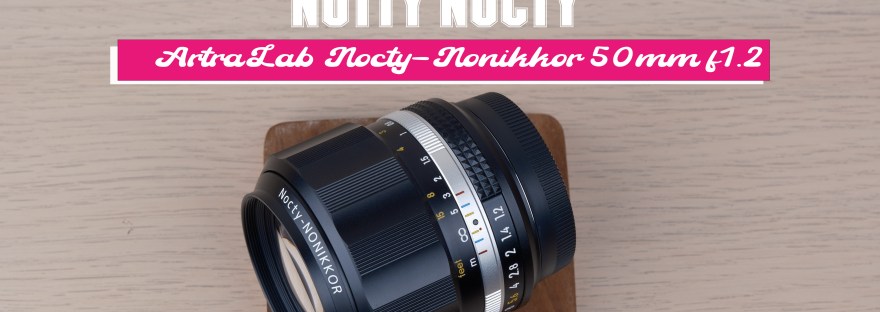
ArtraLab 50mm f1.2 – Notty Nocty

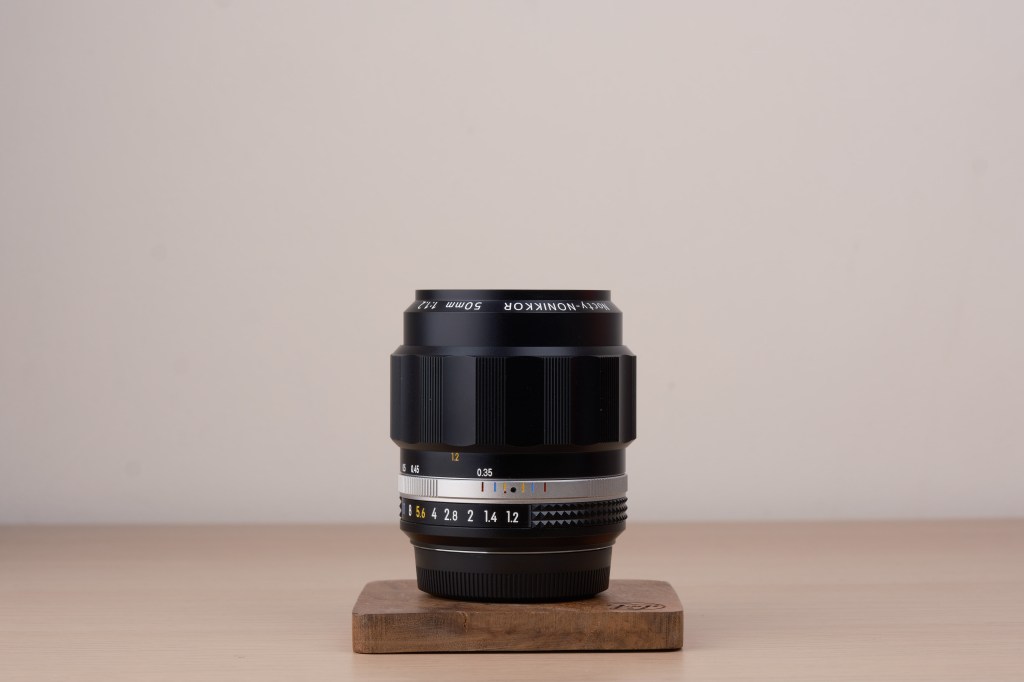
ArtraLab Nocty-Nonikkor 50mm f1.2 is a pretty new lens to the market. It was announced in early October 2024. While some may view it as a bold imitation for photographers looking for a Nikon Noct-like experience at a more affordable price, I see it as an opportunity for photographers a chance to experience a taste of that legendary optical character using other systems to mount a beautifully designed lens on their cameras.

ArtraLab 50mm f1.2

Besides the Fuji X-mount, it is available in Sony E-mount and Nikon Z-mount.  

Design and Build Quality

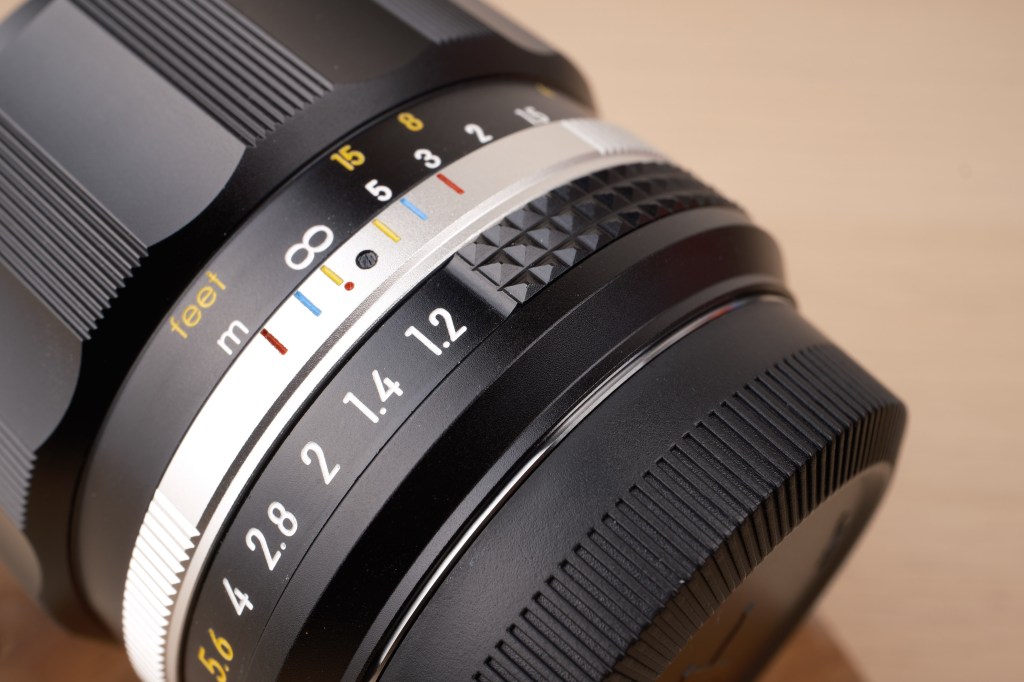
Like the ArtraLab 24mm f1.7 and 35mm f1.4, the first look at this vintage aesthetic lens shows that the design is strongly inspired by classic Nikkor lenses. Similar design elements include colorful aperture values (for your information, they are painted by hand) and the manual focus ring design, which remains with the “blocky rectangular and stripe-like pattern.”

ArtraLab 50mm f1.2

Speaking of the aperture ring, it is still clicky and it is an enjoyable experience.

At 560 grams, this lens is heavy by all means and it is probably the heaviest manual lens I have tested thus far. As for lens handling, it might not be the most comfortable for small hands. However, it comes with a pretty small filter size, only 52mm. And, it shares the same filter size as the 23mm and 35mm as well. This is a surprise for me.

Fuji X-T5 . ArtraLab 50mm f1.2 @ 50mm . f2. 1/400″ . ISO 125 . Nostalgic Negative

Image Quality

When it comes to image quality, I have mixed feelings about this lens. During the day, wide-open shots tend to be soft, lacking in contrast and sharpness. The sharpest part of the image is at the center. I’m not saying this is inherently good or bad, as some photographers actually prefer these characteristics. However, I don’t personally fall into that camp.

Fuji X-T5 . ArtraLab 50mm f1.2 @ 50mm . f1.2. 1/950″ . ISO 125 . Nostalgic Negative

If you prefer sharp images, the image quality improves as you increase the aperture value. In my opinion, the results from f2.8 are more usable.

Fuji X-T5 . ArtraLab 50mm f1.2 @ 50mm . f1.2. 1/80″ . ISO 500 . Nostalgic Negative

However, this lens performs quite well at night. The image quality at f1.2 is more usable than that in the day. To my surprise, vignetting is pretty mild and isn’t that obvious in most situations. Chromatic aberration is also controlled quite well. One good surprise is how well the background blur renders. Somehow I feel that it gives a good moody rendering and not those hard and harsh background blur.

Fuji X-T5 . ArtraLab 50mm f1.2 @ 50mm . f1.2. 1/80″ . ISO 160 . Nostalgic Negative

As for the sun star, it is okay. Nothing impressive or to shout about. The lines are fine, but not well-defined.

Focusing

The focus throw is likely longer than what I’ve experienced, with about 200° of rotation from end to end. While it feels a bit “extended or far,” the benefit is a more precise and controlled focus. This is something I appreciate, though I also find it a bit “tiring” after prolonged use.

Fuji X-T5 . ArtraLab 50mm f1.2 @ 50mm . f2. 1/80″ . ISO 125 . Nostalgic Negative

Nevertheless, I love the dampness of the manual focus ring. It just weighs nice to rotate.

As for lens breathing, it is pretty significant between MFD and infinity. For videographers who wish to use this lens for videography purposes, please take note.

Fuji X-T5 . ArtraLab 50mm f1.2 @ 50mm . f1.2. 1/80″ . ISO 320 . Nostalgic Negative

Minimum Focus Distance (MFD)

The 35cm MFD was a pleasant surprise for me—much shorter than I expected for lenses of this focal length. It allows the photographer to get closer to the subject for more intimate shots. However, it’s worth noting that the image softness is even more pronounced when shooting wide-open.

Fuji X-T5 . ArtraLab 50mm f1.2 @ 50mm . f1.2. 1/2200″ . ISO 125 . Nostalgic Negative

Oh yes, the lens protrudes at its maximum length when it is at MFD.

Price Point

At 545 USD, it is priced cheaper than the Voigtlander Nokton 50mm f/1.2 (629 USD). (And even cheaper if you buy from B&H – 398 USD). But it is more expensive than most third-party autofocus lenses like Sirui Sniper 56mm f1.2 (279 USD) and Meike 55mm f1.4 (200 USD).

Fuji X-T5 . ArtraLab 50mm f1.2 @ 50mm . f1.2. 1/80″ . ISO 1000 . Nostalgic Negative . Black Mist 1/2 filter

Others

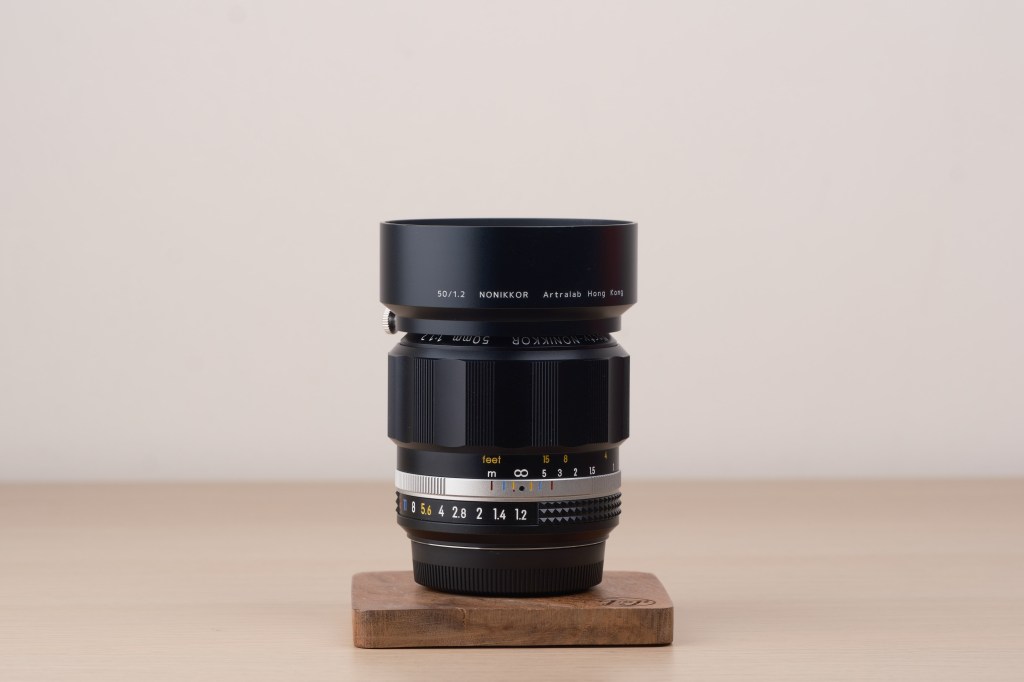
This lens comes with an unusual metal lens hood. There is a small silver screw-like knob that requires loosening and tightening after you have positioned it to your desired position. The rear lens cap is a nice gesture to the Fuji X logo.

ArtraLab 50mm f1.2 lens hood with silver screw-like knob
ArtraLab 50mm f1.2 rear lens cap

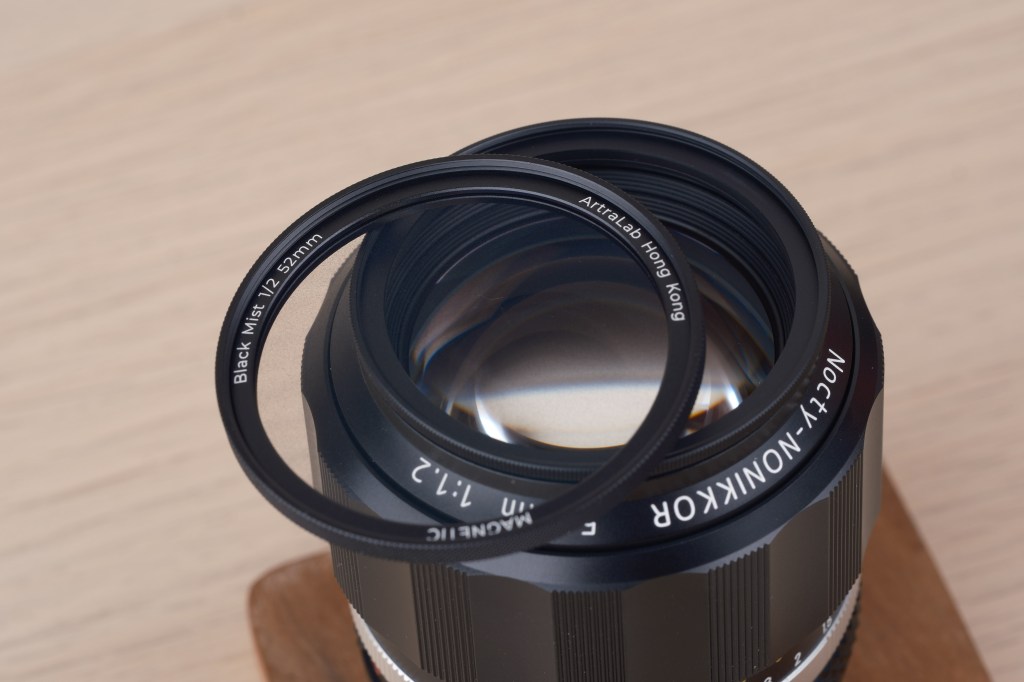
ArtraLab also sent me two filters to try out: a Black Mist 1/2 and a 6-Point Stars filter. Both are magnetic, which eliminates the need for the usual screwing and unscrewing method—just attach or remove them easily with a simple snap. Another great feature is that, since the lenses share a common 52mm filter thread, I can use these filters across multiple lenses.

Who is this for?

This lens is designed for those who appreciate vintage and nostalgic aesthetics. Plain and simple.

Fuji X-T5 . ArtraLab 50mm f1.2 @ 50mm . f1.2. 1/80″ . ISO 200 . Nostalgic Negative . Black Mist 1/2 filter

The 75mm focal length (in 35mm equivalent) is versatile, making it suitable for a range of genres, including portrait, street, product photography, and more.

Conclusion

This lens has a nostalgic charm, and I really appreciate its look, design, and build quality. it gives a very distinctive look, unlike others in this modern generation of lenses.

Fuji X-T5 . ArtraLab 50mm f1.2 @ 50mm . f1.2. 1/500″ . ISO 2500 . Nostalgic Negative . 6-Point Stars filter

However, it doesn’t quite perform as well as I had hoped. When it comes to image quality, I have mixed feelings. While I’m not fond of the softness in wide-open shots during the day, this lens truly excels in low light and indoor settings.

Fuji X-T5 . ArtraLab 50mm f1.2 @ 50mm . f2. 1/140″ . ISO 125 . Nostalgic Negative

If you’re after a lens with personality and aren’t solely focused on technical perfection, the NOCTY-NONIKKOR 50mm F1.2 is definitely worth considering. 

Thank you for reading.

Disclaimer:
1. All the shots taken here are shot by me.
2. Most of the shots are straight out of the camera with some shots edited via In-Camera Raw Processing.

3. The opinions are based on my experience. If there is any mistake, please kindly drop me a message and I will gladly make the amendment.
4. I reserve ownership of these images, if you wish to use my images, please notify me.

If you like my works, please follow me on either one of the 2 Instagram accounts:

If you have a Facebook account, feel free to join Fujifanboys FB group.

If you like my content and you want to show some support and keep this blog alive, you can buy me a coffee here.
Reviews

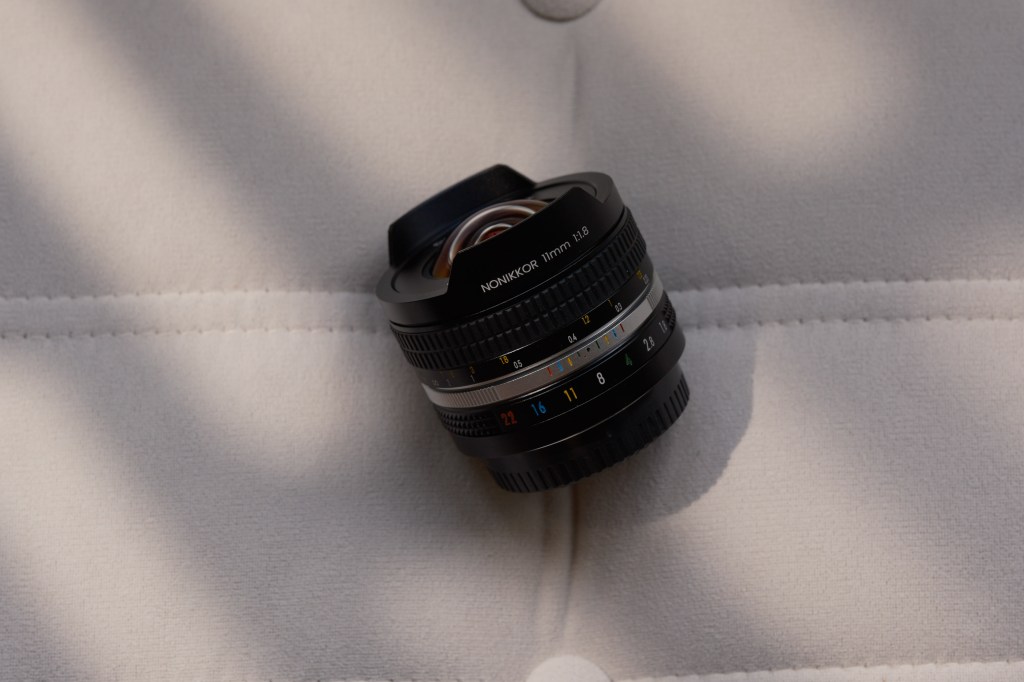
Brightin Star 35mm f0.95 (Silver Edition) – New Color, New Charm

Every now and then, some manufacturers want to extend the longevity of their product line-up to maintain its popularity. The usual way is to release a new color. For example, TTArtisan 27mm f2.8. They released the black version in 2022, then the yellow edition in 2023, and now the silver version in 2024. Another good example is Ricoh GR3. It has a few editions, and the recently announced HDF edition gives a little hardware change to boost the photographers’ choices.

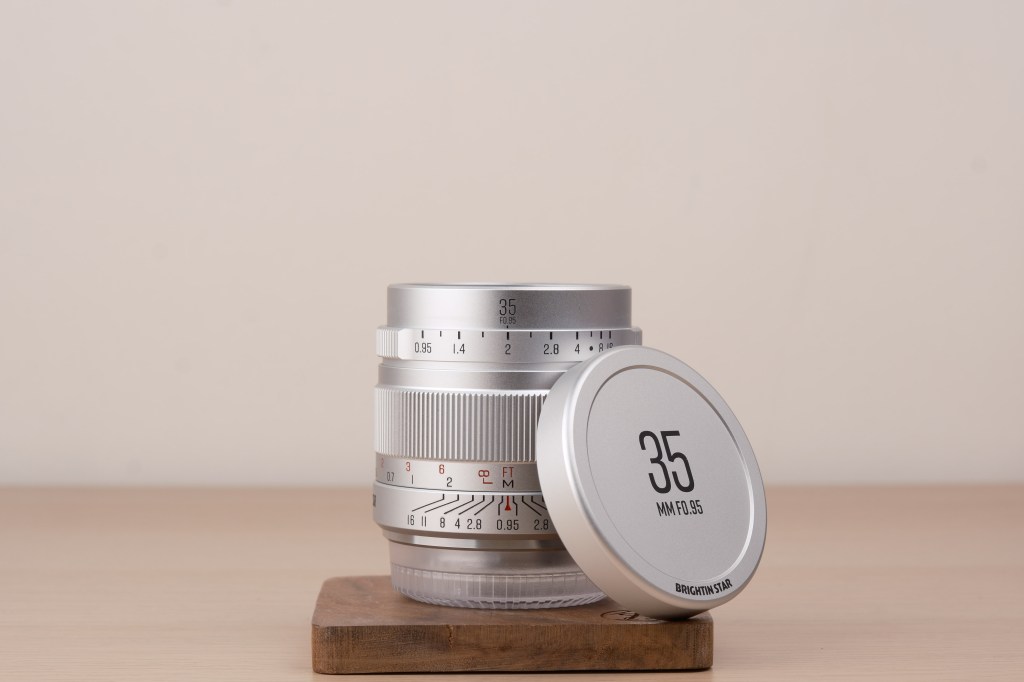
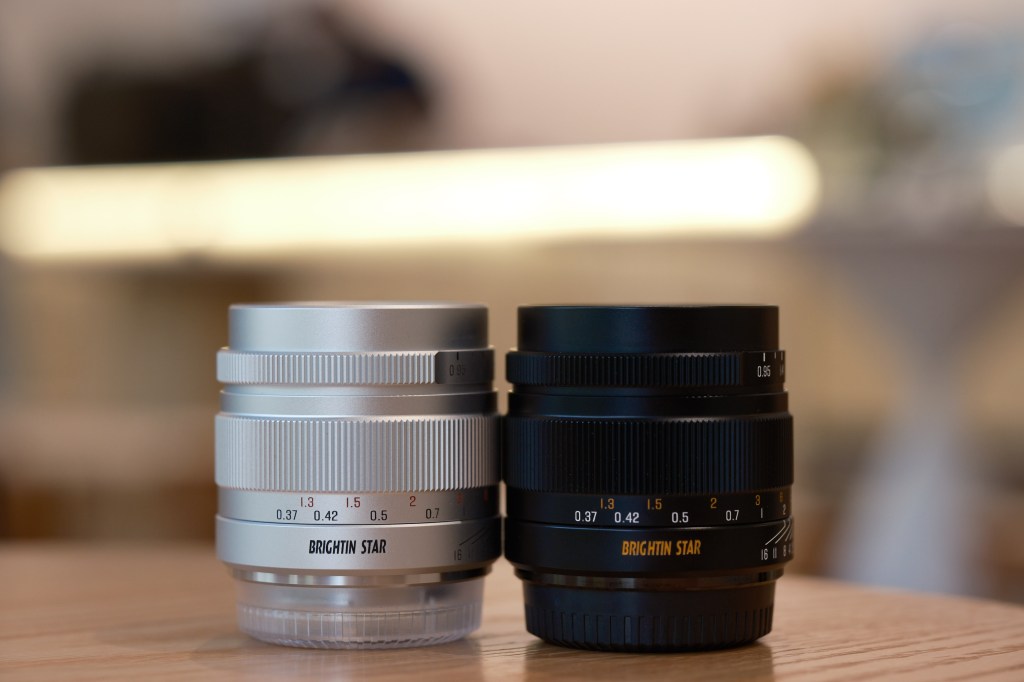
Brightin Star 35mm f0.95 Silver Edition

Intro

Brightin Star has just launched a new silver version of its popular 35mm f0.95. If you hesitated to buy it before due to the black color, this silver option adds a fresh appeal, making it a great choice for you now.

Image Quality, Build Quality & Design

The image quality remains the same and if you are curious about it, you can click on link from the previous paragraph to understand more about this lens. As for built quality, it is no difference from the black color variant.

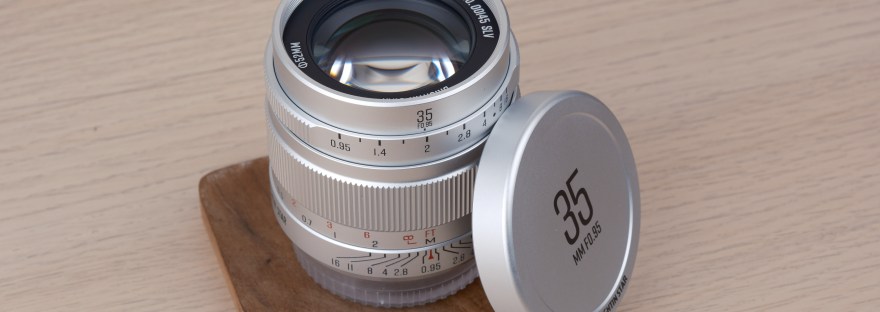
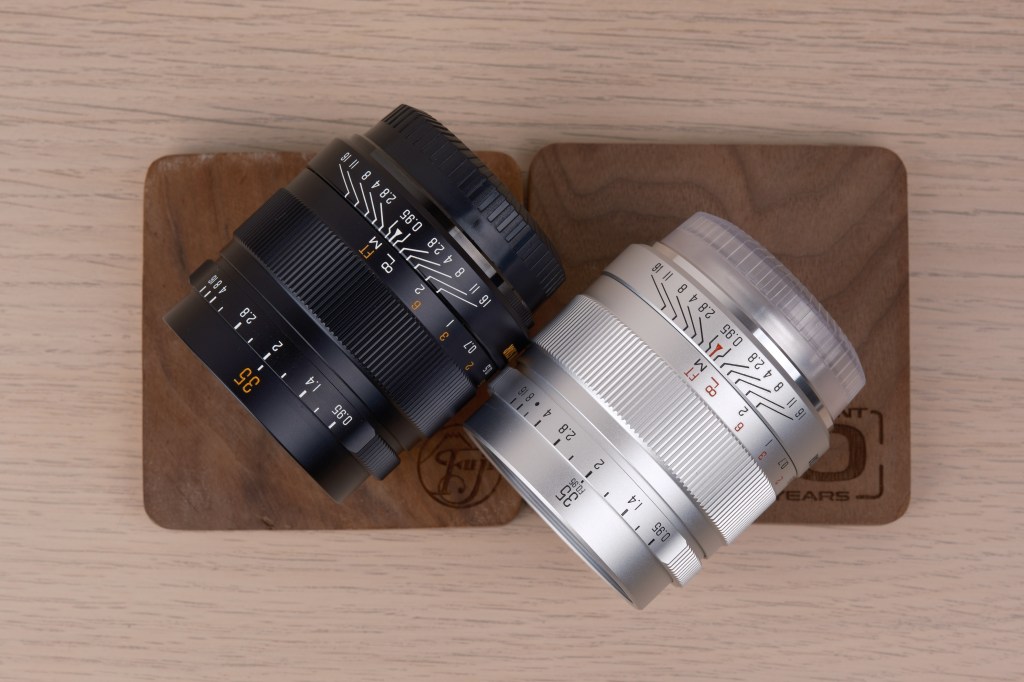
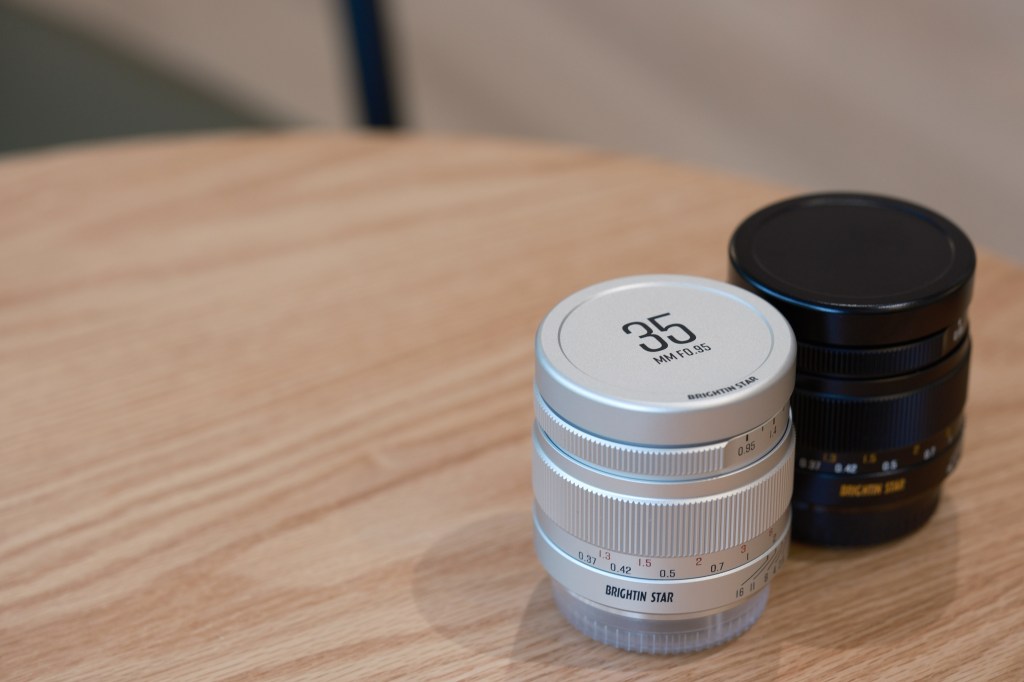
The silver color gives a totally different vibe to the original black color. The striking yellow bold brand logo has become subtle. This may be a good thing for someone wants to lay low yet wants a different color to differentiate this lens with the other he/she owns. Apart from that, the aperture numberings and markings are now in black with focusing distance numberings in red.

Brightin Star 35mm f0.95 Black & Silver Edition
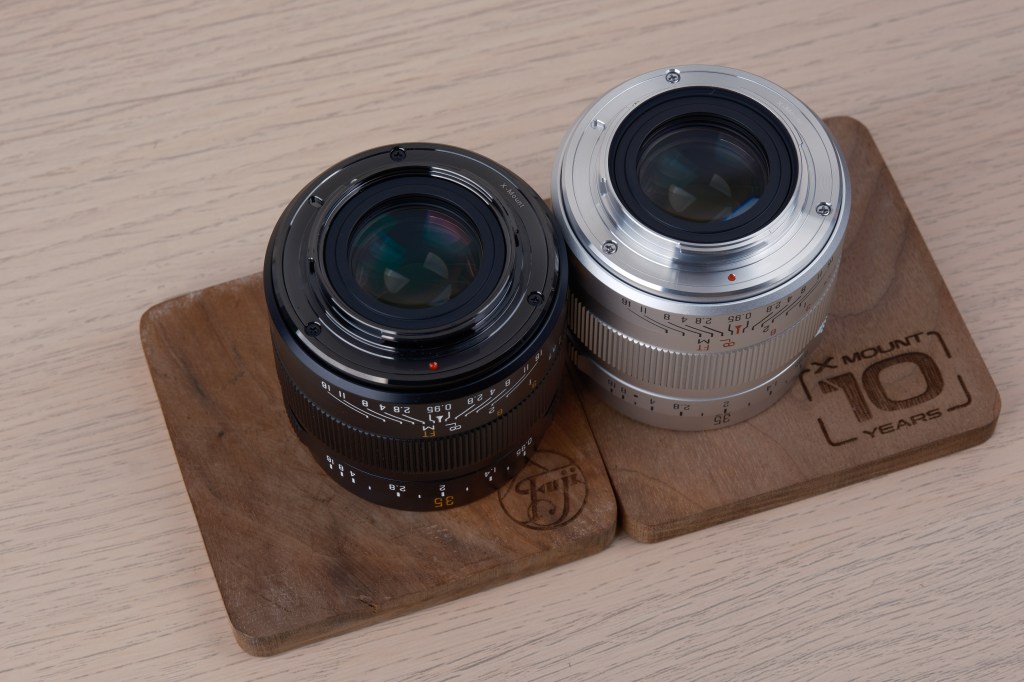
Brightin Star 35mm f0.95 Black & Silver Edition (rear)

Price Point

It is now 169.99 USD, slightly cheaper than when I reviewed it. Do you think it is a good time to get it?

Others

What’s fascinating about this lens is the lens cap. Both front and rear.

Brightin Star 35mm f0.95 Black & Silver Edition

The front lens cap now comes with a minimalistic font indicating it’s a “35mm f0.95” lens and followed by the brand itself. Again, all wordings are in black.

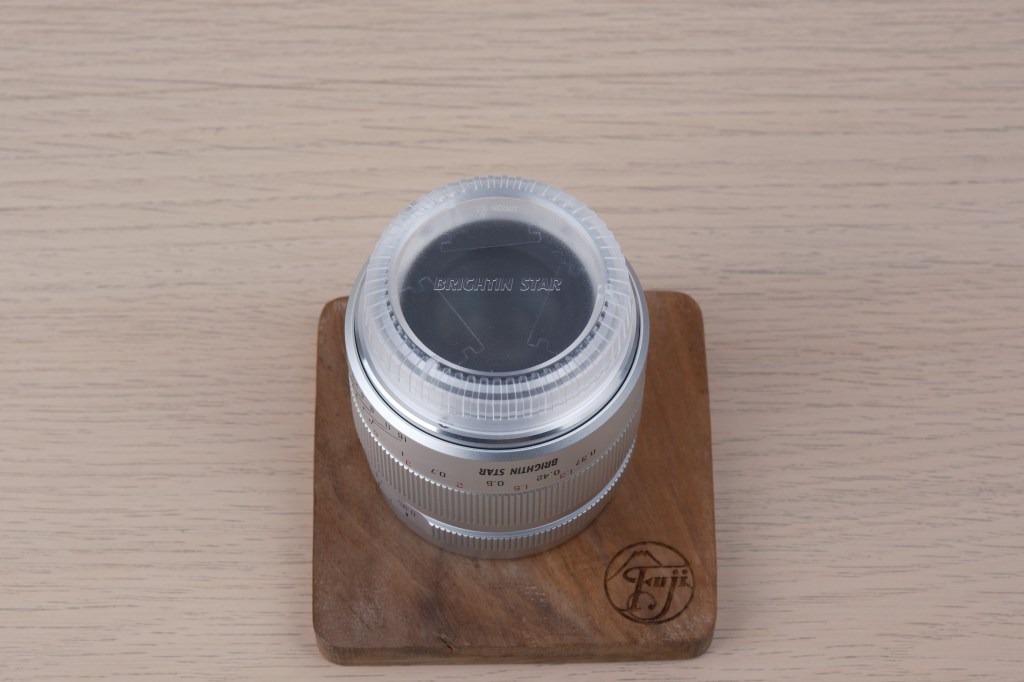
The rear lens cap comes with a frosted plastic material. I think this is the first time I am seeing something that is so interesting. Of course, the name “Brightin Star” can be seen on the rear lens cap.

Conclusion

This lens is an ingenious design from Brightin Star’s design team. They did not simply “color change” the lens and then sell it to potential photographers. I can see that they put effort and thought into this edition of the lens.

This lens is a cleverly crafted creation by Brightin Star’s design team. They put in more than just a “color change” and clearly invested time and effort into this particular version of the lens.

Fuji X-T5 . Brightin Star 35mm f0.95 @ 35mm . f0.95. 1/320″ . ISO 800 . Nostalgic Negative
Fuji X-T5 . Brightin Star 35mm f0.95 @ 35mm . f0.95. 1/320″ . ISO 320 . Nostalgic Negative
Fuji X-T5 . Brightin Star 35mm f0.95 @ 35mm . f0.95. 1/320″ . ISO 1000 . Nostalgic Negative
Fuji X-T5 . Brightin Star 35mm f0.95 @ 35mm . f0.95. 1/320″ . ISO 640 . Nostalgic Negative
Fuji X-T5 . Brightin Star 35mm f0.95 @ 35mm . f0.95. 1/320″ . ISO 400. Nostalgic Negative
Fuji X-T5 . Brightin Star 35mm f0.95 @ 35mm . f0.95. 1/320″ . ISO 200 . Nostalgic Negative
Fuji X-T5 . Brightin Star 35mm f0.95 @ 35mm . f2. 1/320″ . ISO 125 . Nostalgic Negative
Fuji X-T5 . Brightin Star 35mm f0.95 @ 35mm . f0.95. 1/950″ . ISO 125 . Nostalgic Negative
Fuji X-T5 . Brightin Star 35mm f0.95 @ 35mm . f0.95. 1/320″ . ISO 125 . Nostalgic Negative
Fuji X-T5 . Brightin Star 35mm f0.95 @ 35mm . f8. 1/1000″ . ISO 125 . Nostalgic Negative

Thank you for reading.

Disclaimer:
1. All the shots taken here are shot by me.
2. Most of the shots are straight out of the camera with some shots edited via In-Camera Raw Processing and Capture One.

3. The opinions are based on my experience. If there is any mistake, please kindly drop me a message and I will gladly make the amendment.
4. I reserve ownership of these images, if you wish to use my images, please notify me.

If you like my works, please follow me on either one of the 2 Instagram accounts:

https://www.instagram.com/alwinkok_

https://www.instagram.com/alwin.portraits

If you have a Facebook account, feel free to join Fujifanboys FB group.

If you like my content and you want to show some support and keep this blog alive, you can buy me a coffee here.
Reviews

Meike 33mm f1.4 – Checking All The Boxes, Again?

When it comes to the 33mm focal length (or 50mm in full-frame equivalent), there aren’t many options available. Unlike the 50mm to 56mm range, which is well-represented by nearly every brand, the 33mm/35mm focal length seems to lack strong competition in the market.

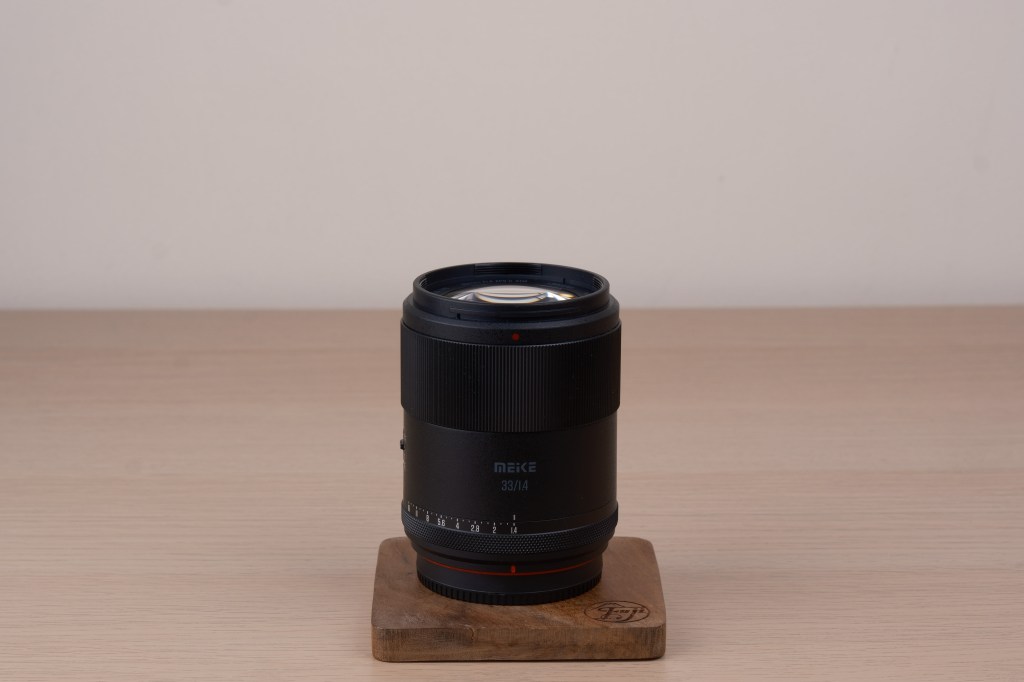
Meike 33mm f1.4

Meike likely recognized this gap in the market and released their 33mm f1.4 to attract more attention from photographers like us.

Intro

There are some teases for this lens from the company and rumors before it’s official announcement in August 2024.

Meike 33mm f1.4

Prior to this lens, Meike released the quite impressive 55mm f1.4, which I tested and really liked. I often recommend it to anyone looking for a compact and lightweight portrait lens. Because of my positive experience with that lens, I have high expectations for the Meike 33mm f/1.4.

Meike 33mm f1.4 with lens hood

Before I move on, I want to express my gratitude to the wonderful team at Meike for providing this lens for my review. I sincerely appreciate their ongoing support.

Design and Build Quality

If you have the Meike 55mm f1.4, then you will be treated with many familiarities with this lens. It shares the same design language, same build quality, and same handling experience.

Fuji X-T5 . Meike 33mm f1.4 @ 33mm . f5.6 . 1/1100″ . ISO 125 . Nostalgic Negative

This 55mm filter-size lens comes with an aperture ring. It still has the same stiffness and same clickiness level applied to the aperture ring. The stiff level is strong enough to prevent accidental change in aperture value. This can be a beneficial thing for me, but definitely not so much for the videographer.

Fuji X-T5 . Meike 33mm f1.4 @ 33mm . f1.4 . 1/1100″ . ISO 125 . Nostalgic Negative

The lens still uses a plastic build, but it doesn’t feel cheap. Holding it feels quite solid, and it doesn’t attract fingerprints easily. While I’m not sure how much weight was shaved off to bring the total weight down to 314 grams, I believe Meike must have carefully considered this balance during the design process.

Fuji X-T5 . Meike 33mm f1.4 @ 33mm . f1.4 . 1/3200″ . ISO 125 . Nostalgic Negative

Image Quality

The Meike 55mm f1.4 gives me a very satisfying result. A result that has decent image quality, good level of contrast, and good chromatic aberration control. The Meike 33mm f1.4 follows the same. After knowing that it does not produce any soft unusable result, I am very happy to use this lens wide-open.

Fuji X-T5 . Meike 33mm f1.4 @ 33mm . f1.4 . 1/2200″ . ISO 125 . Nostalgic Negative

Vignetting, however, is still present at wide-open. In my opinion, it is acceptable as I am totally fine with a small level of vignetting but not too heavy too disturbing to the overall viewing experience.

When comes to sun stars, it is just fine. The lines are not well-defined or detailed. Just fine soft lines. Of course, it does introduce some flares too.

Fuji X-T5 . Meike 33mm f1.4 @ 33mm . f16 . 1/320″ . ISO 125 . Nostalgic Negative

Focusing

Focusing is snappy in most scenarios but sometimes I do encounter the lens is not able to focus on any object at wide-open in bright outdoor and well-lit indoor environment.

Fuji X-T5 . Meike 33mm f1.4 @ 33mm . f8 . 1/680″ . ISO 125 . Nostalgic Negative

This could be a bug or just the copy I have and it only happens if I shoot at f1.4 and did not encounter similar behaviour in any other aperture values. I hope there will have a firmware update to address the focusing issue at wide-open.

Fuji X-T5 . Meike 33mm f1.4 @ 33mm . f1.4 . 1/5400″ . ISO 125 . Nostalgic Negative

If you are concerning about lens breathing, this lens has actually one of the good minimal lens breathing among the third-party manufacturers.

Minimum Focus Distance (MFD)

40cm minimum focus distance is not the shortest. Using XF33mm f1.4 as a benchmark, it’s 30cm and Sirui 33mm f1.2 shared the same MFD as the Meike 33mm f1.4.

Fuji X-T5 . Meike 33mm f1.4 @ 33mm . f1.4 . 1/80″ . ISO 800 . Nostalgic Negative
Fuji X-T5 . Meike 33mm f1.4 @ 33mm . f1.4 . 1/1600″ . ISO 125 . Nostalgic Negative

In most scenarios, short MFD does not really impact to my day-to-day shoots. Just that occasionally I wish it can close up more when I wish to do close-up shots. Nevertheless, I am glad that the image quality does not reduce significantly when taken at MFD.

Price Point

229.99 USD is what it is selling at this time of posting. It is about 3.5 times cheaper than the XF33mm f1.4 (799 USD) but comparable with the other third-party lenses like Viltrox 33mm f1.4 (279 USD) and Sirui 33mm f1.2 (279 USD).

Fuji X-T5 . Meike 33mm f1.4 @ 33mm . f1.4 . 1/1400″ . ISO 125 . Nostalgic Negative

Others

It has the USB-C port located at the rear lens to allow easy firmwares upgrades in the future. And similar to the Meike 55mm f1.4, this lens does not come with any weather sealing or weather resistance.

Meike 33mm f1.4 rear

Who is this for?

With this price point, it is easy to recommend new photographers who plan to buy their first prime lens. For the professional, this can be a good getaway lens to enjoy the love of photography.

Fuji X-T5 . Meike 33mm f1.4 @ 33mm . f8 . 1/480″ . ISO 125 . Nostalgic Negative

Conclusion

This lens may not be perfect in every aspect, but it offers solid performance for its price. In my view, Meike made a smart move by introducing this focal length to expand their lineup. I love how compact the lens is and how usable the image results are. Most importantly, I enjoy using it a lot. I’d highly recommend it to anyone looking for a budget-friendly option without breaking the bank.

Fuji X-T5 . Meike 33mm f1.4 @ 33mm . f1.4 . 1/340″ . ISO 125 . Nostalgic Negative

Alongside the Meike 55mm f1.4, the Meike 33mm f1.4 is one of the best lenses to complement it. What’s still missing, though, is a 23mm focal length (or perhaps even 22mm, given the 55mm and 33mm in the lineup) to complete a “Trinity” of lenses from Meike. While there’s no official word from the manufacturer yet, we can only hope they’ll eventually release this focal length to round out the set.

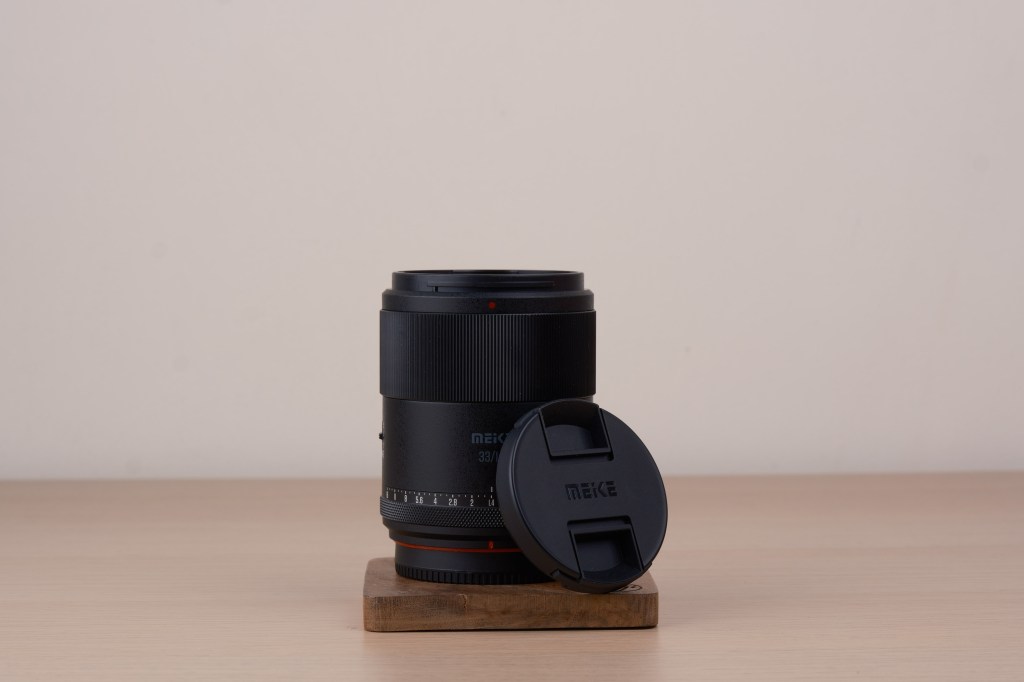
Meike 33mm f1.4 with lens cap

Thank you for reading. 

Disclaimer:
1. All the shots taken here are shot by me.
2. Most of the shots are straight out of the camera with some shots edited via In-Camera Raw Processing.

3. The opinions are based on my experience. If there is any mistake, please kindly drop me a message and I will gladly make the amendment.
4. I reserve ownership of these images, if you wish to use my images, please notify me.

If you like my works, please follow me on either one of the 2 Instagram accounts:

If you have a Facebook account, feel free to join Fujifanboys FB group.

If you like my content and you want to show some support and keep this blog alive, you can buy me a coffee here.

Reviews

Brightin Star 50mm f1.4 – The First AF Lens

The 50mm focal length (equivalent to 75mm in full frame) or similar focal length is a favorite among both manufacturers and photographers, showcasing its popularity. Most brands offer one or two standout lenses in this category. However, the real question is: Can this lens differentiate itself from the competition?

Brightin Star 50mm f1.4

Intro

Before I proceed, I would like to take the opportunity to thank Brightin Star for sending this lens over for my review. Having said that, the review is based on personal experience and zero influence from the manufacturer.

This is Brightin Star first first-ever autofocus lens. It’s a great deal for the manufacturer and I am always happy to see more and more third-party lenses joining the Fuji family. This gives us one more option to choose from.

Design and Build Quality

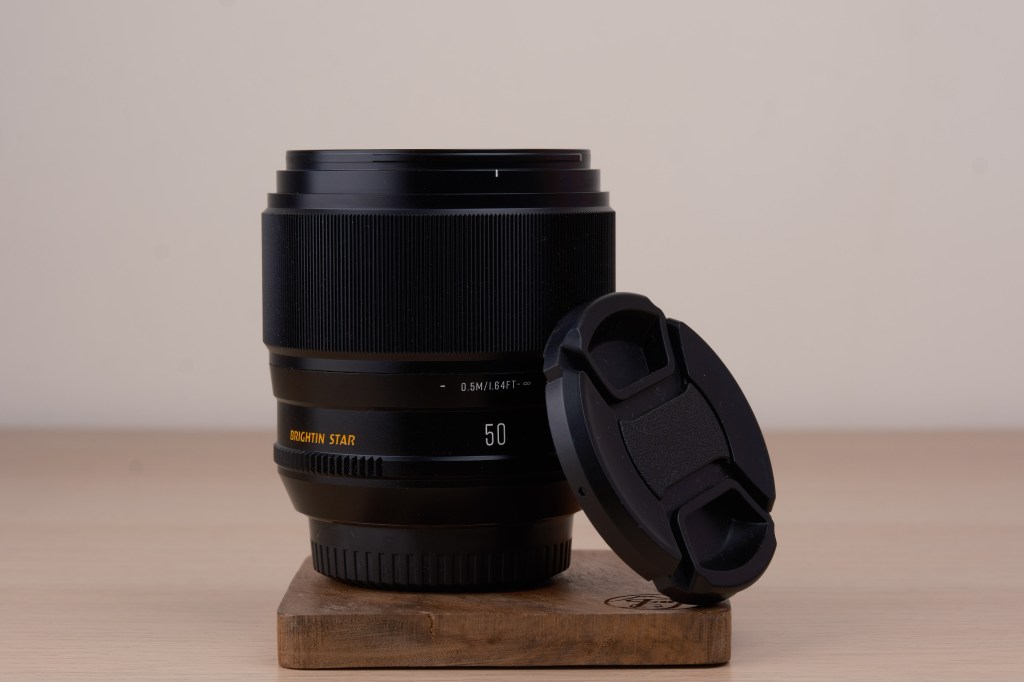
At a glance, the striking yellow brand label is prominently marked on the lens body, and it resembles somewhat similar to a red badge brand. Nonetheless, it easily gives everyone a good impression of the brand. Oh yes, it comes with metal-built quality, which adds a touch of premium quality.

Fuji X-T5 . Brightin Star 50mm f1.4 @ 50mm . f1.4. 1/1500″ . ISO 125 . Nostalgic Negative

Despite the presence of a textured half ring where the aperture ring would typically be located, this lens does not actually have one. I found myself attempting to rotate the “ring” only to discover that it was not present.

It’s a pity to see them missing out on the aperture ring. I was informed that by implementing the aperture ring, the height of the lens will be increased by at least 2cm. I guess the engineers behind this lens have some consideration and come out with this decision. Probably we might see one with the aperture ring someday?

Fuji X-T5 . Brightin Star 50mm f1.4 @ 50mm . f1.4. 1/150″ . ISO 125 . Nostalgic Negative

With the weight of 445 grams, I can feel the weight when I hold the lens in my hand but it feels well-balanced when I mount it on my X-T5.

Fuji X-T5 . Brightin Star 50mm f1.4 @ 50mm . f1.4. 1/80″ . ISO 320 . Nostalgic Negative

It comes with a 58mm filter. I am glad that it comes with a small filter size, which does not require photographers to cough out a huge amount of money for a larger filter size.

Image Quality

My experience with Brightin Star 35mn f0.95 was positive and so I have a high expectation for this lens. I am glad that this lens did meet my expectations. The image quality is great at wide-open.

Fuji X-T5 . Brightin Star 50mm f1.4 @ 50mm . f1.4. 1/250″ . ISO 1250 . Nostalgic Negative

The sharpness at wide-open is great but still falls behind the XF56mm f1.2. When comes to contrast, it seems to be slightly lacking too. I do not worry much about it since it can be done via post-edit. Nonetheless, vignetting and chromatic aberration are well-controlled.

When it comes to the background/foreground blur rendering, it is not the best rendering. But at least it is not something dramatic, nor is it messy.

One observation I’ve made is that, despite having the lens hood attached to the front, some flares are still able to penetrate and reach the glass. It’s uncertain whether this is due to the way I shoot, but it’s worth being aware of. However, the flare does not significantly diminish the quality of the captured image. It retains a good level of contrast on the subject while adding a unique character to the shot.

Fuji X-T5 . Brightin Star 50mm f1.4 @ 50mm . f16. 1/80″ . ISO 160 . Nostalgic Negative

When it comes to the sun star result, the line is not the sharpest nor the lines are well-defined. The result is pretty dull in my opinion.

Focusing

This lens is equipped with a Stepper Motor (STM), and the focusing is considerably snappy for so many glass elements inside the lens. I have no issue with focusing on both bright days and well-lit environments. For low-light situations, I do experience occasionally a little slower autofocus performance. But it’s not a deal breaker for me.

Fuji X-T5 . Brightin Star 50mm f1.4 @ 50mm . f5.6. 1/350″ . ISO 125 . Nostalgic Negative

In terms of eye-AF for portrait photography, the combination with the X-T5 performs well. It achieves a high success rate, with only a minimal number of out-of-focus results.

Fuji X-T5 . Brightin Star 50mm f1.4 @ 50mm . f1.4. 1/125″ . ISO 3200 . Nostalgic Negative

I also encounter a few times when the focus is off when the focus box is already in green. I think this can be fixed by future firmware updates.

The focus breathing is a surprising minimum and I think this helps for videography.

Minimum Focus Distance (MFD)

It has a 50cm MFD, which is a little fall-short as compared with XF50mm f2 (39cm), Yongnuo 50mm f1.8 (45cm), but slightly better than Meike 55mm f1.4 (61cm), and Sirui 56mm f1.2 (60cm).

Fuji X-T5 . Brightin Star 50mm f1.4 @ 50mm . f1.4. 1/80″ . ISO 160 . Nostalgic Negative

The MFD is just nice, and it is nothing to shout about. At least, the focus distance since any further than the competitions. In my observation, the image quality still preserved well with a minimal amount of softness is observed at wide-open. No sign of losing in contrast.

Fuji X-T5 . Brightin Star 50mm f1.4 @ 50mm . f1.4. 1/80″ . ISO 200 . Nostalgic Negative

Price Point

It is priced at 299 USD. This is an attractive yet competitive price point for getting this amazing glass. Taking references from other similar focal length lenses like Sirui 56mm (279 USD), Yongnuo 50mm f1.8 (299 USD), Meike 55mm f1.4 (200 USD), Sigma 56mm f1.4 (529 USD), TTArtisan 56mm f1.8 (158 USD) and lastly XF50mm f2 (449 USD), this newly launched lens is actually quite reasonable.

Fuji X-T5 . Brightin Star 50mm f1.4 @ 50mm . f2. 1/4000″ . ISO 125 . Nostalgic Negative

Others

It comes with a USB-C port right at the rear of the lens mount, like many other third-party manufacturers do. This is mainly for future firmware updates.

USB-C port at the rear lens. (Love the black chrome color)

According to Brightin Star, this lens does come with waterproofing, drip proofing, and dust proofing. Also, it comes with an anti-fouling fluorine coating that allows the stains that fall onto the lens to be easily removed. This surprised me, and I consider it to be a bonus point.

Brightin Star 50mm f1.4 with lens hood

You might have noticed that there is something on the lens hood. It comes with a different lock release mechanism. When the lens hood is in the forward position, you need to press the button to detach it. However, this design only works one way, the lens hood is not able to lock when placed in the reverse position.

Who is this for?

We all know this focal length is suitable for the portrait genre, but this focal length is also suitable for the street genre, product genre, and journalism/documentary genre as well.

Fuji X-T5 . Brightin Star 50mm f1.4 @ 50mm . f2. 1/80″ . ISO 160 . Nostalgic Negative

If you are new to Fujifilm and looking to start building a collection of prime lenses, this lens is both affordable and reliable for long-term use.

For seasoned photographers looking to experiment with third-party lenses, this could be the next lens to consider, as long as you are willing to accept that it lacks an aperture ring.

Conclusion

I have to emphasize again that this is Brightin Star’s first autofocus lens. Although it is not the perfect lens everyone is looking for (such as missing aperture ring and weight), the decent image quality and price tag is something worth considering.

In my opinion, image quality should be the higher priority among all functionalities, and I think the engineering effort for this lens deserves good praise. Nevertheless, this is a worthy lens, and I am already looking forward to their next autofocus lens.

Thank you for reading.

Disclaimer:
1. All the shots taken here are shot by me.
2. Most of the shots are straight out of the camera with some shots edited via In-Camera Raw Processing and Capture One.

3. The opinions are based on my experience. If there is any mistake, please kindly drop me a message and I will gladly make the amendment.
4. I reserve ownership of these images, if you wish to use my images, please notify me.

If you like my works, please follow me on either one of the 2 Instagram accounts:

https://www.instagram.com/alwinkok_

https://www.instagram.com/alwin.portraits

If you have a Facebook account, feel free to join Fujifanboys FB group.

If you like my content and you want to show some support and keep this blog alive, you can buy me a coffee here.

Reviews

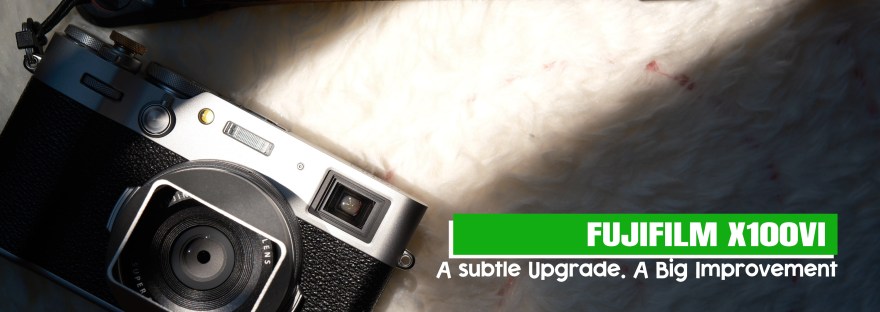
Fujifilm X100VI – A subtle Upgrade. A Big Improvement

It’s been four years since I’ve had my X100V in hand. Specifically, I first picked up this gem on 27 February 2020, and time has truly flown by. While this camera has been a faithful companion, my fully occupied full-time work and remaining time spent testing out other lenses has given me little time to devote to it. However, whenever I do get the chance, I ensure that the moments spent with it are of the highest quality.

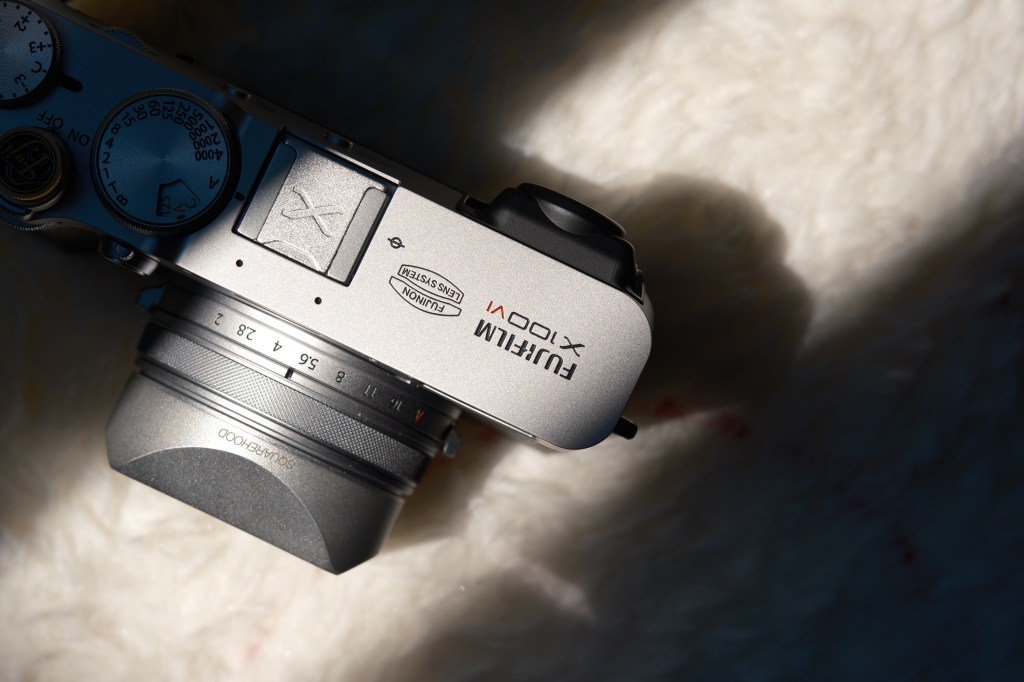
Fujifilm X100VI

Intro

The X100V successor was announced on the 20 February 2024 X-summit Tokyo. But before the announcement, Fujifilm had already teased us with 2 teasers. So it is not much of a surprise and those who know already expected what camera is coming up for the announcement. So what remains unknown are the guts of the camera.

Fujifilm X100VI
Fujifilm X100VI

Design and Build Quality

The build quality is premium, which has always been the case since the X100 era. You can tell by holding the camera and feeling how nicely the camera is engineered and crafted.

Fuji X100VI . 23mm f2 @ 23mm . f5.6 . 1/900″ . ISO 250 . Reala Ace

As for design, it is pretty much the same as its predecessor, X100V, which is also very similar to each iteration.

This is exactly what Masazumi Imai San intention is. He wants other people to identify the camera as an “X100” camera but cannot tell which generation this X100 camera is from as far as 3 meters away.

Fuji X100VI . 23mm f2 @ 23mm . f2 . 1/5800″ . ISO 250 . Reala Ace

On paper, the X100VI is actually 2mm thicker than its predecessor. Because it is now 2mm thicker, he also designed the handgrip to be 0.5 mm deeper than the X100V, which he deemed that this is the best comfort grip for this 521 grams gear.

The first is the noticeable color change for the viewfinder selector. It has changed from red to silver/black color that goes according to the silver/black or of the camera.

Fuji X100VI . 23mm f2 @ 23mm . f2 . 1/80″ . ISO 320 . Reala Ace

From the back, the “drive/delete” button has shifted more closer for easier reachability for the right thumb. I do not have problem reaching the button back then but Fujifilm might have considered photographers who have smaller hands.

Lastly is the tripod mount. It has shifted away from the center and a few millimeters towards the edge of the front camera.

Handling & The Shutter

The handling of the camera is identical to the X100V, it is great in my opinion. Unfortunately (or fortunately to some?), I did not feel any different from the deeper 0.5mm handgrip. For photographers who prefer a deeper grip will have to purchase an additional hand grip.

Fuji X100VI . 23mm f2 @ 23mm . f5.6 . 1/280″ . ISO 125 . Reala Ace

Speaking of leaf shutter, it still stay with the camera and it is part of the X100 tradition.

Sensor and Processor

X-Trans CMOS sensor 5 HR and the X-Processor 5 are the core of the X100VI. If you follow Fujifilm, this is the third camera using this setup (according to the announcement date). In short, no need to explain further how capable is this 40-megapixel sensor and the processor that handles it.

Fuji X100VI . 23mm f2 @ 23mm . f2 . 1/1900″ . ISO 250 . Reala Ace

I have also shared my experiences with the sensor on both X-H2 and X-T5.

Image Quality

Surprise surprise. Fujifilm is using back the same lens from X100V which is a re-designed lens from the predecessors like the X100F, X100T, X100S, and the OG X100. Since Fujifilm is using back the optic from X100V, does this mean that Fujifilm has already well-planned way before launching X100V?

Fuji X100VI . 23mm f2 @ 23mm . f2 . 1/600″ . ISO 250 . Reala Ace

Combined with the latest generation sensor and processor, the image quality is still great. It has met my expectations. The sharpness and contrast are fantastic and well-balanced across the frame. Chromatic aberration is nowhere to be found and I am not expecting that to happen. A little vignetting can be seen, but it is not affecting me at all. Probably already been processed for jpeg but nonetheless, I am pleased with the results.

Pairing up with Wide Conversion Lens and Tele Conversion Lens is good and surprisingly still maintains the same image quality. At least I do not see any drop in image quality.

It comes with a 10cm minimum focus distance. This pretty much helps the photographer to have the option to get closer to the subject if he/she needs it.

Fuji X100VI . 23mm f2 @ 23mm . f5 . 1/15″ . ISO 160 . Reala Ace

Performance

It shares the same “snappy” with occasionally focus pulling like its predecessor but it does not happen frequently. The focus hunting does come when there is a lack of contrast or low light condition and I think it is acceptable for my usage. Overall, it doesn’t impact my X100 series shooting experience.

The eye-AF tracking performs identically to the other cameras that use X-Processor 5.

IBIS

It is a marvel of engineering for Fujifilm engineers to be able to pack a 5-axis IBIS system that is capable of providing up to 6 stops. Impressive work there.

Fuji X100VI . 23mm f2 @ 23mm . f2 . 0.6″ . ISO 125 . Reala Ace

As for practicality, it can help to support up to x seconds handheld for my shaky hands. What do you think?

Fuji X100VI . 23mm f2 @ 23mm . f2 . 0.7″ . ISO 125 . Reala Ace

For me, I can hold the camera as slowly as 0.6 seconds with one hand and still achieve a very decent success hit rate.

Battery Life

It is using back the same NP-W126S battery. My first thought was that the battery was not going to last. I was wrong. The battery life is improved. Though not by a margin, it is slightly better than the predecessors. I think it has to do with the new X-Trans 5 processor that makes the battery life even more efficient.

In my test, I can take approximately 450 shots on average with some photos transferred to the phone. While it is slightly lower than X-T50, it is still not an issue for me. Just bring more batteries. My way of shooting is simply to turn on, shoot, and turn off.

Feedback

The battery is what most people are concerned about for this model and since NP-W235 is missing, I hope to see the successor of X100VI have the NP-W235 instead of NP-W126S. Meanwhile, we will just need to bring an extra battery or two and put it inside our pockets.

Fuji X100VI . 23mm f2 @ 23mm . f2 . 1/80″ . ISO 500 . Reala Ace

Fujifilm chose to keep the 4-stop built-in ND filter in this generation. What I hope to that Fujifilm will make one more built-in ND filter and allow photographers to choose between 4 stops and 8 stops (for example only) for their shoot. Probably even better for a videographer?

Price Point

At 1599 USD, it is pretty expensive and is 200 USD more than its predecessor. But with all the newest technologies from Fujifilm packed into this compact package, I think I can accept it.

Others

After 5 generations of the X100 series, this is the first that is made outside of Japan. Does that mean the build quality is no longer on par with the predecessors?

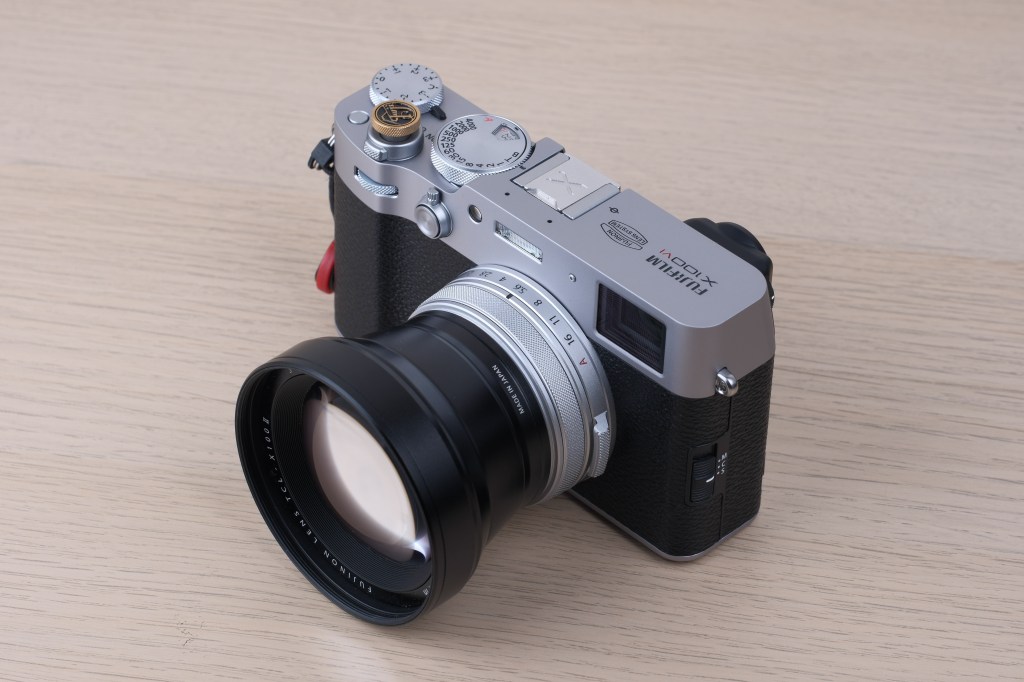
Fujifilm X100VI with WCL and TCL

If Fujifilm did not inform us about where it is made from, I think everyone assumes this generation is still made in Japan. It is so hard to differentiate by just physical touch. This is not the first product that Fujifilm made outside of Japan and I believe Fujifilm does set a certain standard for the other country makers to follow the protocol and quality control set by Fujifilm. If someone is having this concern, I think don’t worry about it.

Who is this for?

This camera can be for everyone and anyone. From a hobbyist to a professional photographer, a parent who wants to capture every moment of his/her kids, a person who loves to have a memorable gathering or someone who just wants to have a camera with a “one lens fits all” concept, or even travelers.

Fuji X100VI . 23mm f2 @ 23mm . f2 . 1/15″ . ISO 3200 . Reala Ace

In my own words

X100 series is a unique product and it holds a special place in my heart. In my opinion, it is still one of the best “Every Day Camera” options. If I have ever had difficulty in deciding what lens to bring out to pair with my X-T5, then the X100 camera will be the only choice. I do not need to think, just grab it and go.

Fuji X100VI . 23mm f2 @ 23mm . f5.6 . 1/120″ . ISO 250 . Reala Ace

X100 VI is the latest and it is the best X100 series yet. No doubt getting one might be a problem now. But if you pick it up from the retail dealer (not scalpers), spend a good time with it. Give yourself a good time admiring its look, hold it up, and feel it. Then power up, click the shutters, and snap some shots. Listen to the shutter “clicks” when you press down the shutters. It gives a good serene experience in return. A good camera to slow down my pace and wander the street through the viewfinder.

Fuji X100VI . 23mm f2 @ 23mm . f5.6 . 1/2500″ . ISO 250 . Reala Ace

Conclusion

As my title suggests, it may seem like a minor upgrade but it turns out to be a great improvement over the X100V. I love it and I hope I can spend more time with it in the future. I also understand that it is totally a challenge to take one from official retailers but I urge potential buyers not to buy from scalpers. I hope serious photographers will get one on their hands.

Fuji X100VI . 23mm f2 @ 23mm . f5.6 . 1/2500″ . ISO 250 . Reala Ace

Thank you for reading. 

If you like my works, please follows me on either one of the 2 Instagram accounts:

https://www.instagram.com/alwinkok_

https://www.instagram.com/alwin.portraits

Disclaimer:
1. All the shots taken here are shot by me. 
2. All of the shots
 are straight out of the camera with some edited via In-Camera Raw Processing.
3. The photos are resized to 30% of the original size except for cropped ones. If you wish to see the original file, contact me and I will be happy to share it with you.
4. I reserve ownership of these images, if you wish to use my images, please notify me.
5. The opinions are based on my experience. If there is any mistake, please kindly drop me a message and I will gladly make the amendment.

If you like my content and you want to show some support, you can buy me a coffee here.

Reviews

XF16-50mm – The Replacement of the Legendary Kit Lens

The XF18-55mm f/2.8-4 is undeniably one of the most standout lenses in Fujifilm’s X-mount lineup. Even Chris and Jordan of Petapixel agreed too. It is also my very first lens with my very first X-Mount camera.

XF16-50mm f2.8-4.8

So Fujifilm has given us it’s successor: XF16-50mm f2.8-4.8 R LM WR. Do you think it is a worthy one?

Intro

The long-waited premium kit lens was announced together with the X-T50 at the X-Summit Sydney 2024. The focal lengths (in full frame equivalent) is 24mm to 75mm and it is no stranger to us. This focal length was first ever introduce to us in 2013 in a form of XC16-5mm f3.5-5.6 OIS (version II was updated in 2015).

XF16-50mm f2.8-4.8

As stated in the name of this lens, the aperture value is variable throughout the lens. This means it’s maximum aperture is f2.8 at 16mm and f4.8 at 50mm.

Before I dive in further, I want to extend my thanks to Ms. Carmen, Marketing Manager at Fujifilm Singapore, for lending the XF16-50mm for review. As of the publication of this review, the lens unit has been returned to Fujifilm Singapore.

Design and Build Quality

When I first saw this lens at the launch event, I was impressed by its size. Visually, it is very similar to the XF18-55mm in size. In terms of built quality, it is the same as the new generation XF lenses. Solid and well-built.

XF16-50mm f2.8-4.8

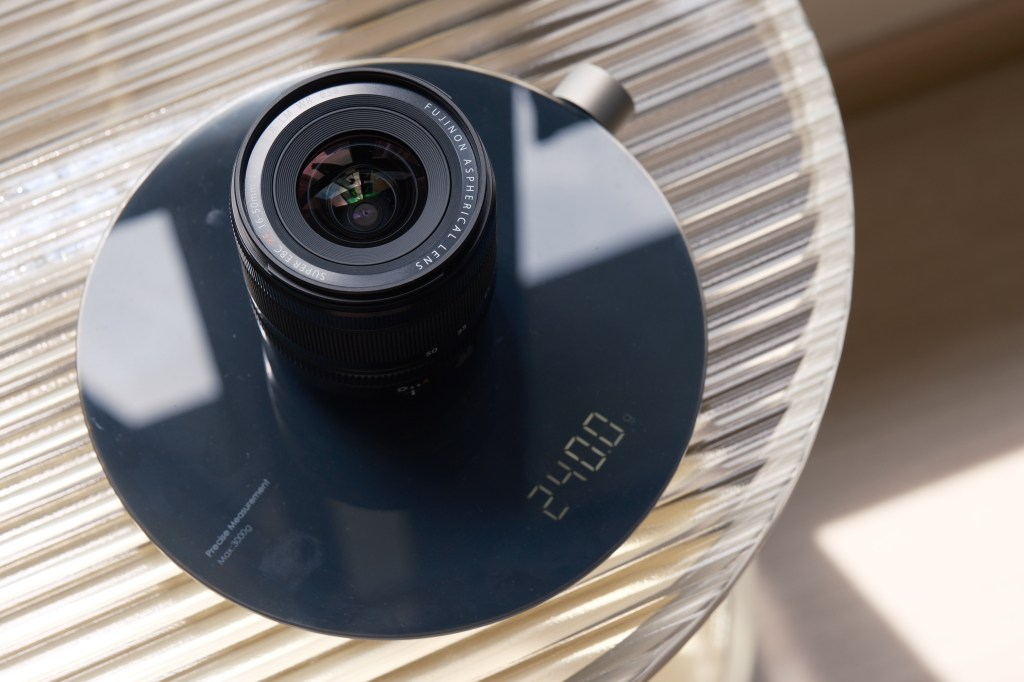
At 240 grams, it feels light on the hand, and due to its compact size, it is easy to hold too. Here comes the first thing that I like about the lens. It is internal zoom, which means it does not protrude when I zoom in and also does not feel “lost balance” when I use the lens at tele. Fujifilm has developed several internal zoom lenses, such as the XF8-16mm f2.8, XF18-120mm f4, and XF150-600mm f5.6-8. Another benefit of having internal zoom is for videographers but I am not about the small aperture value at 50mm.

Fuji X-T50 . XF16-50mm f2.8-4.8 @ 50mm . f4.8 . 1/800″ . ISO 125 . Reala Ace

It comes with an Aperture Mode Switch, which allows the photographer to choose if he/she wants to control the aperture by himself/herself or leave it to the camera to decide for you.

A little bit more about the aperture ring. Unlike Fujifilm prime lenses, it does not have aperture values labeled on the ring. It is simply a “controller” that continues to rotate regardless of whether it has reached its maximum or minimum aperture value, in either direction (clockwise or counterclockwise). The aperture ring is clicky and less stiff than the one on the prime lenses. Anyway, you need to take note of the aperture value before you shoot as you might accidentally rotate the aperture ring without noticing.

Fuji X-T50 . XF16-50mm f2.8-4.8 @ 43.2mm . f4.5 . 1/850″ . ISO 250 . Reala Ace

So yes… Did I mention it’s a 58mm filter size?

Image Quality

This lens is designed to resolve the X-Trans CMOS sensor 5 HR and I think Fujifilm keep their promise.

As a zoom lens, the image quality from this lens is pretty great. It has good sharpness and contrast across all focal lengths. Vignetting is well-controlled and chromatic aberration is nowhere to be seen. This is what I have expected from Fujifilm.

Fuji X-T50 . XF16-50mm f2.8-4.8 @ 32.3mm . f5.6 . 1/125″ . ISO 250 . Reala Ace

However, the rendering of the background/off focus blur varies as you zoom. That’s because it is a variable apertures lens. But it is still able to give a good amount of separation between the off-focus and subject. This is normal for a variable zoom lens as oppose to prime lens.

As for sun star, it is there if you need it in your shot but the result is not the finest one out there in the market.

Fuji X-T50 . XF16-50mm f2.8-4.8 @ 50mm . f22 . 1/80″ . ISO 125 . Reala Ace

Focusing

Since it comes with a Linear Motor, I am not expecting a poor autofocus performance from this. I was not disappointed. Although it is not as instantaneously focused and locked onto the subject as fast as the prime lenses, it is still pretty decent for a zoom lens. The autofocus is snappy across all focal lengths. Even when it is under a low-light situation, it’s performance is slightly poor but still very good for day-to-day use.

Fuji X-T50 . XF16-50mm f2.8-4.8 @ 35.3mm . f3.9 . 1/80″ . ISO 1600 . Reala Ace

Minimum Focus Distance (MFD)

What I like about this lens is the MFD. It comes with a fixed 24cm. Meaning the MFD does not change when you change your focal length. This also means that this lens is capable of shooting at a close-up of an object. It is even closer than Sigma 18-50mm at 50mm (which is at 30cm).

Fuji X-T50 . XF16-50mm f2.8-4.8 @ 50mm . f4.8 . 1/300″ . ISO 250 . Reala Ace

However, the lens optics do exhibit some loss in image quality, leading to softer and less contrasty results. But it looks fine if you don’t pixel-peeping.

Price Point

It is priced the same as the XF18-55mm (currently not in stock in B&H) at 699 USD. Do you think the price is steep? I think it is a little steep for a kit lens but on second thought, it is a premium one. That’s probably explain why.

Fuji X-T50 . XF16-50mm f2.8-4.8 @ 18.5mm . f5 . 1/340″ . ISO 125 . Reala Ace

As of this point in time, the lens is only available as a kit lens (at least in Singapore).

Others

Like most new generation Fujifilm lenses, it does come with weather-resistant.

Another point to note is that this lens does not come with an Optical Image Stabilization (OIS). Is it important? Yes and no.

Fuji X-T50 . XF16-50mm f2.8-4.8 @ 34.3mm . f3.9 . 1/835000″ . ISO 250 . Reala Ace

Yes if your camera is not equipped with In-Body Image Stabilization (IBIS). Unless you are fine with higher ISO under low-light situations, you might struggle to take steady shots at 50mm due to low shutter speed.

Fuji X-T50 . XF16-50mm f2.8-4.8 @ 50mm . f4.8 . 1/1000″ . ISO 250 . Reala Ace

No, if your camera is already equipped with the IBIS like the X-H2S, X-H2, X-T5, X-S20, etc., then the IBIS will help out for steady shots at low shutter speed.

Who is this for?

This is a good lens for a beginner to pick up and it is a very versatile lens that covers most genres. It’s also beneficial for photographers to identify their most frequently used focal length before delving into more specific options.

Fuji X-T50 . XF16-50mm f2.8-4.8 @ 18.5mm . f3 . 1/100″ . ISO 640 . Reala Ace

Also, it is good for travelers who prefer to keep their setup as light as possible and as minimal as possible; like pairing up with the new camera, X-T50.

Conclusion

It is a small and also an all-propose lens. During my testing period, it is delightful to use together with the X-T50. However, is it timed correctly for its launch? I’m uncertain. Nowadays, there are plenty of third-party lenses available, such as the Sigma 18-50mm and Tamron 17-70mm. The XF16-50mm might face tough competition in winning over photographers’ favor.

Fuji X-T50 . XF16-50mm f2.8-4.8 @ 50mm . f4.8 . 1/80″ . ISO 2500 . Reala Ace

Having said that, I am not saying it is a bad lens to pick up. I would advise photographers who are interested to visit a camera store and try it out before deciding which lens suits them best. The XF16-50mm is a good replacement for the XF18-55mm but it doesn’t hold the same place in my affection that the XF18-55mm does.

XF16-50mm f2.8-4.8 with lens hood

Thank you for reading.

Disclaimer:
1. All the shots taken here are shot by me.
2. Most of the shots are straight out of the camera with some shots edited via In-Camera Raw Processing.

3. The opinions are based on my experience. If there is any mistake, please kindly drop me a message and I will gladly make the amendment.
4. I reserve ownership of these images, if you wish to use my images, please notify me.

If you like my works, please follow me on either one of the 2 Instagram accounts:

https://www.instagram.com/alwinkok_

https://www.instagram.com/alwin.portraits

If you have a Facebook account, feel free to join Fujifanboys FB group.

If you like my content and you want to show some support and keep this blog alive, you can buy me a coffee here.

Reviews

Sirui 56mm f1.2 – The First Attempt (III)

This is the last of the Sniper lenses I have with me. By now, if you have read the first two lenses, I guess you should know my opinion of this series. Anyway, I still need to finish sharing my opinion of this focal length.

Sirui 56mm f1.2

Intro

This is the third lens introduced by Sirui together with the 23mm f1.2 and 33mm f1.2. In summary, they started with crowdfunding from one of the popular platforms and this Sniper series succeeded.

Fuji X-T5 . Sirui 56mm f1.2 @ 56mm . f1.2. 1/750″ . ISO 125 . Nostalgic Negative

Design and Build Quality

For some reasons, the “white ceramic coating” or simply white plastic seems to be the worse built quality among the three colors. Having said that, it still far better than the Meike 85mm f1.8. That’s my opinion. As part of the Sniper family, it shares many similarities such as filter size (58mm), no aperture ring and no weather resistant. Also they share the same length as well. This is beneficial to videographers who need to mount on a gimbal.

Fuji X-T5 . Sirui 56mm f1.2 @ 56mm . f5.6. 1/55″ . ISO 3200 . Nostalgic Negative

At 419 grams, the weight of this lens feels okay. Although it may seem heavy, it is evenly distributed. Like its siblings, it comes with a lens hood. The difference is that it comes with a round lens hood instead of a petal-shaped lens hood.

Image Quality

Optically, it shares a lot of similarities with the Sniper family. At f1.2, the image is soft and lacks contrast. Coupled with it are the mild vignetting and strong chromatic aberration. Of course, everything gets better when stopping down. For my acceptance, f2 is the minimum f-stop for sharpness and contrast.

Fuji X-T5 . Sirui 56mm f1.2 @ 56mm . f1.2. 1/220″ . ISO 125 . Nostalgic Negative

The rendering of the background blur is not as smooth as I expected. Somehow it looks kind of hard and unpleasant. Or maybe it is something that I don’t appreciate?

Focusing

It comes with a Stepper Motor (STM). The focus is okay. It is not as snappy as the XF56mm f1.2 WR (just using it as a benchmark). Probably quite average among the rest of the 56mm focal length.

Fuji X-T5 . Sirui 56mm f1.2 @ 56mm . f1.2. 1/240″ . ISO 125. Nostalgic Negative

On average, I do encounter some pull-push effect before focus is locked on my subject. Not every time, but encounter it quite often. Hard to catch the behavior here but fail to do so. I hope the future firmware provides some remedies.

Also, the manual ring is different from the typical manual ring, this one can do a 360° rotation angle electronic focus ring. For photography per SE, I think it might help with precision focusing but I believe this benefits videography more. 

Minimum Focus Distance (MFD)

For a typical 85mm (in full frame equivalent), what is your expectation for a MFD for this focal length?

Fuji X-T5 . Sirui 56mm f1.2 @ 56mm . f1.2. 1/80″ . ISO 200 . Nostalgic Negative

To share some examples of what other 56mm lenses MFD are: TTArtisan 56mm f1.8 is 50cm, XF56mm f1.2 WR is 50cm, Meike 55mm f1.4 is 60cm and Sigma 56mm f1.4 is 50cm.

Fuji X-T5 . Sirui 56mm f1.2 @ 56mm . f1.2. 1/180″ . ISO 125 . Nostalgic Negative

The MFD of this lens is 60cm. Not quite on par with the average one but not any worse. The image quality, fortunately, isn’t degraded any worse too.

Price Point

At 279 USD (discount from the usual price at $349 USD from it’s official store), it is a good price point for a f1.2 autofocus lens. Or 799 USD for the 3 lenses.

For a quick comparison, XF56Mm f1.2 WR is priced at 999 USD, Meike 55mm f1.4 is priced at 199.9 USD, Sigma 56mm f1.4 is priced at 479 USD, and Viltrox 56mm f1.4 is priced at 299 USD. Is the price attractive?

Others

Like all other Sniper lenses, it comes with an USB-C port for future firmware update.

Sirui 56mm f1.2 – rear

Also, it comes with a circular lens hood but mounting and dismounting it gives a quirky noise that always makes me think that I am breaking it anytime with a little pressure. Probably I have a bad copy of the lens hood?

Lastly, it has a thin lens cap (similar to its siblings) which gives me some problems when removing the lens cap from the lens. That’s because the pinch-to-release area is too narrow for big fingers (like mine) to pinch and remove the cap without any level of struggling.

Who is this for?

This 85mm (in full frame equivalent) focal length is suitable for the portrait genre. But not only that, this lens is also suitable for product shots, street, documentary, etc.

Fuji X-T5 . Sirui 56mm f1.2 @ 56mm . f1.2. 1/4000″ . ISO 125 . Nostalgic Negative

If you are a new photographer and have a limited budget, this lens together with its siblings forms good trinity lenses for a starter. Only if you are acceptable with its not-so-perfect image quality.

Conclusion

We do not lack any third-party autofocus lenses for Fujifilm. If you are looking for a “complete set” of third-party lenses, there are a few brands that I can think of at the moment; Sigma and Viltrox.

Fuji X-T5 . Sirui 56mm f1.2 @ 56mm . f10. 1/125″ . ISO 125 . Nostalgic Negative

Considering the price point, I find this lens acceptable, especially since it’s an f1.2 prime rather than the typical f1.4. However, I may have overestimated its capabilities. Nevertheless, I’m eagerly anticipating the release of their “Mark II” Sniper lenses, hoping for significant improvements in this series.

Oh yes, Sirui has launched another 2 new Sniper lenses, the 16mm f1.2, and the 75mm f1.2.

Thank you for reading. 

Disclaimer:
1. All the shots taken here are shot by me.
2. Most of the shots are straight out of the camera with some shots edited via In-Camera Raw Processing.

3. The opinions are based on my experience. If there is any mistake, please kindly drop me a message and I will gladly make the amendment.
4. I reserve ownership of these images, if you wish to use my images, please notify me.

If you like my works, please follow me on either one of the 2 Instagram accounts:

https://www.instagram.com/alwinkok_

https://www.instagram.com/alwin.portraits

If you have a Facebook account, feel free to join Fujifanboys FB group.

If you like my content and you want to show some support and keep this blog alive, you can buy me a coffee here.
Reviews

Sirui 23mm f1.2 – The First Attempt (II)

I have recently shared my opinion about the Sirui 33mm f1.2 and this is the second lens from the Sirui Sniper series.

Intro

To keep things short, this series was first introduced via a crowdfunding platform and, they were successfully funded as expected.

Design and Build Quality

The aluminum alloy or silver color (in my opinion) option seems to be less fancy than the white and black/carbon fiber one. The color is also duller and less reflective than the silver XF lenses.

It is plastic-made build quality. Not the worst one but it’s also not the best plastic build either. However, the 380-gram lens is well-balanced on hand but I can feel the weight. This lens also shared the same 58mm filter size as the Sirui 33mm f1.2.

Fuji X-T5 . Sirui 23mm f1.2 @ 23mm . f1.2. 1/1700″ . ISO 125 . Nostalgic Negative
Fuji X-T5 . Sirui 23mm f1.2 @ 23mm . f1.2. 1/90″ . ISO 125 . Nostalgic Negative

And yes, it comes with a petal-shaped lens hood and metal rear mount.

Since it comes from the Sniper family, missing the aperture ring is one of them. (There are more similarities later.) It comes with an electronic manual ring, which means it comes with a 360° smooth rotation angle.

Image Quality

At f1.2, softness and weak contrast are pretty obvious. In my opinion, sometimes I am unsure if I have nailed the shots with such an image quality. While there are photographers who might like this level of softness, I can’t accept it. I would probably close one eye if this lens were to be released a few years back. For my personal acceptance, f2 is the base with f2.8 for better results.

Fuji X-T5 . Sirui 23mm f1.2 @ 23mm . f1.2. 1/80″ . ISO 1000 . Nostalgic Negative

Vignetting at the corners is acceptable but the chromatic aberration is obvious for wide-open shots.

The foreground/background blur rendering is not my favorite. It seems to be “hard” or I should say the transition is not as smooth as I am expecting it to be.

Fuji X-T5 . Sirui 23mm f1.2 @ 23mm . f2. 1/140″ . ISO 125 . Nostalgic Negative

Focusing

Focusing performance is fast and silent due to the Stepper Motor equipped with this lens. The performance seems to be better than the 33mm version. If compared with the XF23mm f1.4 WR, it is not that snappy fast and locks the subject fast. I do not experience a lot of push-pull focusing issues.

Fuji X-T5 . Sirui 23mm f1.2 @ 23mm . f2. 1/105″ . ISO 125 . Nostalgic Negative

Minimum Focus Distance (MFD)

For a 35mm (full-frame equivalent) lens, the MFD is 30cm. For a quick comparison, XF23mm f1.4 WR is 20cm, Sigma 23mm f1.4 is 25cm and the classic XF23mm f1.4 R is 28cm.

Fuji X-T5 . Sirui 23mm f1.2 @ 23mm . f1.2. 1/80″ . ISO 160 . Nostalgic Negative
Fuji X-T5 . Sirui 23mm f1.2 @ 23mm . f1.2. 1/1000″ . ISO 125 . Nostalgic Negative

If you don’t really need to care about shooting as close to the subject as possible, then this lens is fine. The good thing is that the image quality won’t get worse, even at wide-open.

Price Point

279 USD (from B&H) is considerably a good price point for a f1.2. For reference, XF23mm f1.4 WR is about 810 USD, Viltrox 23mm f1.4 mk II is at 299 USD, and, Sigma 23mm f1.4 is priced at 550 USD.

Fuji X-T5 . Sirui 23mm f1.2 @ 23mm . f2. 1/8″ . ISO 3200 . Nostalgic Negative

If you are buying as a bundle with the other 2 Sniper lenses in the Sirui official store, the deal might be even better if there are promotions.

Others

I am glad to see the USB-C port made available for future firmware updates.

Sirui 23mm f1.2 – rear with USB-C port
Fuji X-T5 . Sirui 23mm f1.2 @ 23mm . f2.8. 1/80″ . ISO 250 . Nostalgic Negative

This 35mm (in full frame equivalent) shares some similarities with the other Sniper lenses. For example, the lens hood gives a very clicky feel that deems the hood can be broken easily when mounting it front-facing. Another example is it comes with a very thin lens cap with very narrow pinch-to-release space. This gives a good challenge for big fingers to pinch the lens cap.

Lastly, it is not weather-resistance.

Who is this for?

This is my favorite focal length. I would say it’s a very versatile focal length for environment portraits, street, documentaries, journalism, and many others.

Fuji X-T5 . Sirui 23mm f1.2 @ 23mm . f2. 1/80″ . ISO 200 . Nostalgic Negative

If you are a new photographer or you are unsure if this focal length suits your shooting habit or on a tight budget, you can consider this lens as a stepping stone.

Conclusion

This lens together with the other Sniper lenses is a good attempt from Sirui. Compared with the other manufacturers’ lenses I have reviewed, I am a little disappointed with the optical quality Sirui provides with this series.

There is a lot of potential in this series. Unfortunately, it is not what I expected for a fast lens. Having said that, I hope to see more improved versions of this series in the future.

Thank you for reading.

Disclaimer:
1. All the shots taken here are shot by me.
2. Most of the shots are straight out of the camera with some shots edited via In-Camera Raw Processing and Capture One.
3. The opinions are based on my experience. If there is any mistake, please kindly drop me a message and I will gladly make the amendment.
4. I reserve ownership of these images, if you wish to use my images, please notify me.

If you like my works, please follow me on either one of the 2 Instagram accounts:

https://www.instagram.com/alwinkok_

https://www.instagram.com/alwin.portraits

If you have a Facebook account, feel free to join Fujifanboys FB group.

If you like my content and you want to show some support and keep this blog alive, you can buy me a coffee here.