The 85mm full-frame equivalent has long been considered the ideal portrait focal length. Its natural facial rendering, flattering compression, and versatility have made it the gold standard among portrait photographers worldwide. The newly release Viltrox 56mm f1.2 Pro is the lens created for this purpose.
Viltrox 56mm f1.2 ProViltrox 56mm f1.2 ProViltrox 56mm f1.2 Pro
Intro
The Viltrox 56mm f1.2 Pro marks the third addition to Viltrox’s growing “Pro” lineup, following the 75mm f1.2 Pro and 27mm f1.2 Pro. Announced on 1 September 2025, this lens comes in both X-mount and E-mount versions.
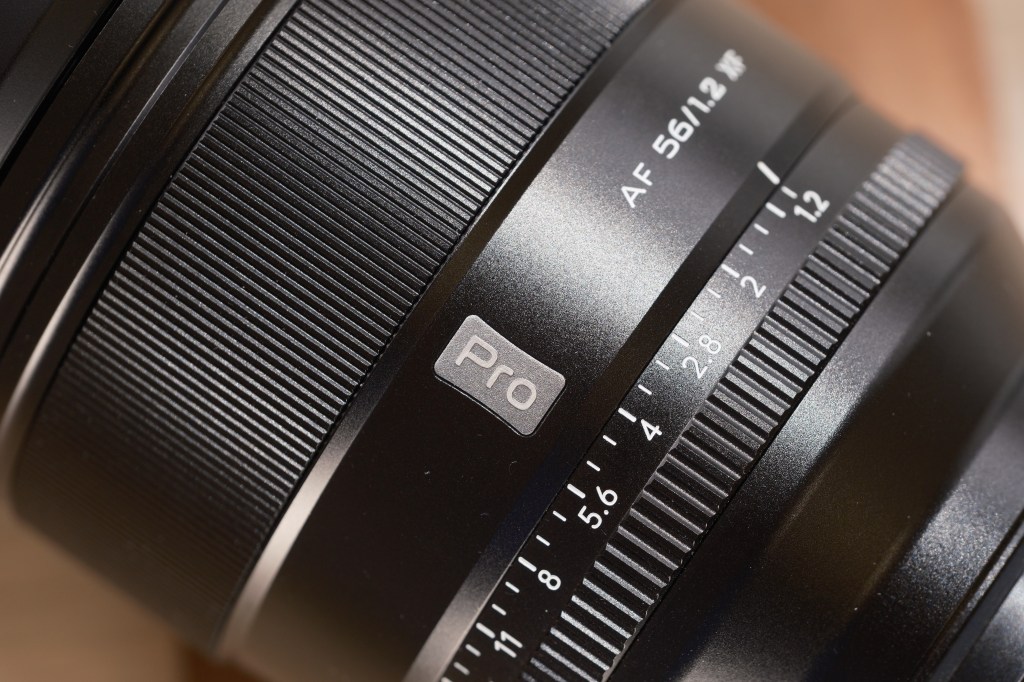
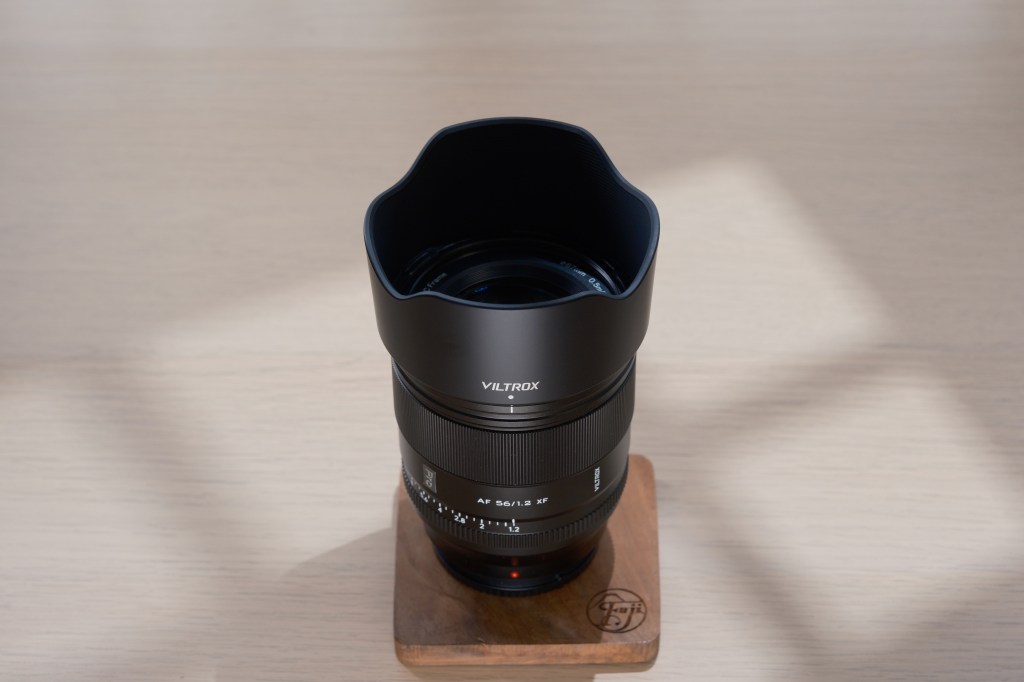
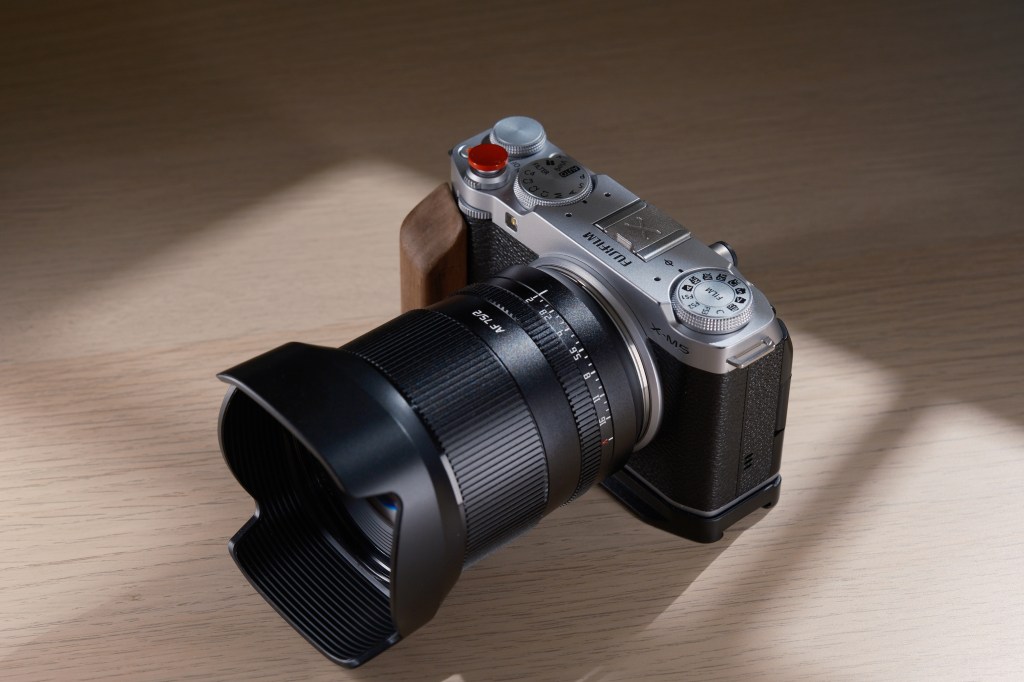
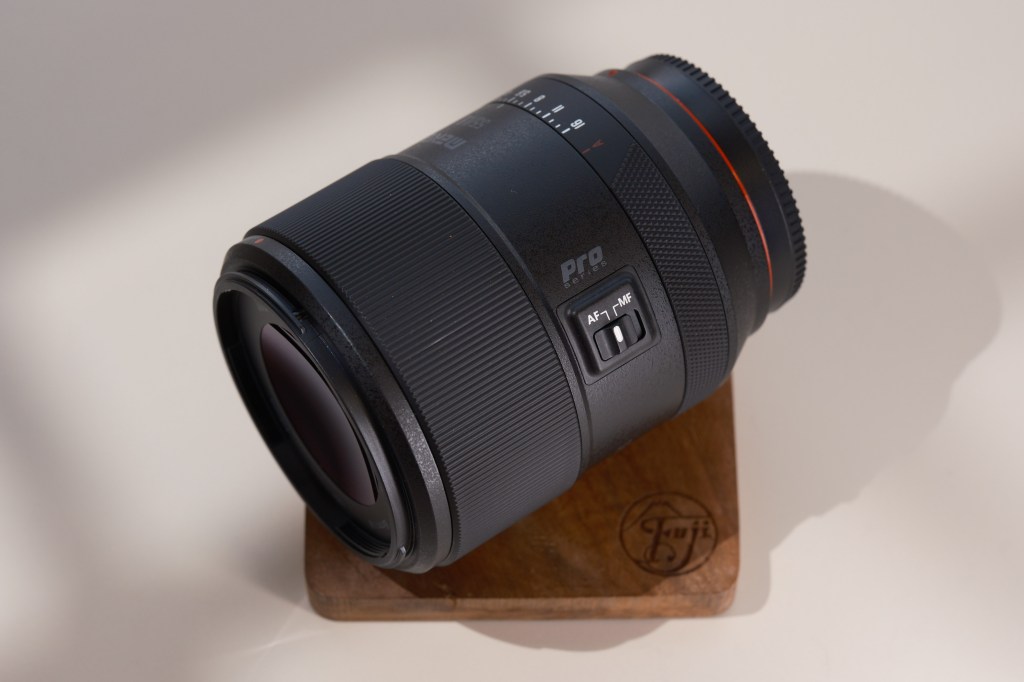
Like its 27mm and 75mm siblings, the Viltrox 56mm f1.2 Pro carries a consistent design language. The all-metal lens barrel immediately feels premium, like you’re holding something worth every dollar spent.
The aperture ring is satisfyingly clicky, with just the right amount of tension and tactile feedback. Nothing feels loose, sloppy, or overly stiff.
It comes with a 67mm filter thread and weighs 575 grams. It’s definitely not a tiny lens, but it balances reasonably well on bodies like the X-T5 and X-E5 (with grip). For comparison, Fujifilm’s own XF56mm f1.2 WR comes in at 445 grams.
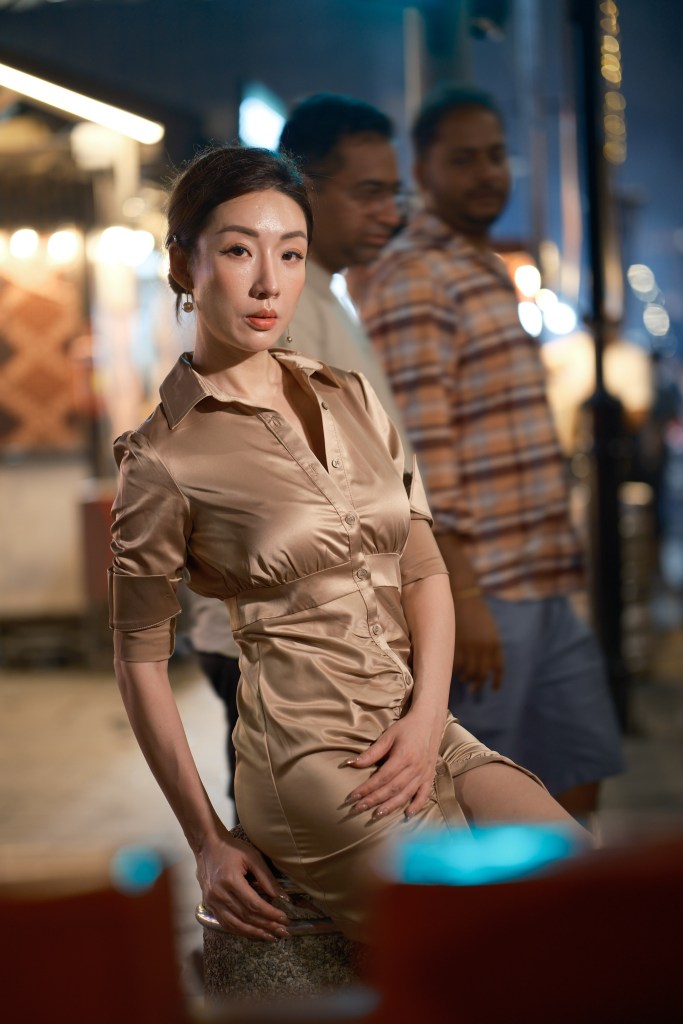
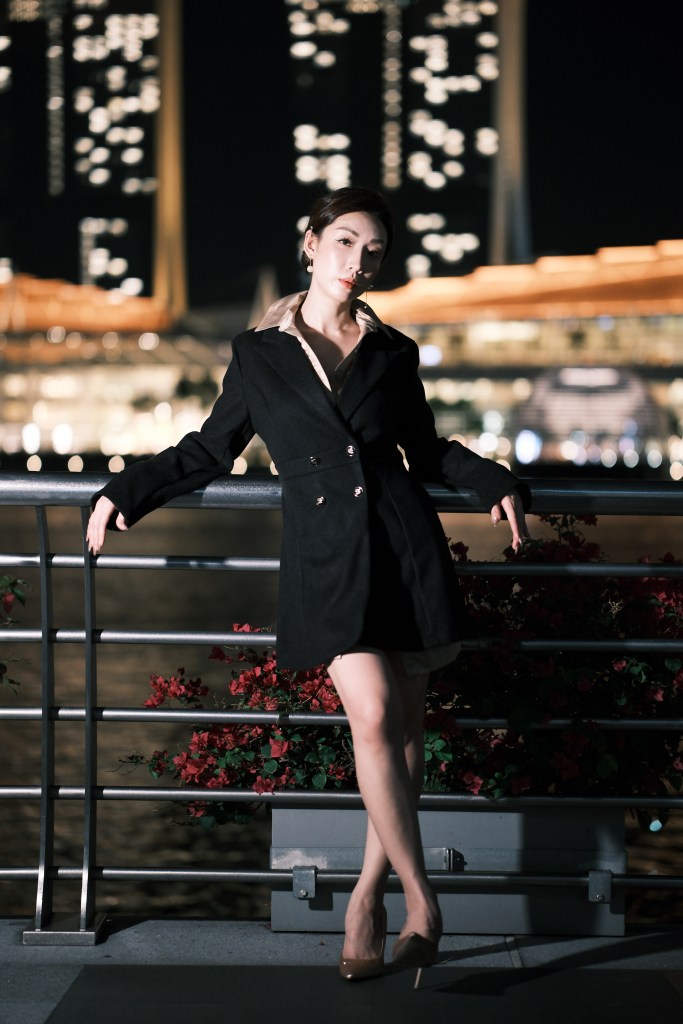
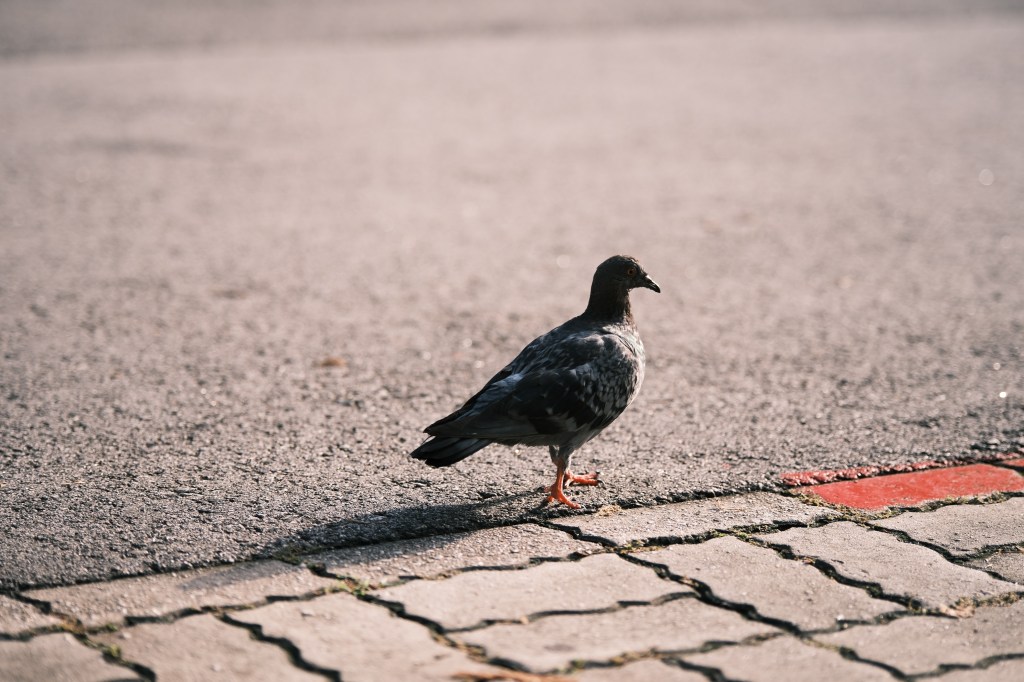
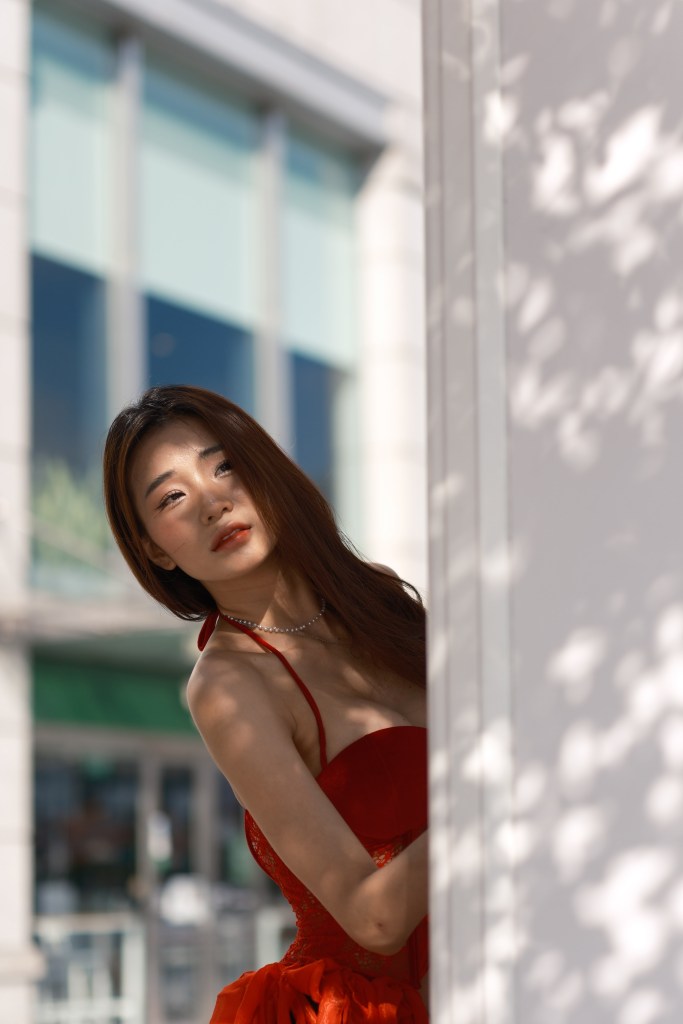
As expected from a “Pro” lens, the Viltrox 56mm f1.2 does not disappoint. It’s already sharp at wide open, with pleasing contrast and well-controlled chromatic aberration, even to my imperfect eyes. Vignetting is present but mild and easily corrected or avoided by stopping down or process in post.
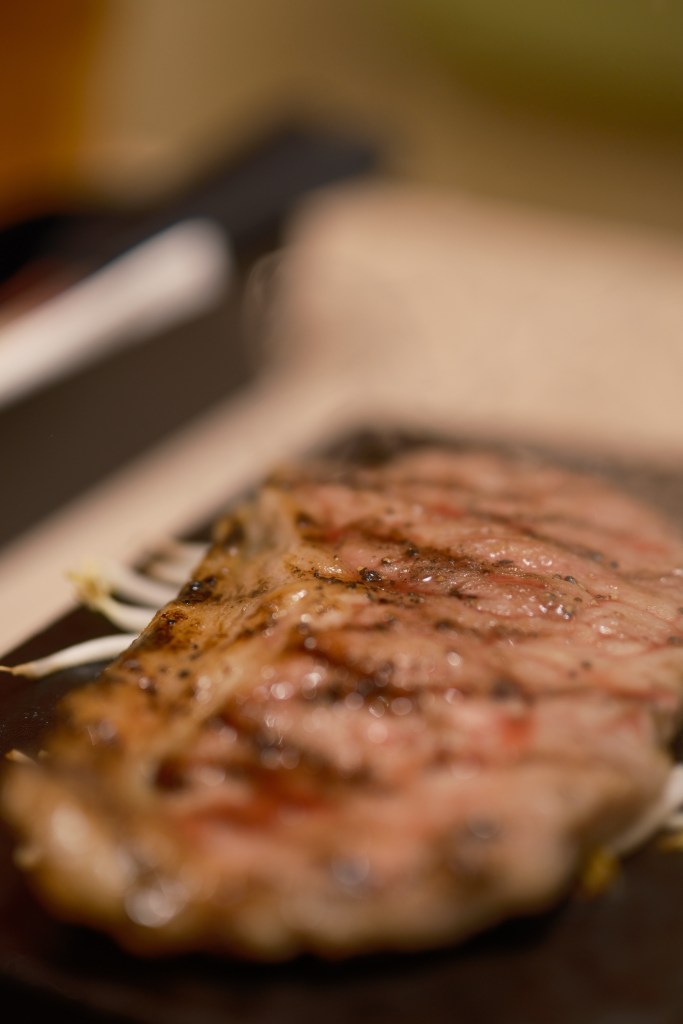
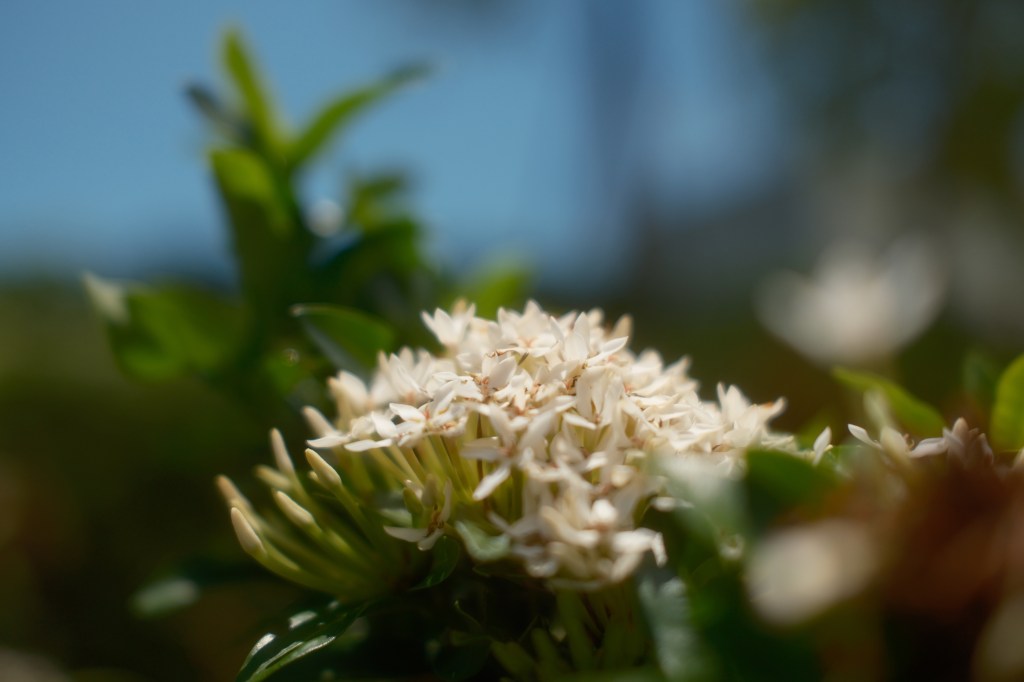
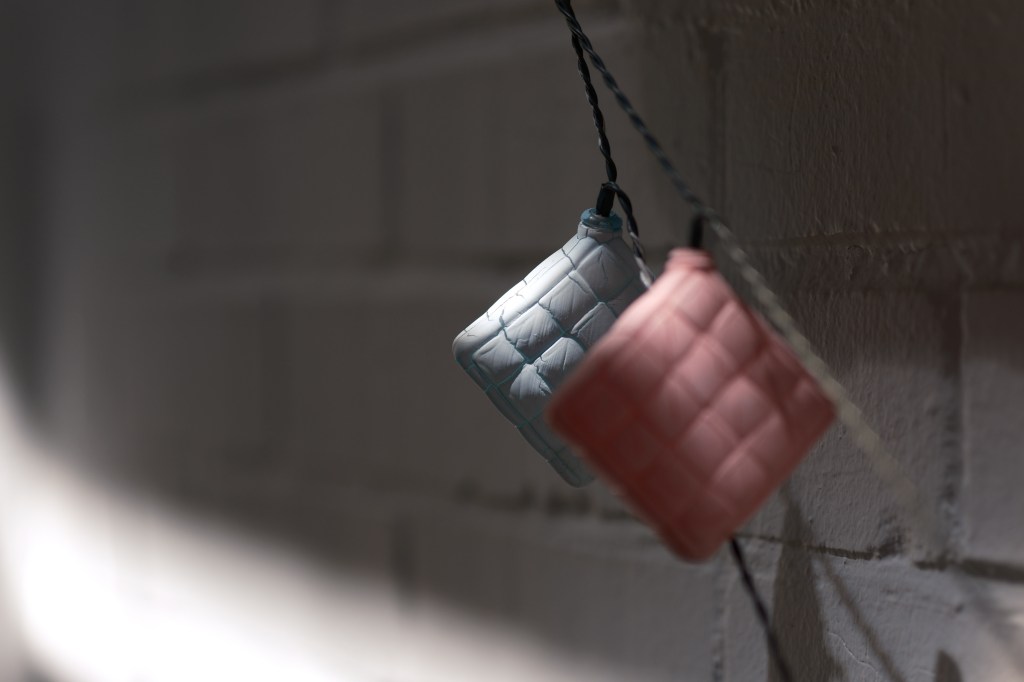
The background blur is smooth with a gentle transition between in-focus and out-of-focus areas. Overall, the rendering feels clean and pleasant. No real complaints here.
Focusing
Viltrox equipped this lens with its Dual HyperVCM motor, but how does it perform in reality?
On both the X-T5 and X-M5, autofocus is generally snappy, silent, consistent, and accurate. I do get an occasional miss on the first try, but nothing worrying.
However, pairing it with the X-E5 gave me a very different experience. The autofocus mechanism jammed repeatedly, so much so that even remounting the lens or swapping with other lenses didn’t fix it. It would jam again after a few shots. I can ’t explain why, but the issue exists. X-E5 users should take note.
Another thing I observed: Eye-AF tends to jump rapidly between eyes and faces more often than other third-party lenses I’ve tested. I’m unsure whether this is a copy-specific issue or a broader batch issue, but I hope a future firmware update will address it.
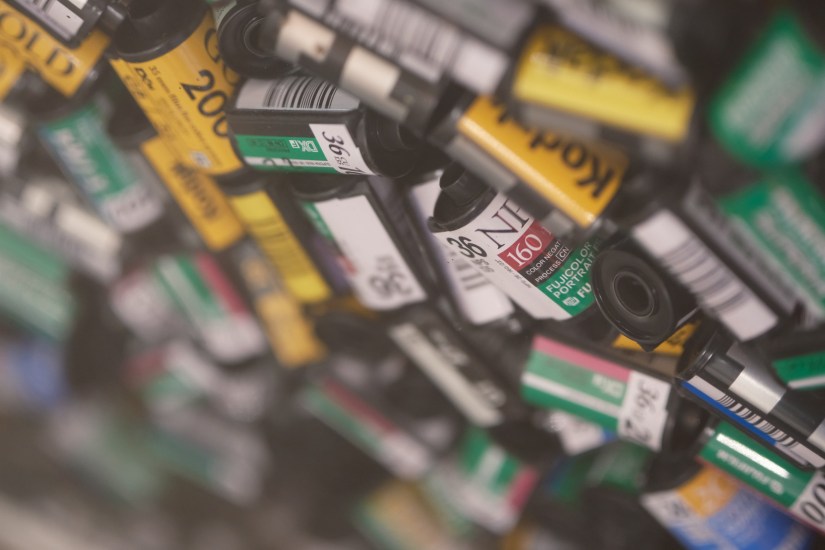
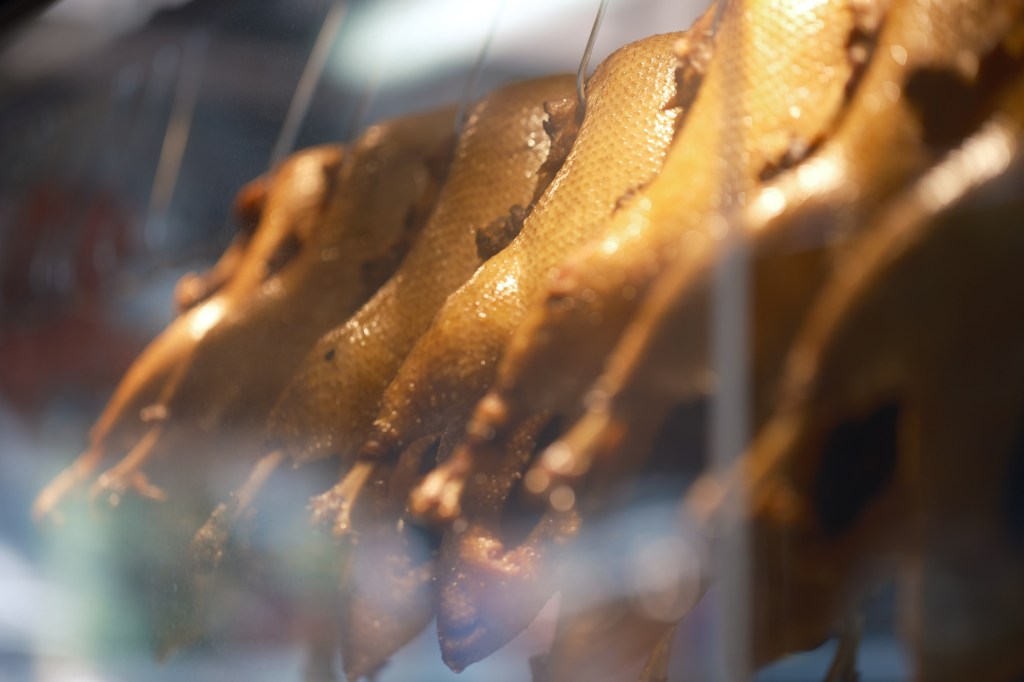
At 50cm, the MFD is impressive for a mid-telephoto lens, identical to the Fujifilm XF56mm f1.2 WR. You can get quite close without losing image quality, which is great for tighter product shots.
Initially priced at 580 USD, the lens now goes for around 464 USD, making it extremely competitive, especially when the XF56mm f1.2 WR sells for 1099 USD at B&H.
Sirui also offers a 56mm f1.2 variant at $280 USD, but personally, I wouldn’t recommend that one.
As with all Viltrox autofocus lenses, the USB-C port is positioned at the rear, which I prefer over the exposed designs (on the lens barrel) with rubber flaps.
Viltrox 56mm f1.2 Pro – USB-C port at the rear lens element
The lens is also weather-sealed, in true “Pro” fashion, though I’m not exactly planning to test the seals anytime soon.
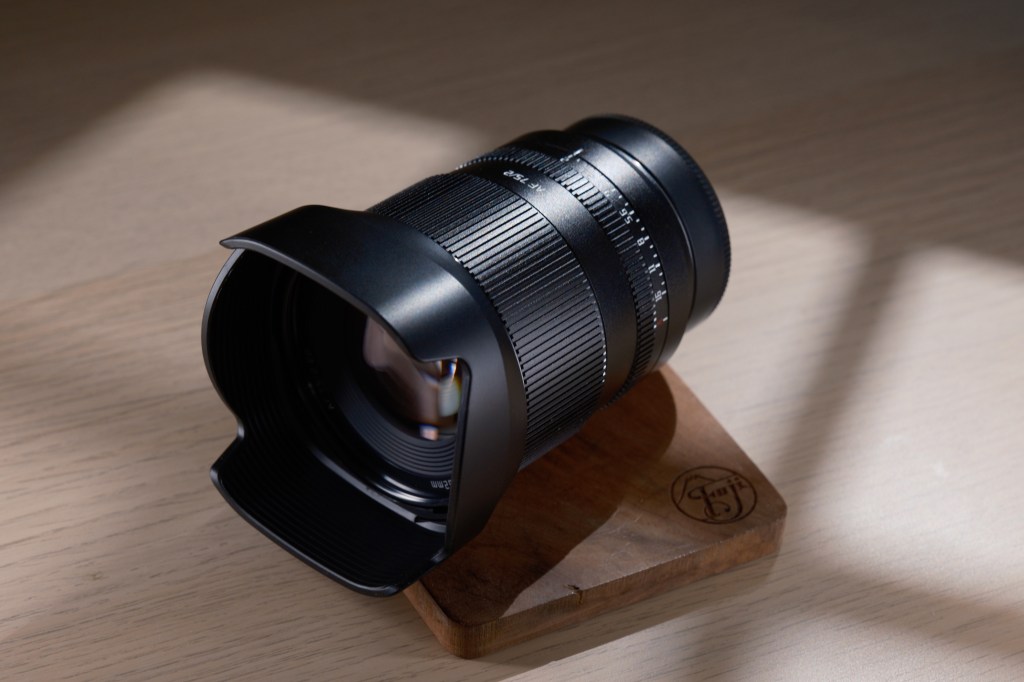
Viltrox 56mm f1.2 Pro with lens hood
A lens hood is included, but it’s a bit disappointing that it’s plastic instead of metal.
Who is this for?
If you shoot portraits, this focal length deserves a place on your wishlist. But portraits aren’t the only thing it can do.
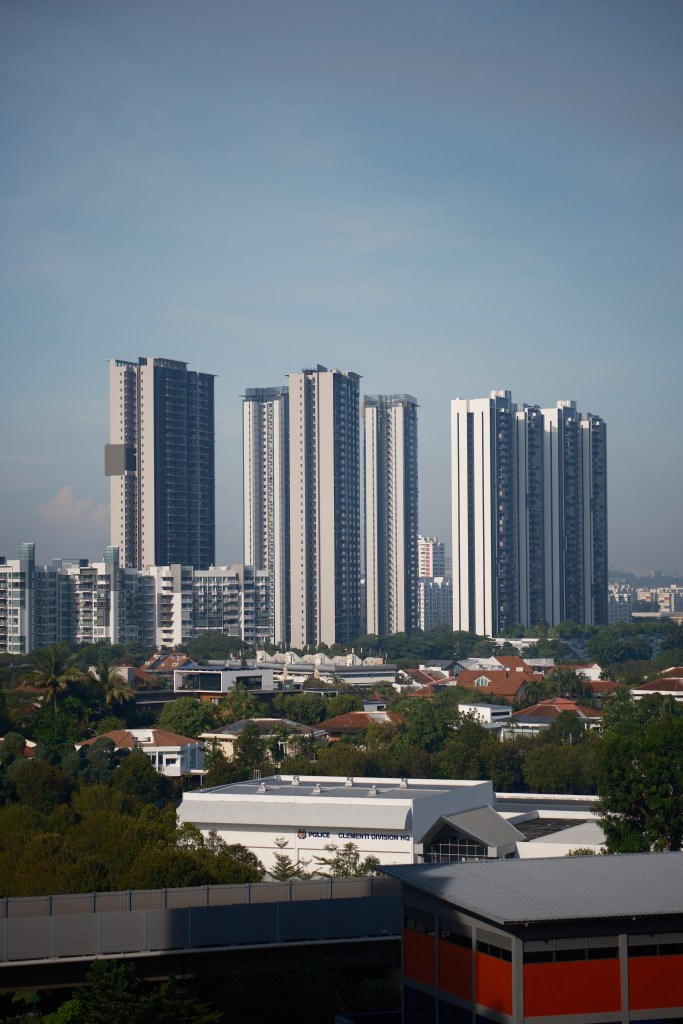
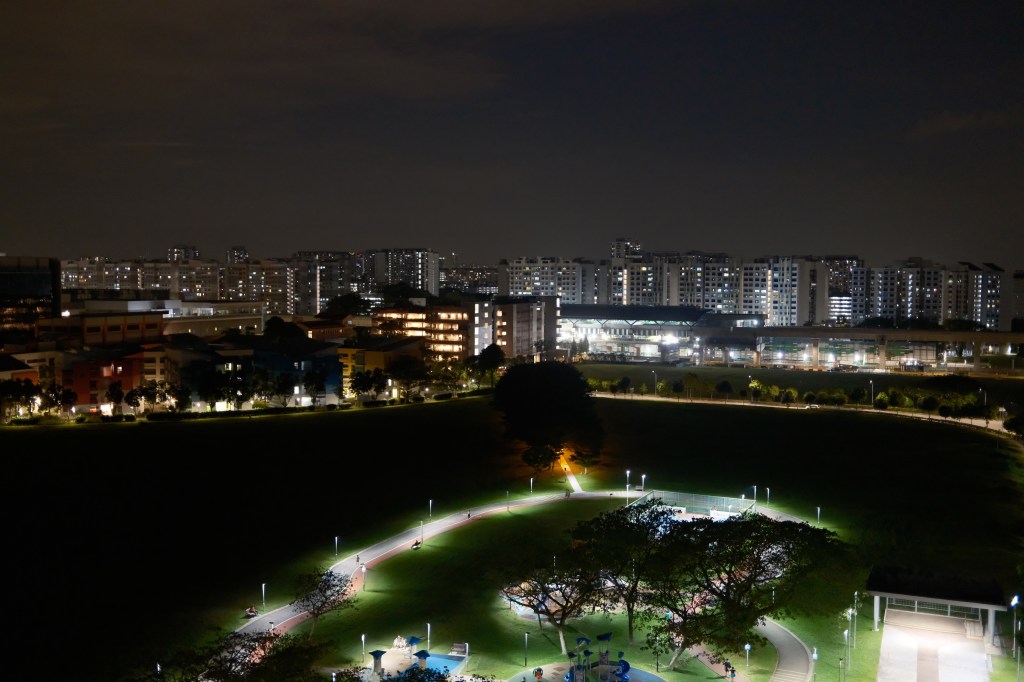
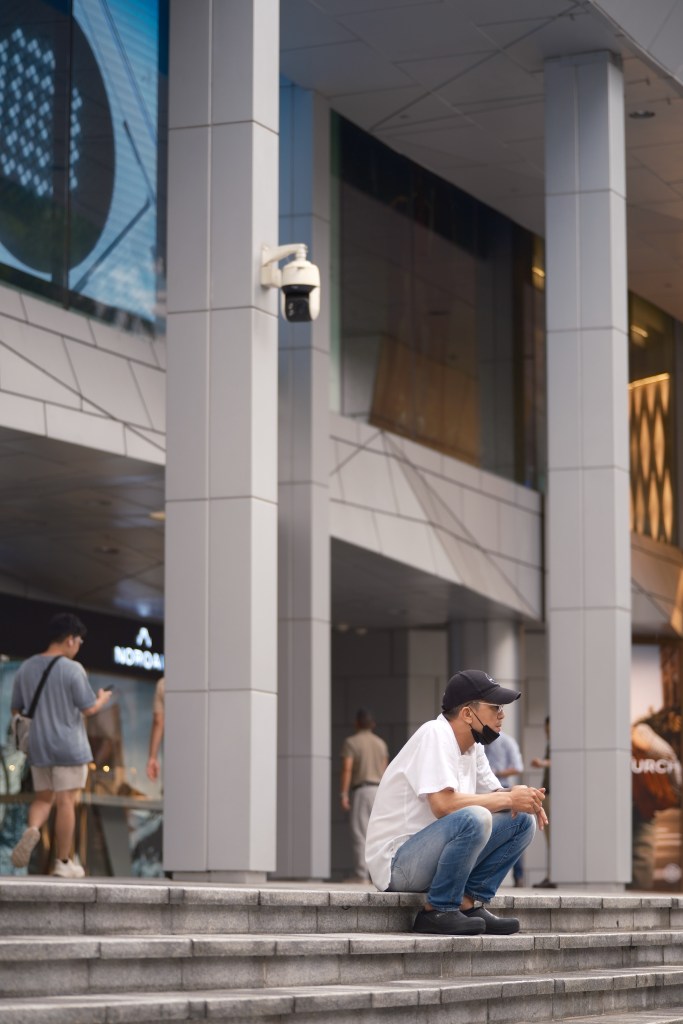
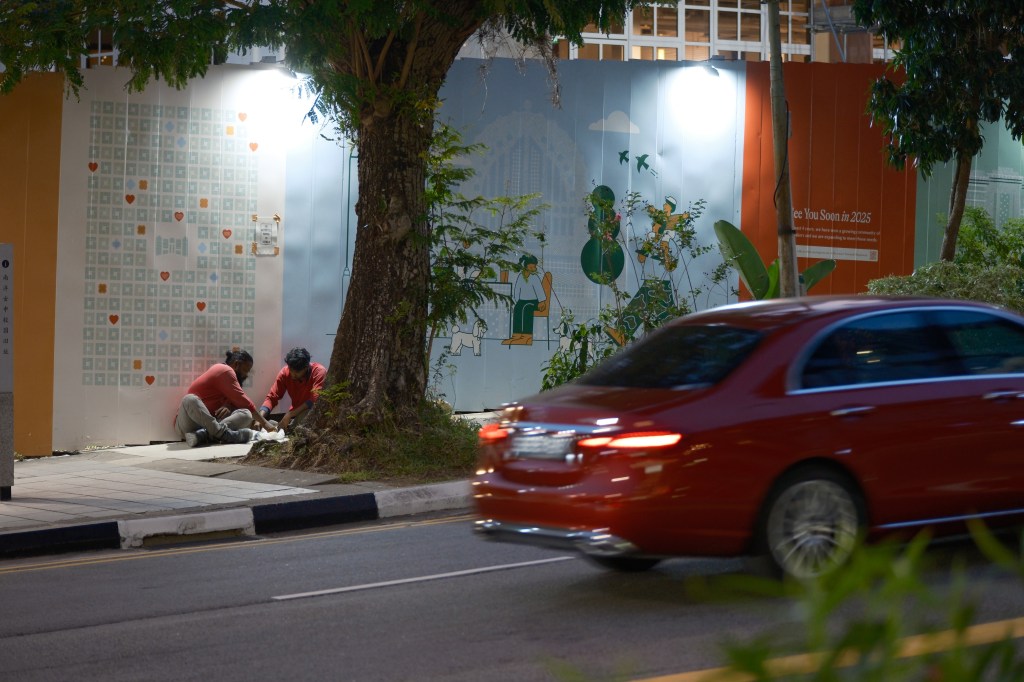
During my testing, I found it great for product shoots, street photography, and even cityscapes. As long as the framing suits your vision, the lens delivers.
Conclusion
If you already own the Viltrox 27mm f1.2 Pro and 75mm f1.2 Pro, this lens completes the f1.2 Pro “trinity,” making your lineup feel wonderfully cohesive.
Viltrox 56mm f1.2 Pro and XF56mm f1.2 WRViltrox 56mm f1.2 Pro and XF56mm f1.2 WR (with lens hoods)
Viltrox has consistently impressed with its Pro series, excellent image quality, reasonable pricing, in exchange for slightly larger size and heavier builds. The 56mm f1.2 Pro follows that philosophy closely.
Sure, the Fujifilm XF56mm f/1.2 WR edges out a bit in sharpness and autofocus reliability, but at two times the cost, is it worth it? That comes down to your priorities. If you’re chasing image quality but can’t justify the XF56mm f1.2 WR’s premium price, and you don’t mind the extra weight, the Viltrox 56mm f1.2 Pro is definitely worth considering.
X-E5 with Viltrox 56mm f1.2 ProX-M5 with Viltrox 56mm f1.2 Pro
Thank you for reading.
If you are interested in this lens, head down to this affiliate link to purchase yours.
Disclaimer: 1. All the shots taken here are shot by me. 2. Most of the shots are straight out of the camera with some shots edited via In-Camera Raw Processing. 3. The opinions are based on my experience. If there is any mistake, please kindly drop me a message and I will gladly make the amendment. 4. I reserve ownership of these images, if you wish to use my images, please notify me.
If you like my works, please follow me on either one of the 2 Instagram accounts:
Godox has been on a roll lately, launching compact flashes faster than any competitor can catch up. The new Godox iT20 and iT22 are perfect examples of this momentum, proving once again that small doesn’t mean weak.
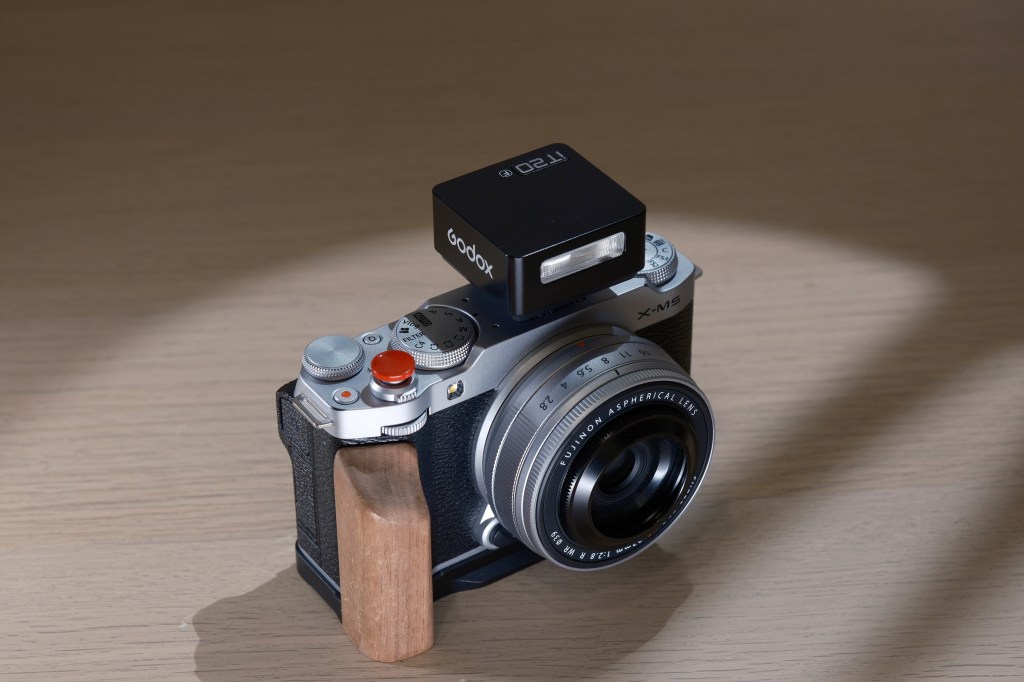
Fuji X-M5 with Godox iT20
Intro
Both flashes were announced in July 2025, just two months before the iT30 Pro hit the scene. The best part? Both support TTL, which is impressive for flashes this size and price.
Fuji X-E5 with Godox iT22
Design and Build Quality
Right out of the box, both models feel premium. The all-metal construction gives them a solid, confident feel in hand. The buttons are clearly laid out, well-spaced, and tactile with satisfying feedback.
One thoughtful detail: the power button (which also doubles as the test flash button) is concave, unlike the other convex buttons, making it easy to distinguish by touch.
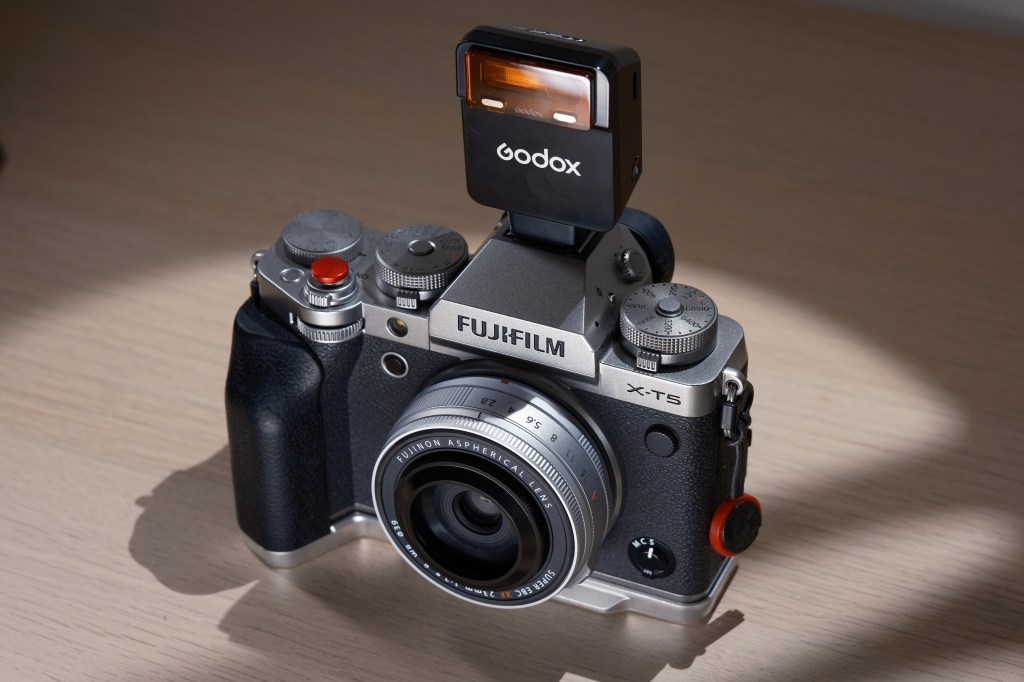
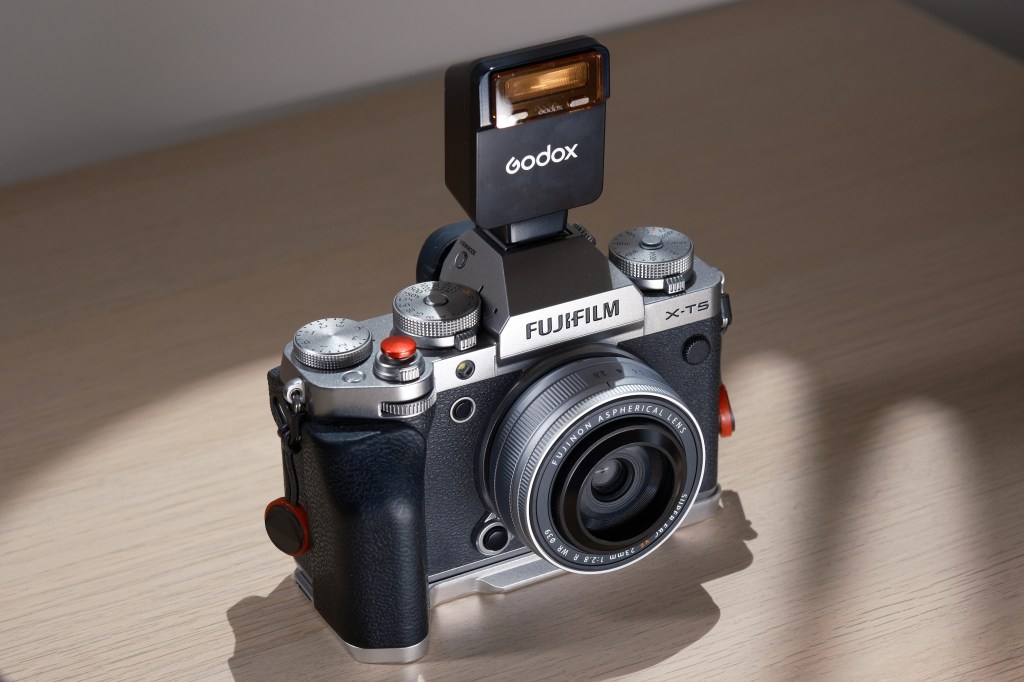
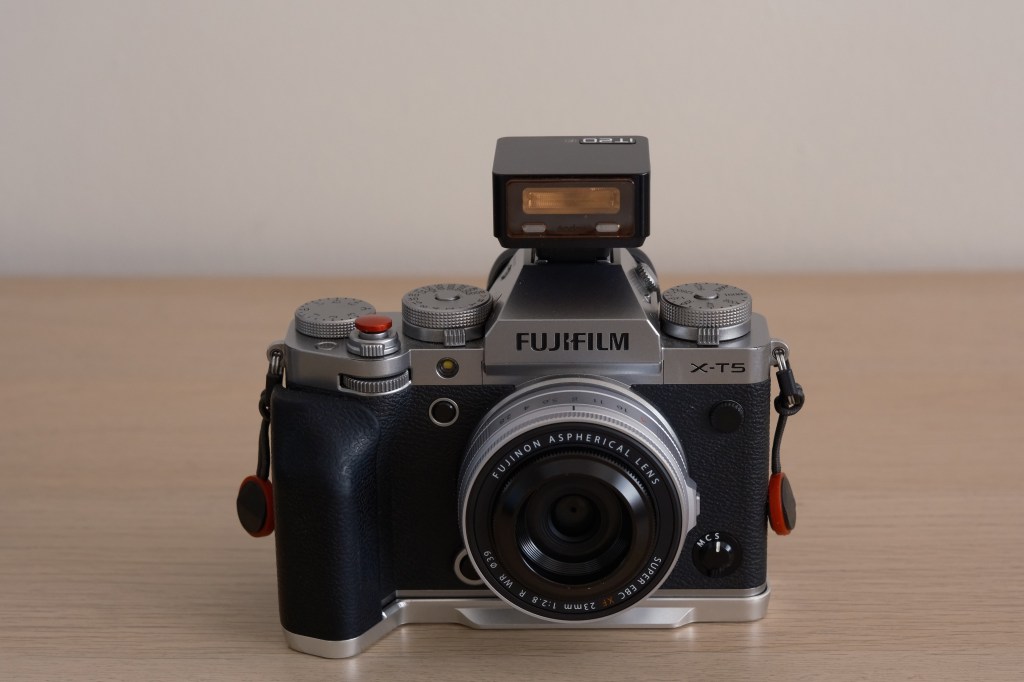
Fuji X-M5 with Godox iT20Fuji X-E5 with Godox iT22
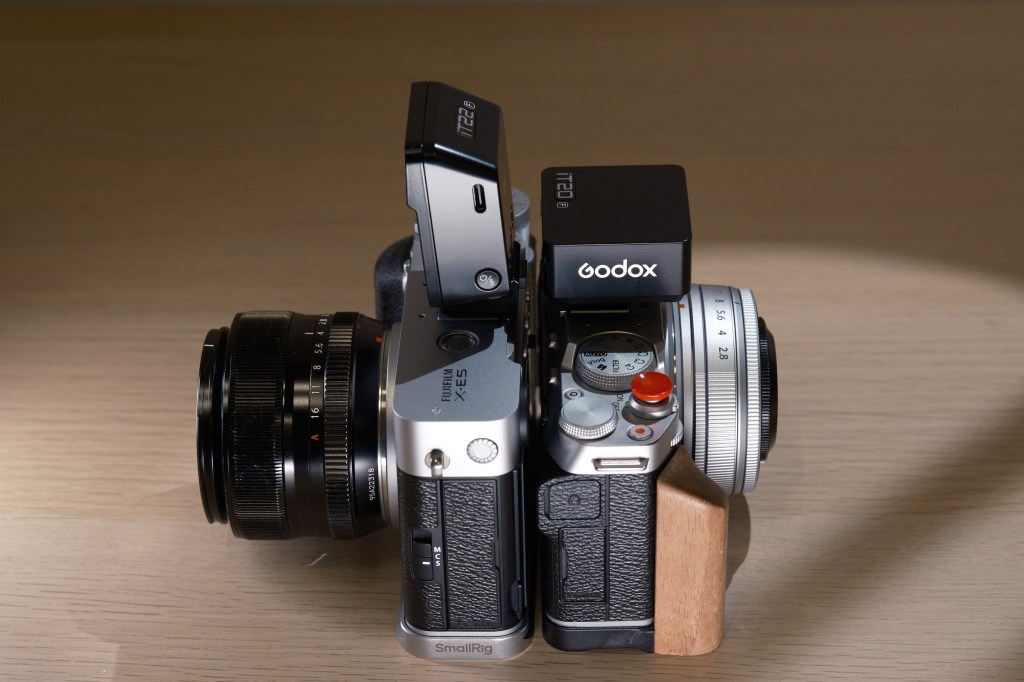
Weight-wise, the iT20 tips the scale at 45g, and the iT22 at 52g, practically indistinguishable when you’re holding them.
Both use a small dot-matrix display, and despite the compact size, the information is crisp and easily readable in both bright outdoor light and darker indoor environments.
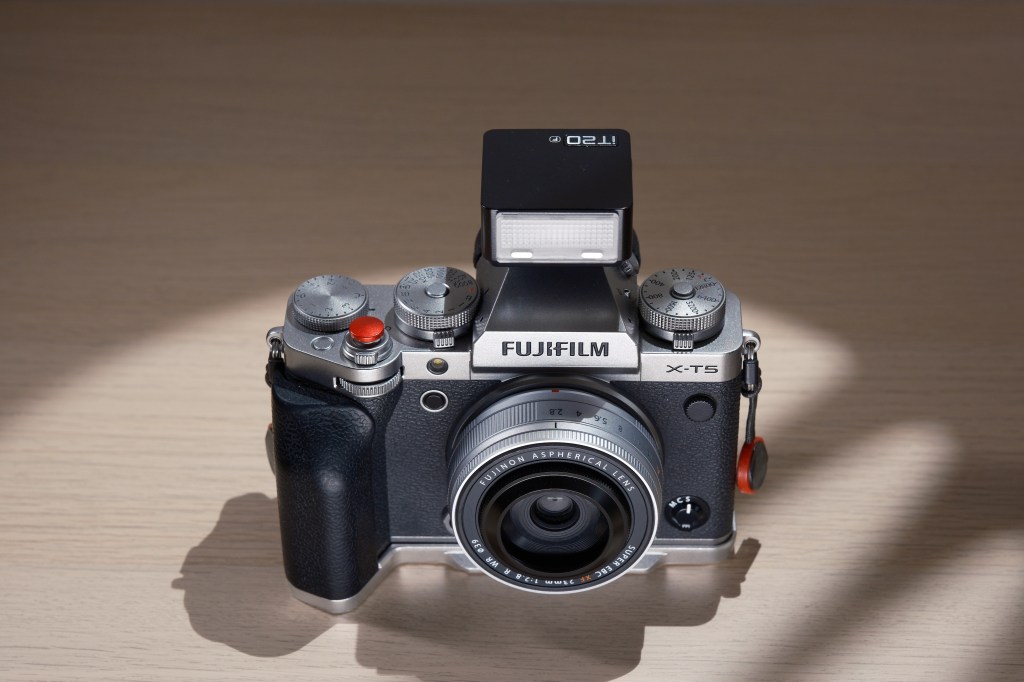
iT22 stands a little taller, a clever move to avoid interference from larger lenses or lens hoods.
iT20 has a sleek, low-profile shape, perfect for compact cameras and smaller lenses.
Control
Godox kept things simple and intuitive. You’ll find just four buttons: power, mode, plus, and minus, along with a release button to detach the flash from the hot shoe.
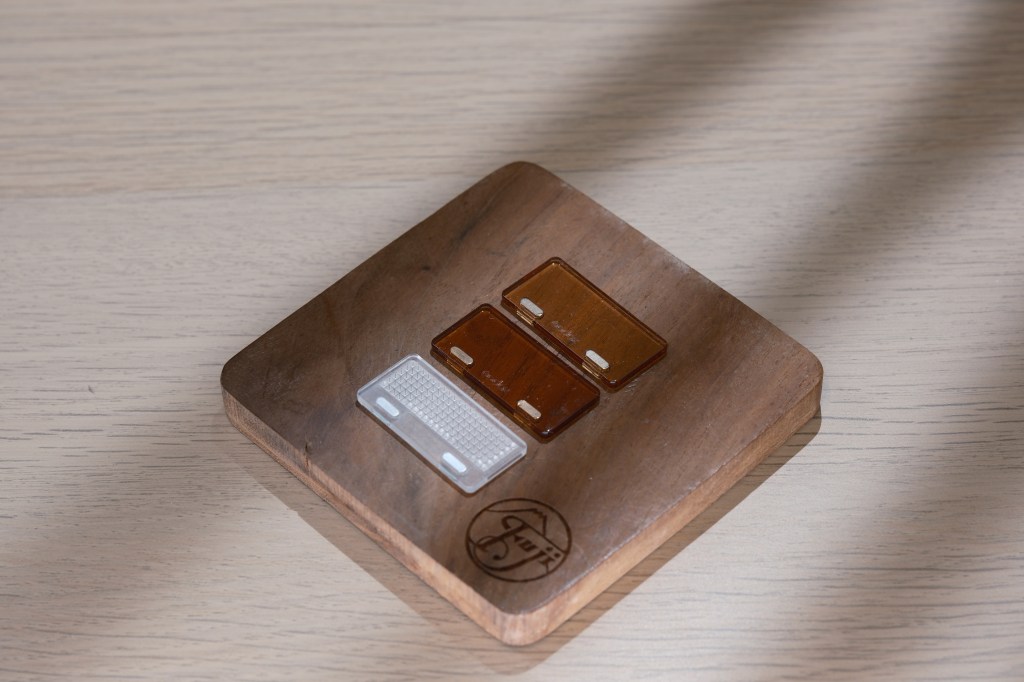
Magnetic Diffuser, 1/1 CTO Magnetic Color Filter, 1/2 CTO Magnetic Color Filter
Adjustments are straightforward. Flash power can be fine-tuned in six steps (1/32 to 1/1), and recycle time for a full-power flash sits at a very reasonable 1.5 seconds, quite good for a flash this size.
Flash Power
As their names suggest, the iT20 and iT22 have Guide Numbers of 20 and 22 (ISO 100). While those numbers may not sound huge on paper, they’re more than enough for most real-world uses, such as street photography, travel snaps, or casual portraits.
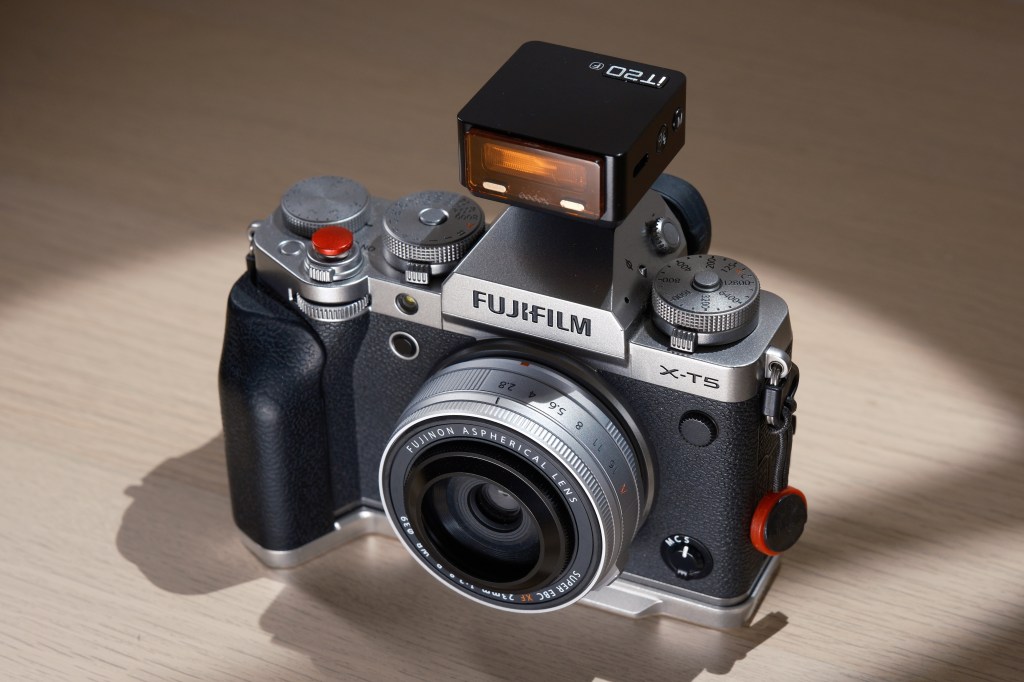
Fuji X-T5 with Godox iT20 & Magnetic DiffuserLeft: Fuji X-T5 with Godox iT20 & 1/2 CTO Magnetic Color Filter Right: Fuji X-T5 with Godox iT20 & 1/1 CTO Magnetic Color Filter
Price Point
Both flashes retail for around USD 45, a very attractive price given the metal build, TTL support, and overall performance.
Godox iT20 USB-C port
Battery Life
Battery life is surprisingly solid. Each flash is rated for up to 700 full-power pops from the built-in 300 mAh battery. Even if you shave 20% off that for real-world use, that’s still over 500 shots, easily enough for a day of casual shooting.
Godox iT22 USB-C port
Charging is simple via the USB-C port, which is always appreciated.
Others
Godox adds a clever touch here: both models support magnetic accessories, letting you quickly attach diffusers, color gels, or other light shapers.
Fuji X-T5 with Godox iT22 & Magnetic DiffuserLeft: Fuji X-T5 with Godox iT22 & 1/1 CTO Magnetic Color Filter Right: Fuji X-T5 with Godox iT22 & 1/2 CTO Magnetic Color Filter
Compatibility is also broad, available for Canon, Nikon, Sony, Fujifilm, OM System, and Panasonic. Just be sure to pick the correct version for your camera if you want TTL to work properly.
X-E5 with Godox iT22 and X-M5 with Godox iT20
Who is this for?
The iT20 and iT22 fit perfectly into the current direct flash trend that’s taking over social media and street photography. They’re also great for travel shooters, beginners, or anyone using a camera without a built-in flash.
Without flashLeft: with Diffuser, Center: with 1/1 CTO Magnetic Color Filter, Right: 1/2 CTO Magnetic Color Filter Left: with 1/1 CTO Magnetic Color, Center: with 1/2 CTO Magnetic Color Filter, Right: with Diffuser
In short, they’re ideal little companions for photographers who want portability, simplicity, and versatility, and they make a great Christmas gift that won’t burn a hole in your pocket.
Conclusion
When it comes to compact flashes, Godox has effectively filled every niche a photographer might need. With premium build, TTL support, and affordable pricing, the iT20 and iT22 prove that sometimes the best things really do come in small packages.
X-E5 with Godox iT22 and X-M5 with Godox iT20
Thank you for reading.
Disclaimer: 1. All the shots taken here are shot by me. 2. Most of the shots are straight out of the camera with some shots edited via In-Camera Raw Processing. 3. The opinions are based on my experience. If there is any mistake, please kindly drop me a message and I will gladly make the amendment. 4. I reserve ownership of these images, if you wish to use my images, please notify me.
If you like my works, please follow me on either one of the 2 Instagram accounts:
Every now and then, something interesting pops up in the world of camera accessories, small things that somehow make a big difference in your shooting experience. For us Fujifilm X100 users, those little tweaks often go a long way.
The Freewell X100VI Accessories
Recently, the good folks at Freewell reached out and asked if I’d like to try their new X100VI accessories. Of course, I said yes — any excuse to take my favorite walkabout camera, the X100VI, out for another spin is a good one.
Before I dive in, I want to thank Freewell for generously sending not one, but three X100VI accessories for me to test. That said, everything you’ll read here comes straight from my own honest experience, as always.
The lineup includes:
Fuji X100VI Thumb Grip with Cold Shoe Mount
Fuji X100VI L-Bracket Premium Grip
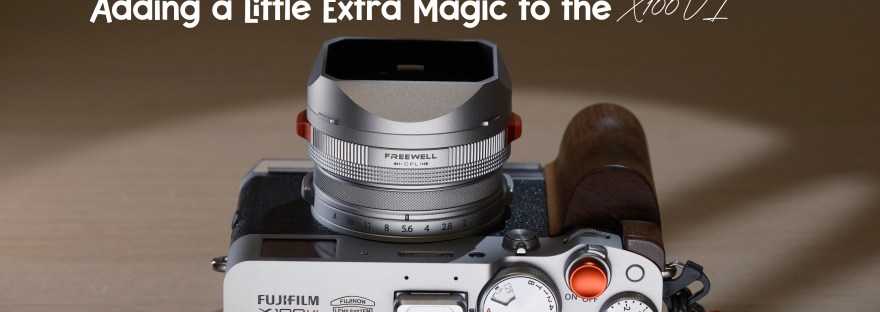
Fuji X100VI Real Lens Hood
Let’s go through each of them in that order.
Design and Build Quality
All three accessories share the same metal construction, giving them a premium and sturdy feel right out of the box. They match the clean, minimalist aesthetic of the X100VI perfectly and add a touch of refinement to the camera’s already sleek design.
Thumb Grip
As simple as it sounds, the thumb grip does exactly what you hope it would, it provides a solid resting spot for your thumb, making the camera much more comfortable to hold for longer periods.
Thumb Grip with Cold Shoe Mount
It doesn’t drastically change how the camera handles, but it adds just enough stability to make a noticeable difference.
Oh yes, the thumbgrip comes with a cold shoe mount if you ever need to use it for microphone or LED video light.
L Bracket Grip
At first glance, I wasn’t too impressed with the grip’s design. The top curve section where the small extended extra wood looked… odd. I couldn’t quite figure out why they designed it that way.
Then I attached it to the camera, and I was completely wrong.
L-Bracket Premium Grip
The curve contour actually makes it surprisingly comfortable, providing a natural resting point for my middle finger. The grip is also deep enough for a firm hold, and the wooden section feels fantastic in hand. You can tell the difference in material quality right away, it’s smooth, solid, and premium.
Base of the L-Bracket Premium Grip
And here’s a nice touch: it comes with a red shutter button, it’s a small detail that really adds to the X100’s charm.
Real Lens Hood
Now, the name “Real Lens Hood” caught my attention. Why “real”? I still don’t know, but the design itself speaks volumes.
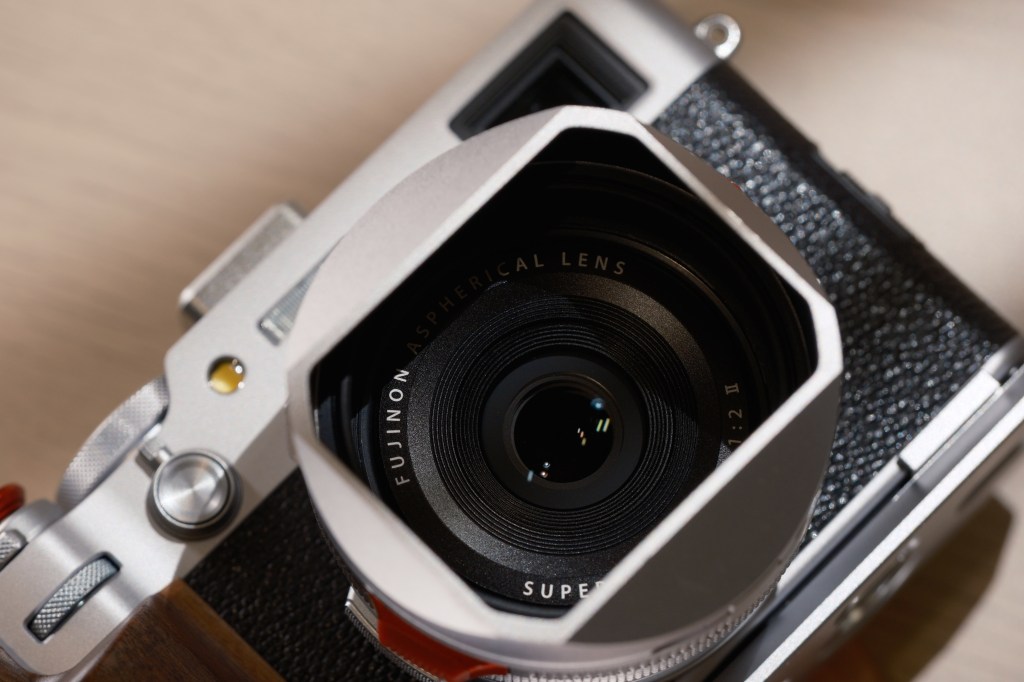
The hood feels light yet premium, with a metal body that matches the X100VI’s build. Unfortunately, the lens cap is made of plastic, and not the best kind. It’s a small letdown compared to the rest of the build. Oh, and it even has an NFC tag built in, scan it for product info and support materials (though oddly, my iPhone couldn’t detect it, but my Android did).
Flippable Square Lens Hood with FilterFlippable Square Lens Hood without FilterFlippable Square Lens Hood without Filter
That said, the hood comes with some neat tricks. It features a flippable design, letting you change filters without removing the hood entirely, a small but genuinely smart idea.
Two red rubber-tipped tabs make rotating filters smooth and easy, especially when you’re using Freewell’s included 49mm hybrid filter (a Circular Polarizer combined with a 1/4 Black Mist filter).
Rubber-tipped tab
CPL and Black Mist Filter
This hybrid filter is one of my favorite surprises in the kit. The CPL (Circular Polarizer) helps reduce glare and reflections on water, glass, and foliage while boosting color and contrast. You can control the effect by rotating the filter, that’s where the red tabs really shine.
Left: CPL Filter rotates to the extreme one corner Right: CPL Filter rotates to the other extreme cornerLeft: Without filter Right: With filter
The 1/4 Black Mist effect adds a gentle bloom to highlights and a soft cinematic glow around light sources. It also slightly reduces contrast in low light, giving your shots a moody, filmic atmosphere.
Left: CPL Filter rotates to the extreme one corner Right: CPL Filter rotates to the other extreme corner
Among the usual 1/8, 1/4, and 1/2 mist options, I personally find 1/4 to be the perfect balance, noticeable but not overdone. It’s one of those filters that might take a bit of experimenting to fully appreciate, but once you get the hang of it, it adds real character to your images.
Price Point
Here’s the breakdown:
1. Fuji X100VI Thumb Grip with Cold Shoe Mount – 40 USD
2. Fuji X100VI L Bracket Premium Grip – 80 USD
3. Fuji X100VI Real Lens Hood – 130 USD
Considering the quality and usability, these prices feel reasonable, especially if you’re looking to give your X100VI setup a premium touch without going overboard.
Left: Without filter Right: With filter
Who is this for?
If you’re looking to enhance your X100VI experience, in handling, comfort, and overall shooting enjoyment, this is a solid trio to consider.
If you only want one accessory, I’d recommend the Real Lens Hood. It not only looks stylish with its square profile but also lets you swap filters easily without removing the hood, perfect for photographers who love working with filters.
Left: With filter Right: Without filter
Just note that it extends a little beyond the lens, both in width and length, but it adds function and flair at the same time.
Conclusion
Freewell has been around since 2012, earning a reputation for crafting innovative filters and camera accessories, from their popular magnetic filter systems to gear for photographers, drone pilots, action cam users, and now, X100 enthusiasts.
This was my first hands-on experience with Freewell products, and honestly, I’m impressed. The accessories feel high-quality, thoughtfully designed, and genuinely enhance the user experience.
They’ve turned my everyday X100VI into something that feels even more refined, and that’s exactly what good accessories should do.
X100VI with Freewell Accessories
Thank you for reading.
Disclaimer: 1. All the shots taken here are shot by me. 2. Most of the shots are straight out of the camera with some shots edited via In-Camera Raw Processing. 3. The opinions are based on my experience. If there is any mistake, please kindly drop me a message and I will gladly make the amendment. 4. I reserve ownership of these images, if you wish to use my images, please notify me.
If you like my works, please follow me on either one of the 2 Instagram accounts:
When it comes to a 75mm focal length, it’s not exactly the most common out there. Most photographers are more familiar with 56mm, while 75mm sits in that in-between telephoto zone that can feel a little intimidating, especially if you’re shooting in tight urban spaces like I do. Space is a luxury here, and a longer focal length often means stepping back more than I’d like. Still, I was curious. And that curiosity led me to the TTArtisan 75mm f2, a surprisingly compact tele lens that might just deserve a spot in your camera bag.
X-M5 with TTArtisan 75mm f2X-M5 with TTArtisan 75mm f2
Intro
The TTArtisan 75mm f2 was first launched for Z-mount and E-mount back in September 2024, and it took almost a full year before the X-mount version arrived in August 2025. It’s now available in a total of four mounts, including L-mount, making it accessible to a wide range of photographers.
A quick shoutout to the awesome folks at TTArtisan for sending this lens my way to test, as always, my thoughts here are entirely my own.
Design and Build Quality
Design-wise, this lens follows the familiar TTArtisan aesthetic, very much in line with the 23mm f1.8, 35mm f1.8 II, and 56mm f1.8. But there’s one major difference: this time, there is an aperture ring.
That’s right, an actual clicky aperture ring on an autofocus lens. It’s something we rarely see from TTArtisan, and it’s a welcome addition, though I’ll admit, the clicks are a bit on the stiff side. It’s not the smoothest experience, but it works.
Build quality, as always with TTArtisan, doesn’t disappoint. The metal construction gives it a solid, premium feel. At 326 grams, it’s nicely balanced and not too heavy. The filter size is 62mm, making filters easy and affordable to find. Plus, it now comes with a square lens hood, which looks great and adds a bit of flair.
Image Quality
Let’s talk about performance. Wide open at f2, the TTArtisan 75mm delivers impressively sharp results. It’s not on the same razor-sharp level as the Viltrox 75mm f1.2, but for general use, it’s more than capable, and the images look fantastic.
Chromatic aberration is very well controlled, and vignetting is minimal enough to be a non-issue.
The bokeh is decent, not the creamiest out there, but it has character. The rendering feels a bit on the “hard” side, but for portraits and product shots, it still delivers pleasing separation and depth.
Autofocus runs on a Stepper Motor (STM), and it’s quick, accurate, and relatively quiet. Not lightning-fast, but definitely reliable. Eye tracking also performs quite well and stays sticky enough for most portrait situations.
Minimum Focus Distance (MFD)
The minimum focus distance is 75cm, which feels fair for this focal length. For comparison:
So the TTArtisan sits comfortably in between. More importantly, image quality stays strong even when shooting near the minimum distance.
Price Point
Here’s where things get wild: it is priced at just USD 200. For context, the Viltrox 75mm f1.2 costs about USD 580, and the Samyang/Rokinon 75mm f1.8 sits at USD 449. That’s more than double (and almost triple) the price. So for $200, this TTArtisan feels like a steal, a budget-friendly telephoto lens that still performs well in all checkboxes.
Like other TTArtisan AF lenses, the rear lens cap includes a USB-C port for firmware updates, which is always a plus.
Rear lens cap with USB-C port
One thing to note, this lens does not have weather or dust sealing. But honestly, at this price point, that’s perfectly reasonable.
Who is this for?
At a 112mm full-frame equivalent, this lens is clearly made for portraits and product photography. It’s not the most versatile choice for street shooters, unless you like keeping a bit of distance between you and your subjects. In that case, this focal length might be perfect for candid, unobtrusive shots.
For travel photographers, it’s a great lens to pack “just in case.” It’s compact, not too heavy, and covers a nice tele range when you need it.
Conclusion
Alongside TTArtisan’s compact prime lineup: the 23mm f1.8, 35mm f1.8 II, and 56mm f1.8, this new 75mm f2 rounds out a very practical and affordable set of lenses for any prime shooter. For 200 USD, TTArtisan has nailed the balance between build quality, image performance, and price. I honestly can’t find a solid reason not to recommend it.
It’s compact, capable, and fun to use, the kind of lens that reminds you good gear doesn’t always have to come with a high-end price tag. TTArtisan has been on a roll, releasing lens after lens, and now I can’t help but wonder… what focal length will they surprise us with next?
X-E5 with TTArtisan 75mm f2X-E5 with TTArtisan 75mm f2
Thank you for reading.
Disclaimer: 1. All the shots taken here are shot by me. 2. Most of the shots are straight out of the camera with some shots edited via In-Camera Raw Processing. 3. The opinions are based on my experience. If there is any mistake, please kindly drop me a message and I will gladly make the amendment. 4. I reserve ownership of these images, if you wish to use my images, please notify me.
If you like my works, please follow me on either one of the 2 Instagram accounts:
Tilt-shift lenses have always been a niche tool, designed for very specific kinds of photography, the kind most photographers never touch because, well, they used to cost a small fortune.
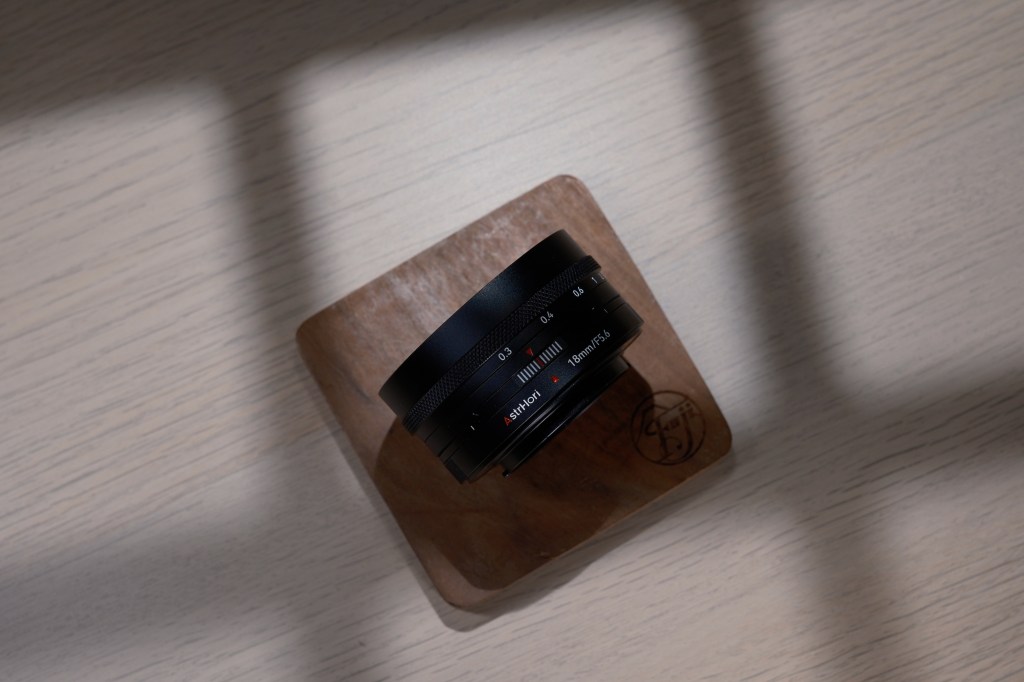
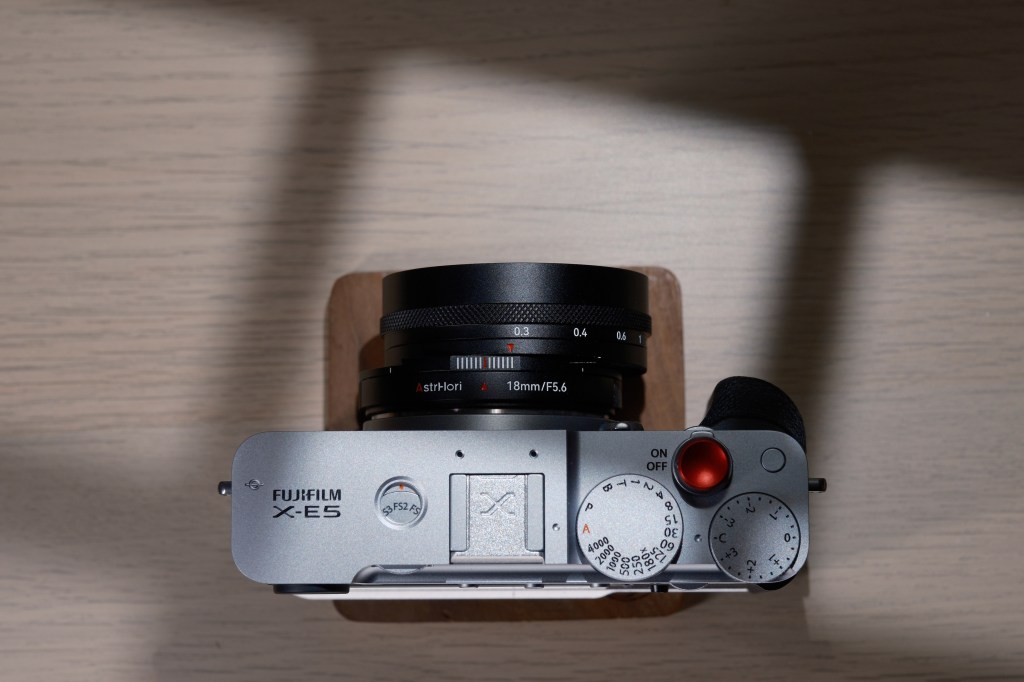
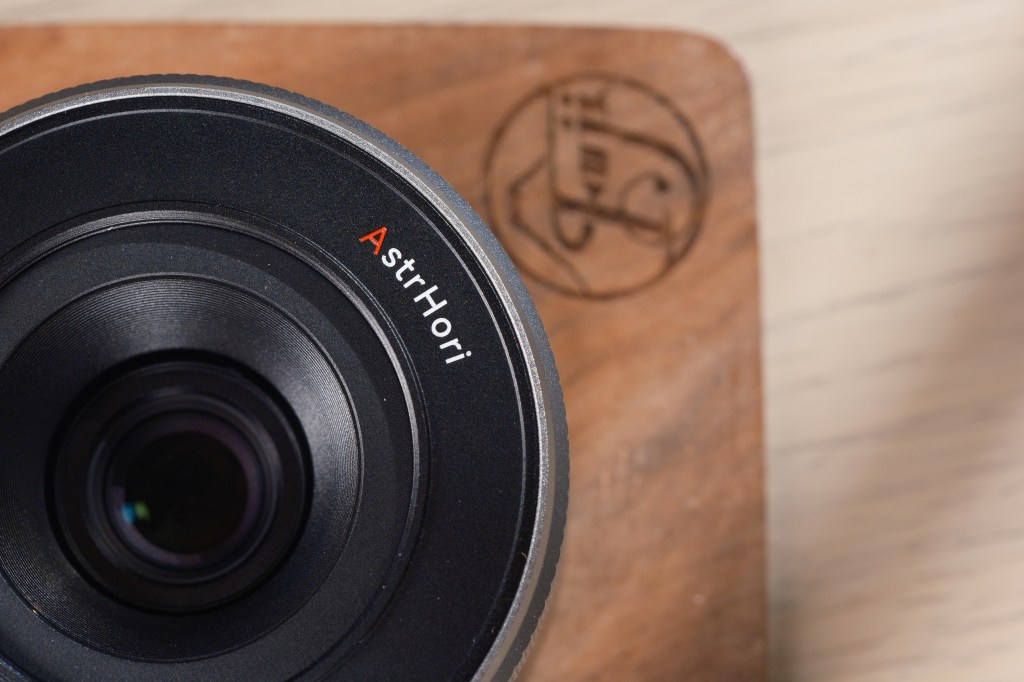
AstrHori 18mm f5.6 Shift Lens
But times have changed. With the rise of Chinese lens makers, we’re now seeing more affordable alternatives entering the market. These lenses bring once-exclusive creative tools into the hands of curious photographers who’ve always wanted to try tilt or shift lenses without breaking the bank.
Fuji X-E5 with AstrHori 18mm f5.6 Shift Lens
Before proceeding further, I would like to express my gratitude to the team at AstrHori for providing me with this lens for review. Rest assured that the opinion is my own.
Intro
When it comes to shift lenses, options are still rare. As far as I know, only AstrHori and Laowa (Venus Optics)currently make them.
Fuji X-M5 with AstrHori 18mm f5.6 Shift Lens
Now, it’s worth noting the difference between tilt and shift:
Tilt lenses allow you to play with the plane of focus, creating dreamy miniature effects or selective focus shots.
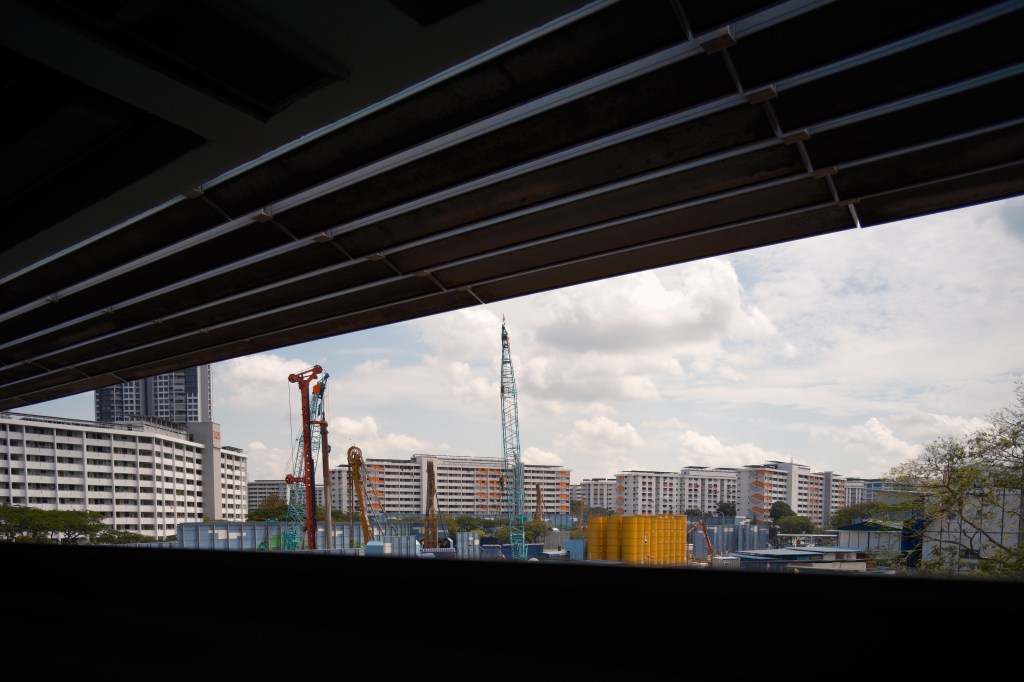
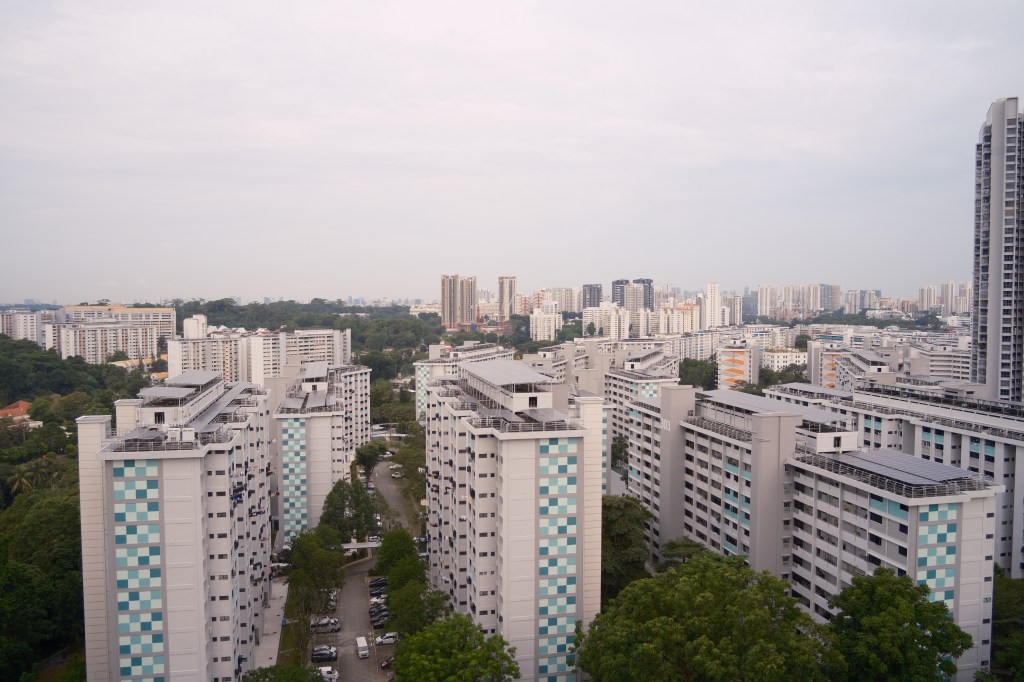
Shift lenses, on the other hand, are all about correcting perspective distortion, like the converging lines you see in architectural photos, while keeping your camera level. They’re also great for stitching large, high-resolution panoramas from overlapping shots.
AstrHori 18mm f5.6 Shift Lens
Design and Build Quality
The AstrHori 18mm f/5.6 feels solid and well-built, with a full-metal construction. You’ll immediately notice the zigzag line around the body — that’s the part where the shifting happens.
The lens can also rotate, with a satisfying click at each stop. This makes it easy to align your shift direction, whether you’re shooting in landscape or portrait orientation.
At 170 grams, it’s about twice the weight of the Fujifilm XF23mm f2.8 (which is 90g), but still feels light and well-balanced in hand.
Image Quality
This lens has a fixed aperture of f5.6, meaning there’s no way to change it , similar to the Viltrox 28mm f4.5. While that may sound limiting, it simplifies the shooting experience and keeps the design compact.
For the image quality, I will break down the image performance into two parts: normal and shift shooting.
Normal shooting mode
Image quality is surprisingly good, sharp enough with well-preserved contrast. Chromatic aberration is minimal, and vignetting is very well controlled, almost nonexistent.
The AstrHori 18mm allows for a ±6mm shift range. Whether or not that’s a standard figure, it’s enough to make a noticeable difference. The perspective correction is clear and effective, with no visible loss in image quality.
Since this lens does not come with a lens hood, we have to be mindful of the potential flare introduced into the photos.
Focusing
The focus throw spans about 170°, which gives you a good amount of precision for manual focusing. It’s smooth and consistent, exactly what you want for a lens like this.
With a minimum focus distance of 30cm, it’s not meant for close-up work. But that’s expected; this is a shift lens designed primarily for architecture and perspective correction, not macro photography.
At just USD 119, this lens is an absolute steal. It’s inexpensive enough to buy out of curiosity, experiment with, and maybe even surprise yourself with the results. For the price of a nice dinner, you can add a creative tool to your camera bag that might come in handy one day.
One thing to watch out for: be mindful of where your fingers rest when shifting the lens. The metal edges can be a little sharp, not enough to hurt, but enough to give you a surprise if you’re not paying attention. Hopefully, AstrHori smooths that out in the next version.
Sharp edges
The shift function works best when shooting upward or downward angles, like from the ground floor looking up at a building. If you’re shooting straight ahead, shifting mainly changes your framing rather than fixing distortion.
While the primary audience is architectural photographers, the 28mm (full-frame equivalent) field of view and f5.6 aperture also make it a fun lens for street photography. And again, at USD 119, it’s an easy lens to buy as a gift, or just to satisfy your curiosity.
Niche products like this are rare because most manufacturers won’t take the risk. So props to AstrHori for daring to do something different. The 18mm f5.6 Shift Lens is available in multiple mounts (E, L, and Z), opening up creative possibilities for photographers across systems.
It’s compact, affordable, and genuinely fun to use, proof that innovation doesn’t always have to come with a high price tag. Here’s hoping AstrHori keeps pushing boundaries with more unique releases, while continuing to refine their lineup of everyday lenses like the AstrHori 27mm f2.8.
Fuji X-E5 with AstrHori 18mm f5.6 shift lens
Thank you for reading.
Disclaimer: 1. All the shots taken here are shot by me. 2. Most of the shots are straight out of the camera with some shots edited via In-Camera Raw Processing. 3. The opinions are based on my experience. If there is any mistake, please kindly drop me a message and I will gladly make the amendment. 4. I reserve ownership of these images, if you wish to use my images, please notify me. 5. If you are interested in this lens and also wish to support me, this is the affilinate link to purchase.
If you like my works, please follow me on either one of the 2 Instagram accounts:
23mm (35mm in full-frame equivalent) has always been my favorite walk-around focal length. So, whenever I’m not testing lenses, the X100VI is usually the first camera I reach for.
With the release of the new XF23mm f2.8 WR, we now have three different 23mm options from Fujifilm. That really shows just how popular this focal length is, and Fujifilm clearly knows it, giving us more choices to fit different shooting styles and budgets.
XF23mm f2.8 WRXF23mm f2.8 WR
Intro
Back in 2022, a community poll on a rumors forum showed strong interest in a compact 23mm pancake lens. I was one of the photographers who voted for it. Over the years, bits and pieces of rumors kept surfacing, and I found myself always hoping the day would finally come. Now, in 2025, Fujifilm has delivered. The long-awaited pancake lens arrived alongside the X-E5 at the X-Summit in Shanghai.
At first glance, you’ll immediately notice how small and lightweight this lens is. Weighing just 90 grams, it’s only slightly heavier than the XF27mm f2.8 WR (84 grams). In terms of size, its dimensions are 61.8mm x 23mm, almost identical to the XF27mm. In reality, both lenses are very close to each other, basically the same in size and weight. This also means this 23mm pancake won’t add any bulk to your camera setup.
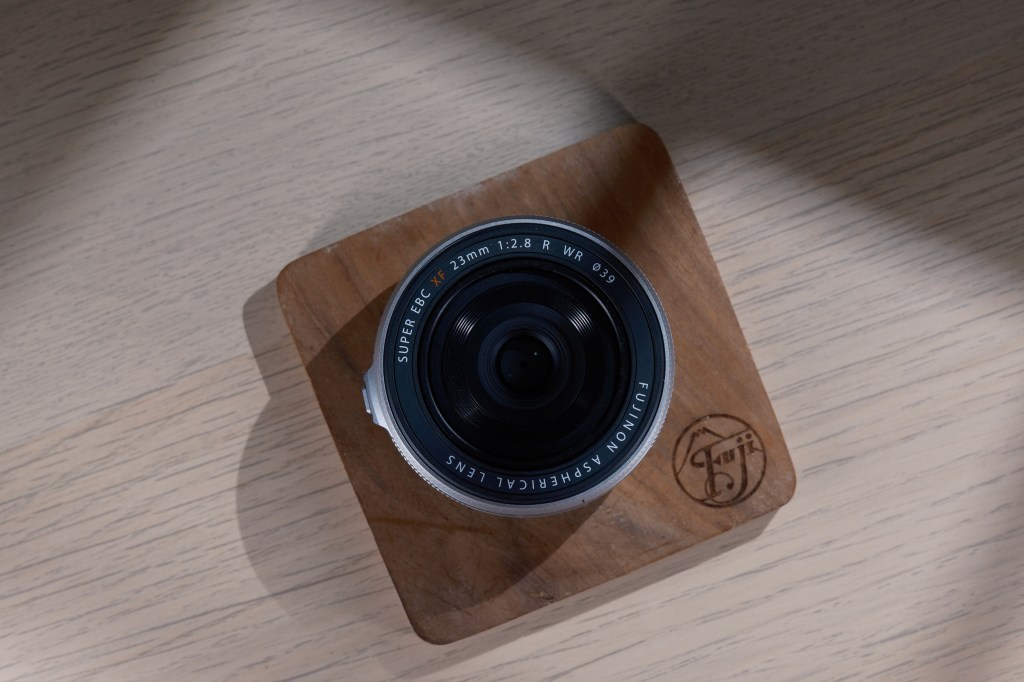
It also takes tiny 39mm filters, which is great for filter users. The metal build feels premium, exactly what we’ve come to expect from Fujifilm; no compromises here.
The aperture ring is another highlight. It delivers that satisfying, tactile click with every turn, something Fujifilm shooters will definitely appreciate.
Image Quality
When it comes to Fujifilm, image quality is rarely in question. Whether the lens is marketed as budget-friendly or premium, their standards remain high.
This pancake is no exception. At wide-open, the images are sharp with excellent contrast. Chromatic aberration and vignetting are virtually unnoticeable, which is impressive for a compact lens like this.
The lens uses a DC coreless motor for autofocus. In most cases, it’s quick and accurate, even in low-light conditions. It’s not quite as snappy as Fujifilm’s other two 23mm lenses, but still very reliable.
That said, I did encounter two instances in a row where the autofocus confirmed (green box lit up), but the final shot was back-focused. Oddly, this happened outdoors in bright sunlight. After those two occasions, everything went back to normal, and I haven’t been able to reproduce the issue.
Something surprised me in this department. I wasn’t expecting something so compact and yet able to deliver a much closer focusing distance at 20cm. It is impressive that the image quality holds up beautifully with crisp detail and punchy contrast.
As of now, this lens is bundled as the kit option with the X-E5. The price difference between the X-E5 body only and the kit with this lens is about USD 200 / SGD 300.
If purchased separately, the lens is expected to retail at USD 499 / SGD 599. Availability seems to vary by region—here in Singapore, for instance, it’s not yet being sold standalone.
Others
The lens doesn’t ship with a square hood, but it does include a small round hood. It’s more for basic protection than style, but it gets the job done.
This lens is aimed at photographers who value compactness above all else. While you can certainly mount it on cameras like the X-T5 or X-H2(S), I think it pairs best with Fujifilm’s smaller bodies, such as the X-M5, X-E series, or X-Txx series.
The XF23mm f2.8 WR may not be the brightest lens in the lineup, but it’s the compact street photography lens that many Fujifilm users have been waiting for, and Fujifilm has finally delivered. Now that we have the long-anticipated 23mm pancake, I can’t help but wonder what Fujifilm’s next pancake lens might be. Will it be a 35mm, or maybe a 50/56mm? What do you think?
X-M5 with XF23mm f2.8 WR
Thank you for reading.
Disclaimer: 1. All the shots taken here are shot by me. 2. Most of the shots are straight out of the camera with some shots edited via In-Camera Raw Processing. 3. The opinions are based on my experience. If there is any mistake, please kindly drop me a message and I will gladly make the amendment. 4. I reserve ownership of these images, if you wish to use my images, please notify me.
If you like my works, please follow me on either one of the 2 Instagram accounts:
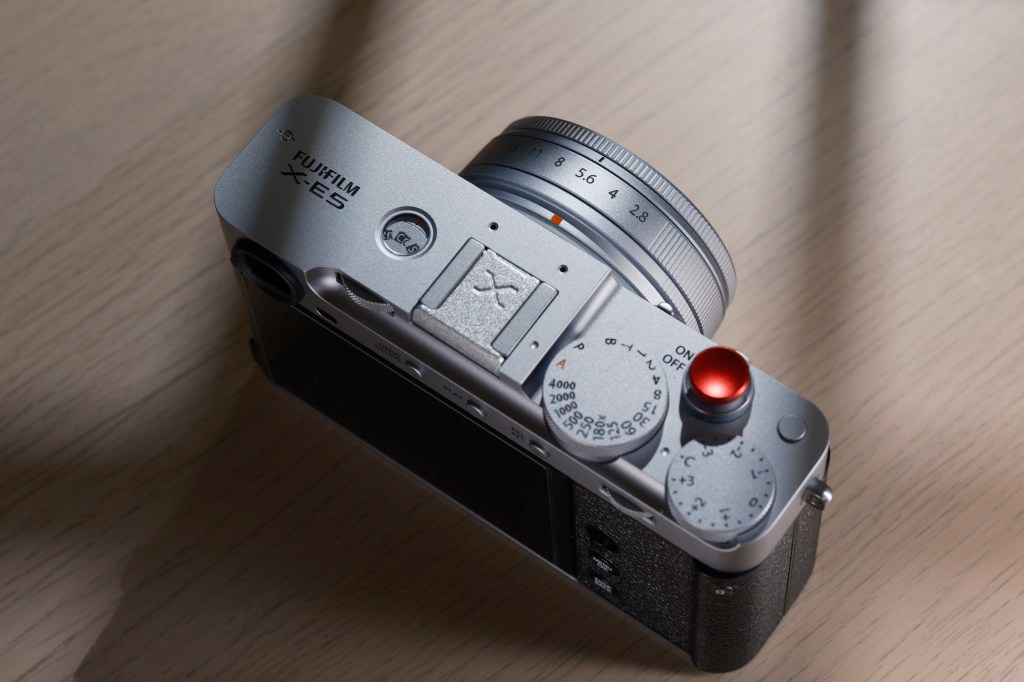
Fujifilm X-E5 is the newest camera in the X-E series and of course in the Fujifilm X series family as well. There was a saying that this series has been a lot of ups and downs with speculation about this series been axed. But it survived everytime and always been refining and Fujifilm always trying yo positioning it better.
Fuji X-E5
Intro
The X-E series has always been considered the little brother to the X-Pro line. Designed to be a more affordable option for photographers who love the rangefinder style but can’t justify the X-Pro’s price, the X-E models traditionally came with slightly lower specs and a plastic build.
Looking back at the Fujifilm X-E series, one thing that immediately stands out is how the design language has evolved. Earlier models carried a softer, curved body shape, but with the newer iterations, Fujifilm has shifted toward a sharper, more refined blocky look.
Interestingly, the X-E1, the very first in the lineup, was actually a bit larger and taller than the brand-new X-E5, yet it still managed to be much lighter thanks to the plastic built body.
The X-E4 was where Fujifilm took a bold leap into minimalism. Some photographers appreciated the stripped-back approach, while others felt it went a little too far. The X-E5 continues along that same minimal design path, but with a few thoughtful additions that make it feel like Fujifilm listened to the feedback.
The shutter, however, doesn’t feel heavy at all. In fact, it’s gentle and refined compared to earlier models, giving the camera a pleasing shooting experience.
A welcome return is the flip-up LCD display. I don’t take selfies often, but the flip-up screen is perfect for capturing low-angle shots.
What’s been brought back? The hand grip. While it’s not the chunkiest grip you’ll find, the small front and rear bumps do improve handling compared to the gripless X-E4. It’s still not perfect, many will likely want an additional grip accessory, but the difference is noticeable and very welcome.
What’s been added? From the front, you’ll now spot a focus mode selector, a control lever, and a function button, small but meaningful upgrades for usability. Around the back, the “Q” button has been moved into the same position as the X100VI, and Fujifilm has also added a rear command dial. These tweaks make the X-E5 feel more versatile without cluttering the minimalist design.
Focus Mode SelectorPlacement of the “Q” button is the same as X100VI
If you’ve shot with previous X-E cameras, one of the first things you’ll notice when picking up the X-E5 is the weight. At 445g, it’s the heaviest in the series (most predecessors hovered around 350g). But with that extra heft comes a sense of sturdiness, thanks to its solid aluminum build.
One of the most distinctive design touches on the X-E5 is the new film simulation dial built into the top plate window. Traditionally, that little window displayed film count, and now, it tells you which film simulation you’re using. A subtle but clever nod to the good film days, and of course, the Instax cameras.
Film simulation dial
The dial itself comes with 10 film simulation slots: 6 fixed presets and 4 that can be customized. (For comparison, the X-M5 offers 12 slots.) FS1 to FS3 can be assigned to any simulation you like, including your own recipes. The final slot, labeled “C” for Custom, lets you quickly change simulations on the fly using the front command dial.
Sensor and Processor
The X-E5 is equipped with the familiar 40MP X-Trans CMOS 5 HR sensor alongside the powerful X-Processor 5. It is the same combination found in Fujifilm’s X-H2, X-T5, X-T50, and even the X100VI.
40 megapixels might feel like overkill if your main goal is to share photos on social media, but having that level of resolution opens up plenty of creative possibilities, from large prints to detailed cropping. It’s a thoughtful move by Fujifilm, and one that photographers will no doubt appreciate.
40 megapixels image quality is superior. Pairing the right lenses help to optimize the best image quality Fujifilm offers. If you pair up with the Fujifilm older generation of lenses or other third party lenses, you might notice some levels of softness if you are the picky one.
For those who have experienced the X-Processor 5, you already know the kind of performance it delivers. This is the very same processor powering the flagship GFX100 II, and it brings that same level of speed and refinement into the X series. When paired with Fujifilm’s latest generation of lenses, the results are nothing short of outstanding, showcasing some of the best performance Fujifilm has to offer.
That said, the eye-AF tracking performs well by Fujifilm’s current standards. It sticks onto the subject most of the time, though every now and then it might wander off a little. When I put it side by side with my X-T5, the focusing feels slightly slower (both running on default settings). But honestly, it’s not a deal breaker for me.
Similar to all other latest series of X-Series camera bodies, it is equipped with 7 stops of compensation. In short, the IBIS in this camera works impressively well.
When it comes to battery, I am prepared and expecting that NP-W126S to be the battery model and we all know how small the battery capacity this model can be.
According to CIPA rating, it is about 300 shots. But based on my usage with everything in default, I managed to squeeze about 480 shots. And that including transferring 50 shots from the camera to the phone. This result of mine shared similarity with the X-T50.
In my opinion, the number of shots seems to be good enough for a 2-3 days travel occasion and probably a good one day coverage for photowalks. If you think the battery is not good enough, I will suggest getting another 1 to 2 spare batteries as the battery is quite pocketable and compact. Alternatively, standby a PD powerbank to charge via the USB-C to extend the juice whenever needed.
Feedback
Like all the rest of the X-E series that come before it, it does not equipped with Dial Lock Release like the X-T5. This lock is so beneficial because it can prevent accidental dial changes. I encountered this when my camera is place inside the bag and probably some movement has pushes the dial without noticing.
Wish to have a dial lock on the shuttle speed dialFuji X-E5 with XF23mm f2.8
There hasn’t been any upgrade to the Electronic View Finder (EVF) or the rear LCD display and they are still at 2.36 million dots and 1.04 million dots respectively. I do wish Fujifilm had pushed a little further in this area, especially to better justify the price increase.
This new generation comes in at a noticeably higher price than the previous one. The body alone is priced at 1599 USD, and in Singapore, it’s going for 2099 SGD. To put things in perspective, the last model was launched at 1449 SGD back in 2021.
Even after adjusting for inflation, which would bring that number closer to 1700 SGD, the new price still sits quite a bit higher. Whether that premium is worth paying really depends on what photographers feel they’re getting out of it.
When it comes to the Fujifilm X-E5 and X100VI, the comparisons never seem to end. Which one is better? Why choose this over that? Which camera really gives you the most value? The debates go on, often shaped by personal preference and bias. That’s completely fair, and I respect that.
From my perspective, both cameras serve different purposes and are designed to meet the unique needs of each photographer and shooting experiences. There’s really no right or wrong choice here. What matters most is understanding your own shooting style and priorities. Once you’re clear about what you need, picking the right camera becomes a much simpler decision. It might sound straightforward, but in reality, finding the right one often takes a bit more time and consideration.
The X-E5 has a little trick up its sleeve, a classic display mode in the electronic viewfinder. It’s an interesting addition that feels like a nod to nostalgia for senior generations users, while also giving younger generations a taste of the past.
Who is this for?
If you are interested in jumping into Fujifilm ecosystem and find that price of the X-E5 price is too steep, there are other models available, for instance, X-M5.
Fujifilm is always about the overall user experience from using the gear, to click the shutter and the final results in front of your eyes. Each camera user experience is different somehow and finding the right one is always a challenge.
If possible, give it a try in your nearest camera store or better recommendation is to rent it out for a week or two with a few lenses to try. The later one is a costly option, but probably a better one than rush buy.
Conclusion
The X-E series has always held a special charm for me. I still keep my X-E3 around, and while I regret missing the chance to pick up the X-E4 before Fujifilm suddenly discontinued it, I wasn’t willing to pay inflated resale prices. So when the X-E5 was announced, it was an easy decision. I knew I had to get it.
Thanks to the ripple effect from the viral X100V video, Fujifilm cameras have been attracting attention well beyond the photography community. And naturally, the X-E5 has also found its way into the spotlight.
Yes, the X-E5 is the most expensive model in the X-E lineup so far, but in my opinion, it’s also the best one yet. I absolutely enjoy the shooting experience this rangefinder-style body offers—it’s a completely different vibe compared to my X-T5. As I’ve said before, every camera has its own purpose, crafted to meet the specific needs and styles of different photographers. The X-E5 is no exception, and that’s exactly what makes it so special.
Fuji X-E5 with XF23mm f.28 kit lens
Thank you for reading.
Disclaimer: 1. All the shots taken here are shot by me. 2. Most of the shots are straight out of the camera with some shots edited via In-Camera Raw Processing. 3. The opinions are based on my experience. If there is any mistake, please kindly drop me a message and I will gladly make the amendment. 4. I reserve ownership of these images, if you wish to use my images, please notify me.
If you like my works, please follow me on either one of the 2 Instagram accounts:
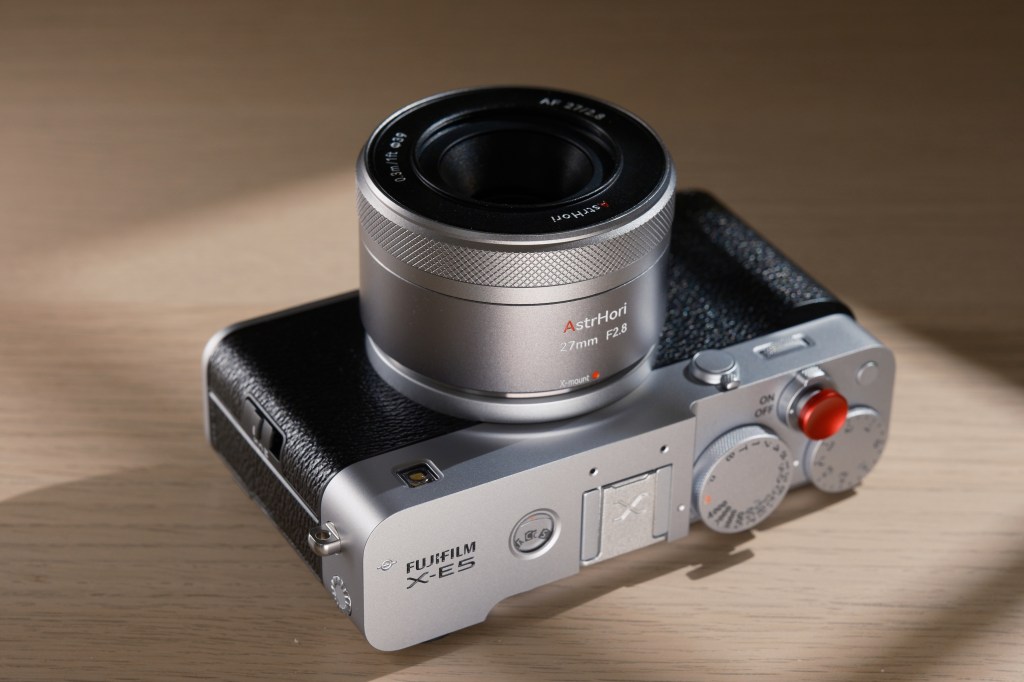
Suddenly, there seems to be another new hype for 27mm among third-party manufacturers. I have no idea why there are suddenly so many 27mm in the market again. If you are not familiar, Ulanzi and 7Artisans release the same 27mm f2.8 setup. (Just that Ulanzi only released it for the Sony E-mount.)
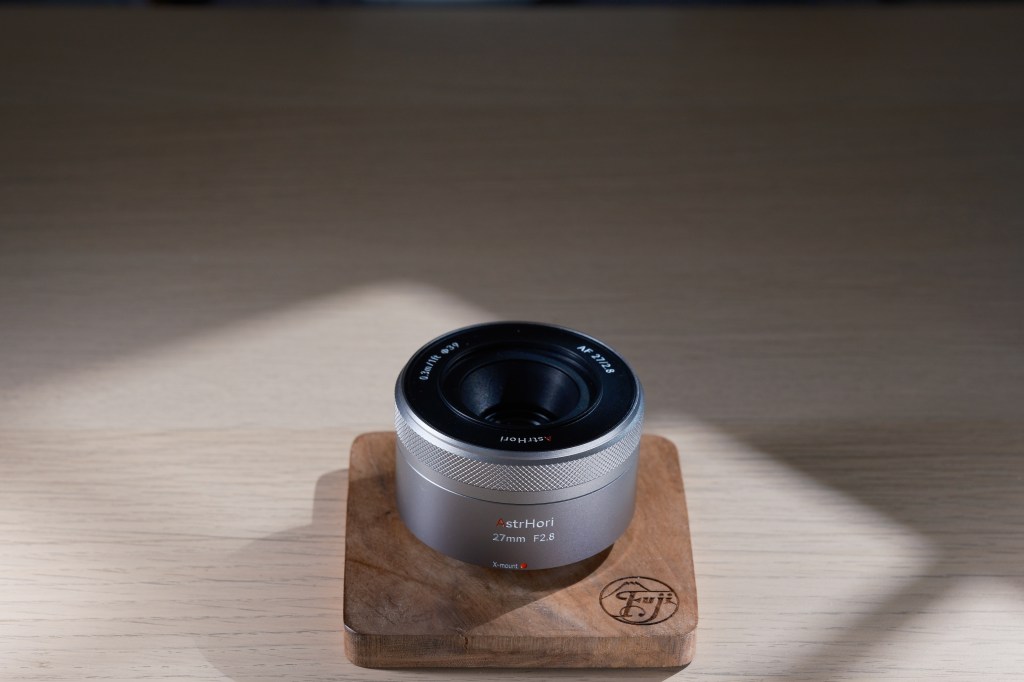
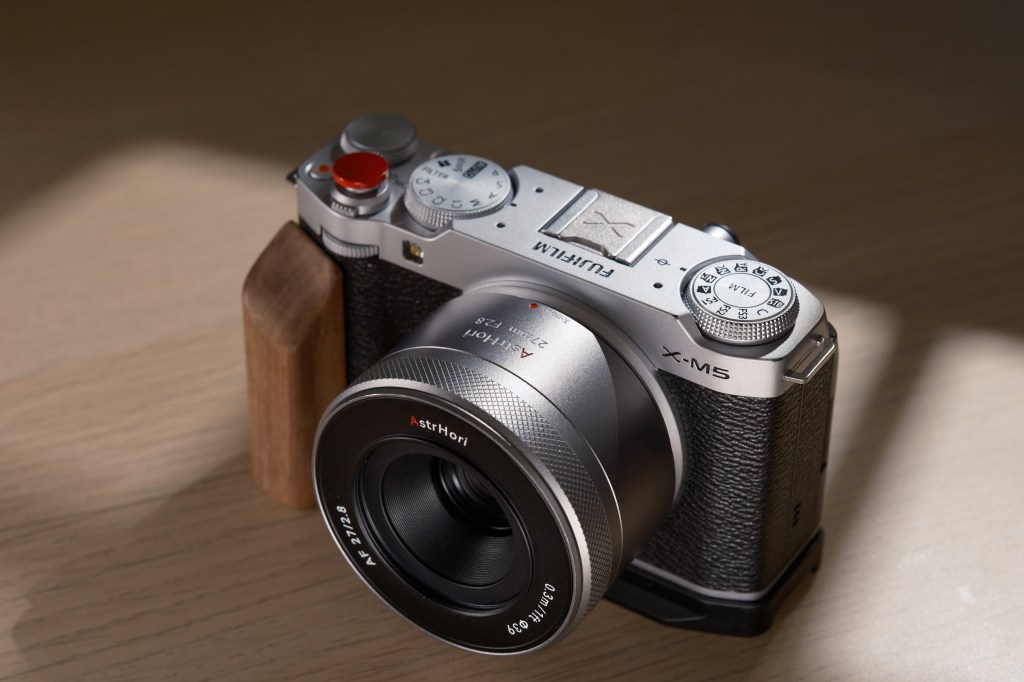
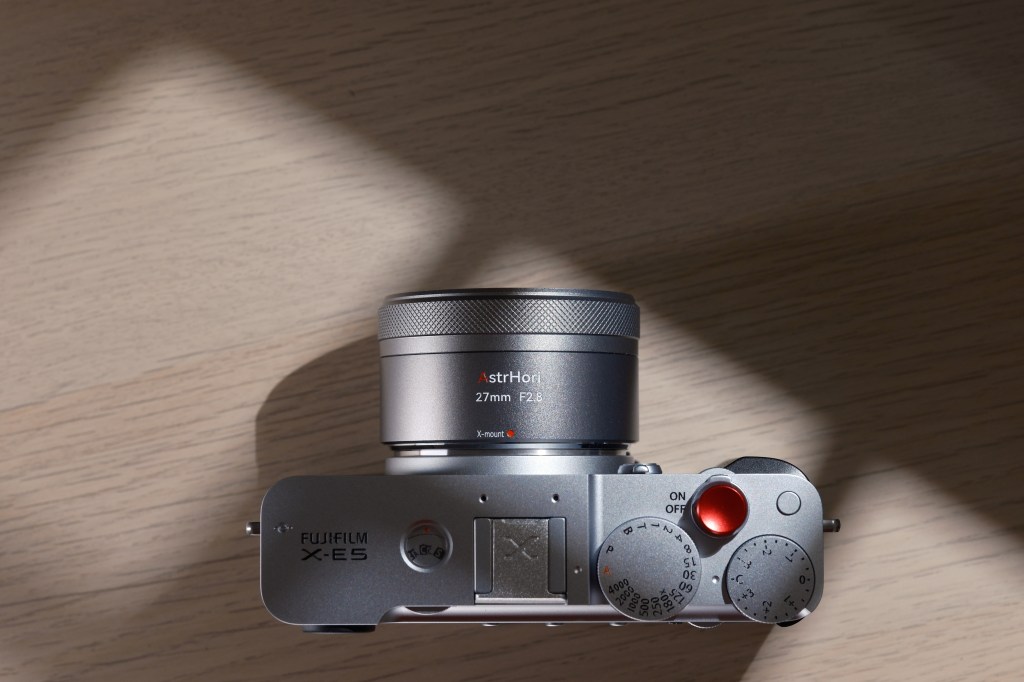
AstrHori 27mm f2.8 AstrHori 27mm f2.8
On a second note, you might realized that both 7Artisans and AstrHori shared very similar lens design with Jintu. You are not wrong. They are the same lens. Just rebranded. (However, we have no idea who rebranded from who. But does it matter?)
Intro
AstrHori 27mm f2.8 was announced back in November 2024. AstrHori isn’t a new player for this focal length, in fact, they had released two 27mm manual lenses before. So I suppose they have decided to go for an autofocus one after noticing some demands from the market.
AstrHori 27mm f2.8 AstrHori 27mm f2.8
Design and Build Quality
From the look, this lens is a simple, beautiful, and minimalistic. It comes with a simple textured manual focus ring for easy gripping. No lens hood is provided for the 39mm filter thread. It comes with 2 colors, black and titanium, which I think the later one do stand out a bit from the crowd.
When it comes to size, it is not the smallest 27mm lens in the market. In fact, it is not even the size of being a “pancake” lens. It is about 2x the size of the XF27mm f2.8. If in return, the
The lens is metal-constructed, with decent built quality. At 165 grams, it is well-weighted and well-balanced on hand. If you are hoping this lens has a similar size to the XF27mm f2.8 WR, you might be disappointed as it is close to 2 times the thickness.
Image Quality
The image quality is noticeably better than that of TTArtisan’s offering. Not quite a fair comparison as the TTArtisan variant was released in 2022 and I believe the optical glass quality has improved over the years.
While sharpness isn’t exceptional at wide open, it remains decent and perfectly usable. The lens also delivers pleasing contrast, and I didn’t encounter any significant chromatic aberration. Vignetting is present, but it can be corrected easily in post.
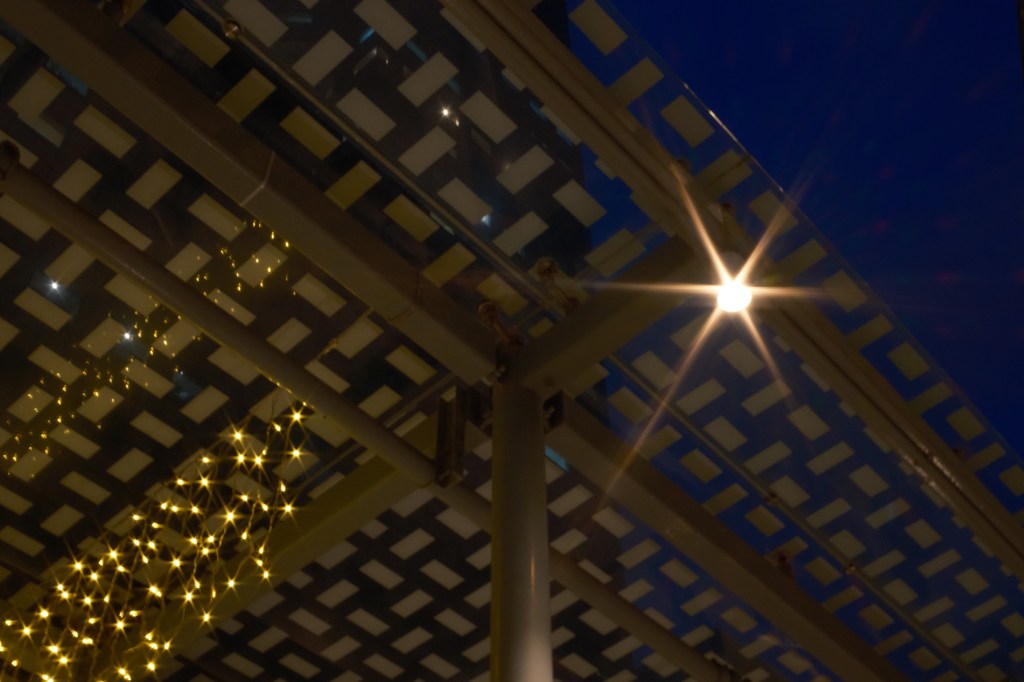
As for sunstars, they’re acceptable and considerably sharp or well-defined.
The autofocus speed isn’t particularly fast or snappy, but it delivers respectable performance and remains largely accurate. In my testing, the Stepper Motor (STM) handled low-light conditions without any noticeable issues, and most importantly, it is quite silent compared to other 27mm f2.8 variants.
Minimum Focus Distance (MFD)
On the bright side, the MFD is actually better (@30cm) than the XF27mm f2.8 WR and TTArtisan 27mm f2.8, at 34cm and 35cm respectively. Also, the good news is that the image quality remains the same.
Priced at 126 USD. It is probably the second cheapest 27mm autofocus lens on the market, the 7Artisans variant is now 110 USD. If every cent is considered in your budget, this is the most affordable 27mm lens to be considered.
Like most of the third-party manufacturers, it does come with a USB-C port for future firmware updates. But unlike most of them, the port is located right at the bottom of the lens barrel. The port does protected by a piece of rubber seal but it is not my most favourable one since the seal can be easily lost without being noticed.
Left: AstrHori 27mm f2.8 with rubber seal on the USB-C port Right: AstrHori 27mm f2.8 without rubber seal on the USB-C portLeft to right: Viltrox 27mm f1.2, TTArtisan 27mm f2.8, XF27mm f2.8 WR, AstrHori 27mm f2.8
Oh yes, it comes with Sony E-mount and Nikon Z-mount too.
Who is this for?
The 40mm (full-frame equivalent) focal length tends to be a love-or-hate choice. This often comes down to two key factors: lens size and aperture. However, this particular lens isn’t designed to excel in either area. Instead, it’s aimed at photographers who want to experience the 40mm perspective without committing to a higher investment.
Although this is a rebranded lens, its image quality is more than acceptable, with reliable sharpness and decent focusing speed. Considering the price point, there’s little to complain about.
I’ve always admired AstrHori for producing unique and unconventional lenses that few other manufacturers attempt. That’s why I was surprised to see them release a focal length that’s already quite common in the market. Perhaps this is their way of balancing between offering distinctive, niche lenses and more conventional options.
X-M5 with AstrHori 27mm f2.8 X-E5 with AstrHori 27mm f2.8 X-E5 with AstrHori 27mm f2.8
That said, I look forward to seeing Astrhori continue to grow, especially with more autofocus lenses in their lineup.
Thank you for reading.
Disclaimer: 1. All the shots taken here are shot by me. 2. Most of the shots are straight out of the camera with some shots edited via In-Camera Raw Processing. 3. The opinions are based on my experience. If there is any mistake, please kindly drop me a message and I will gladly make the amendment. 4. I reserve ownership of these images, if you wish to use my images, please notify me. 5. If you are interested in this lens and also wish to support me, this is the affilinate link to purchase.
If you like my works, please follow me on either one of the 2 Instagram accounts:
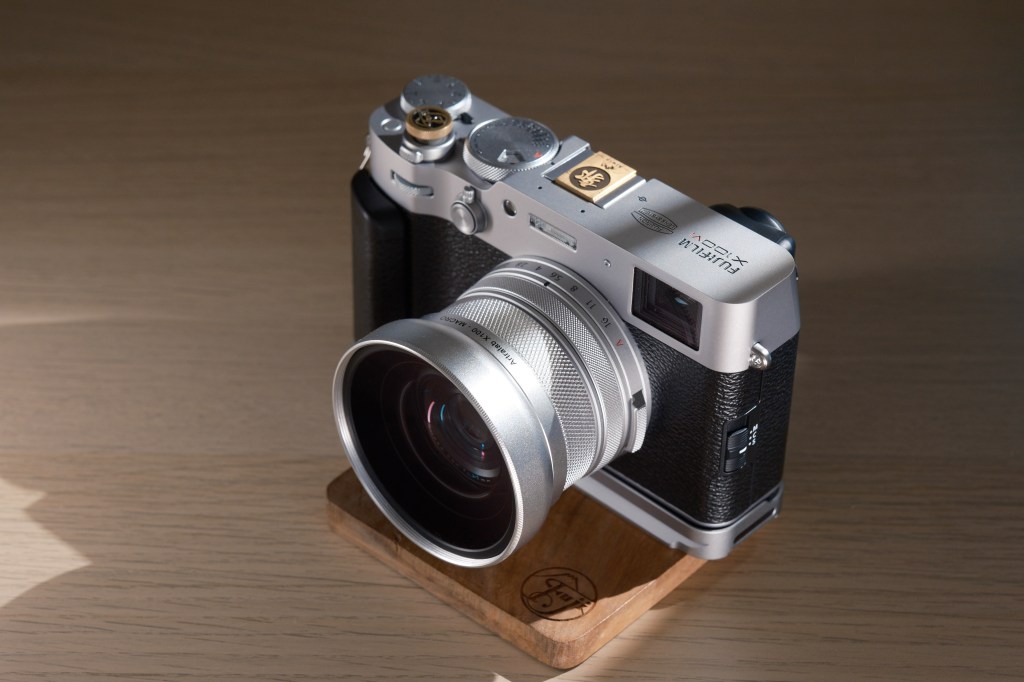
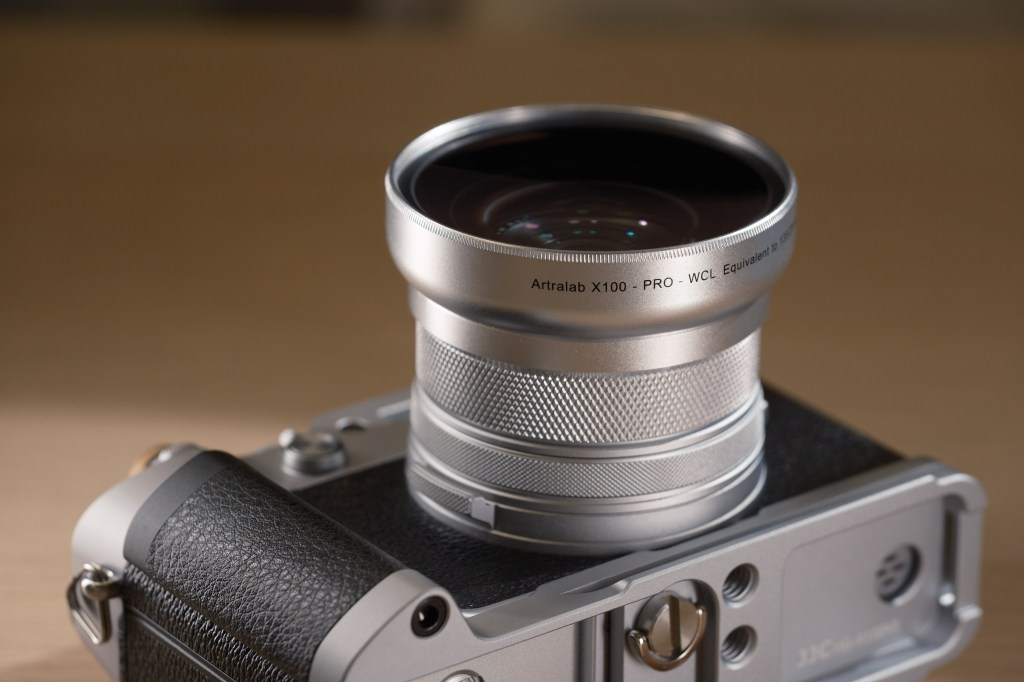
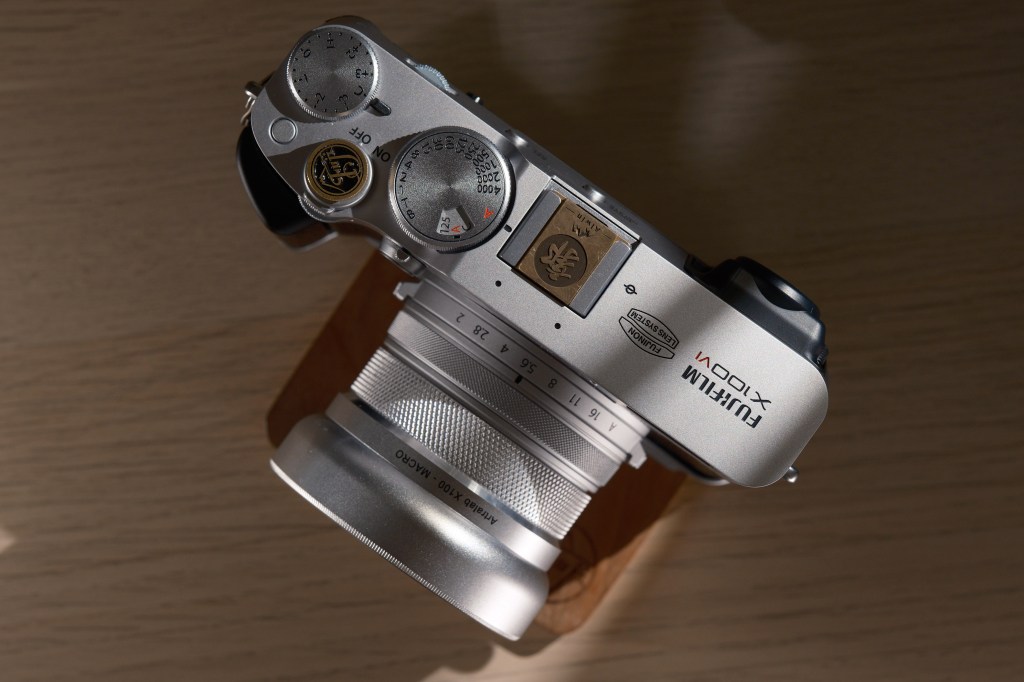
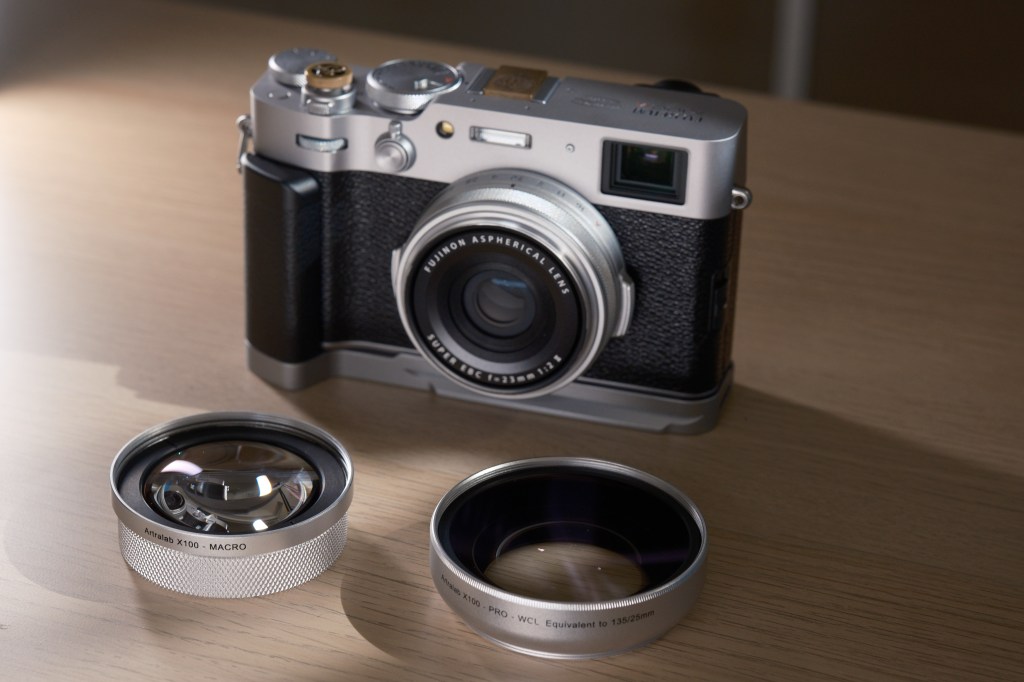
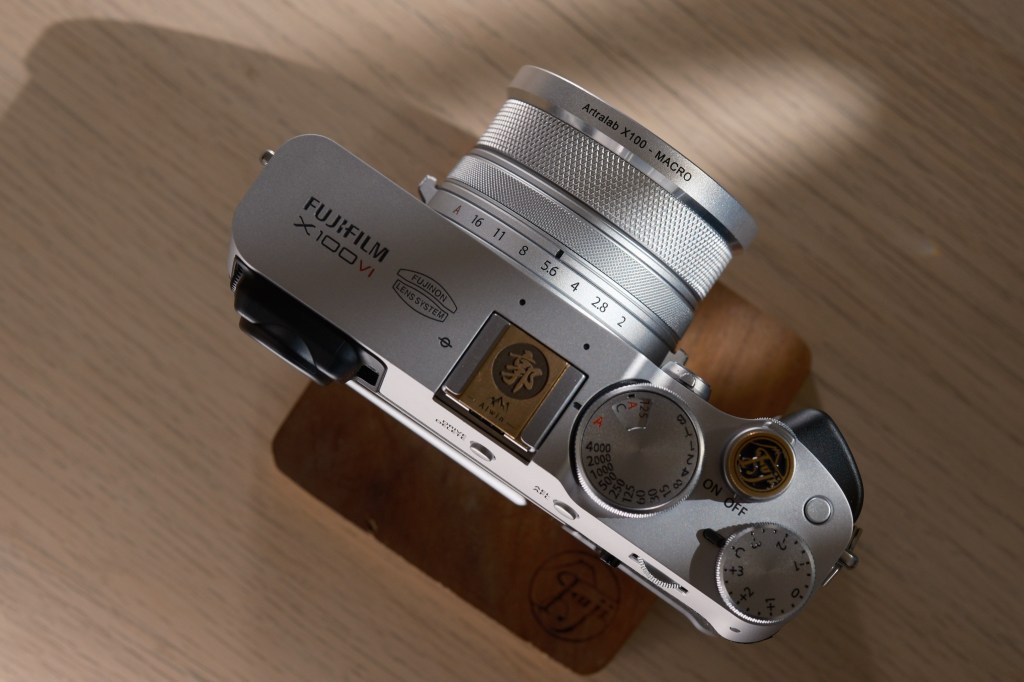
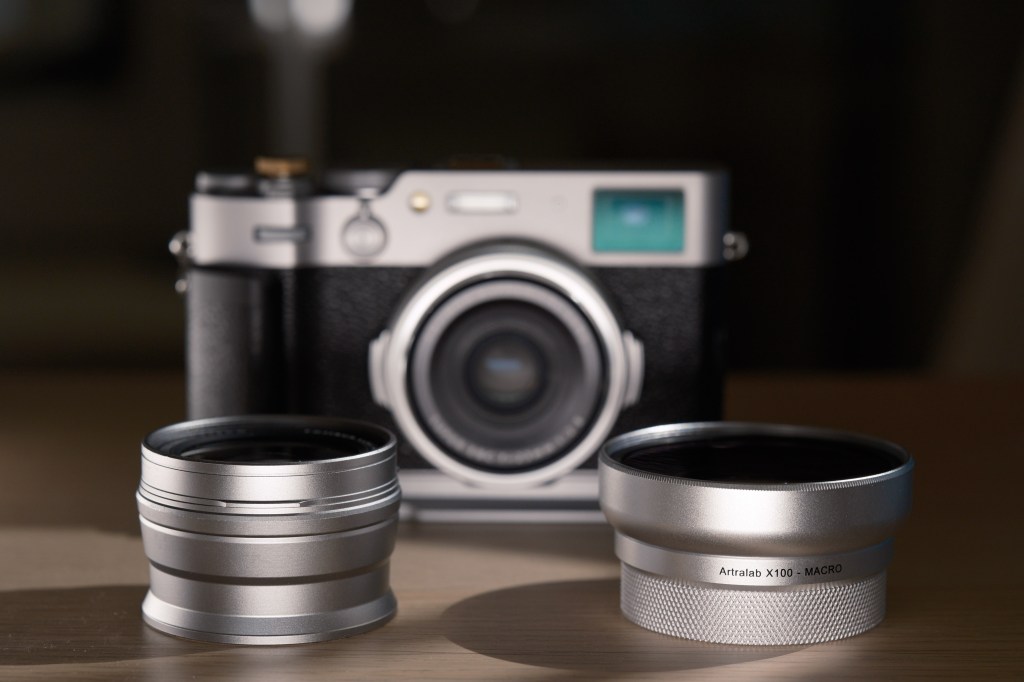
The Artralab X100 Pro WCL + Macro 25mm Wide Conversion Lens was officially announced in June 2025. As its name implies, it’s a professional-grade wide conversion lens.
This isn’t Artralab’s first venture into X100 conversion lenses; they previously released two under the “FUNKYFRAME” label: a 16mm wide and a 60mm tele conversion lens.
Intro
The X100 series, as many of us know, features a fixed lens with a 35mm equivalent focal length in full-frame terms. Its fixed-lens design is part of its charm, photographers appreciate its simplicity and the pure shooting experience it offers. However, this also means the system is somewhat limited in flexibility. That said, we’ve all had those moments when we wished for a wider perspective or a bit more telephoto reach.
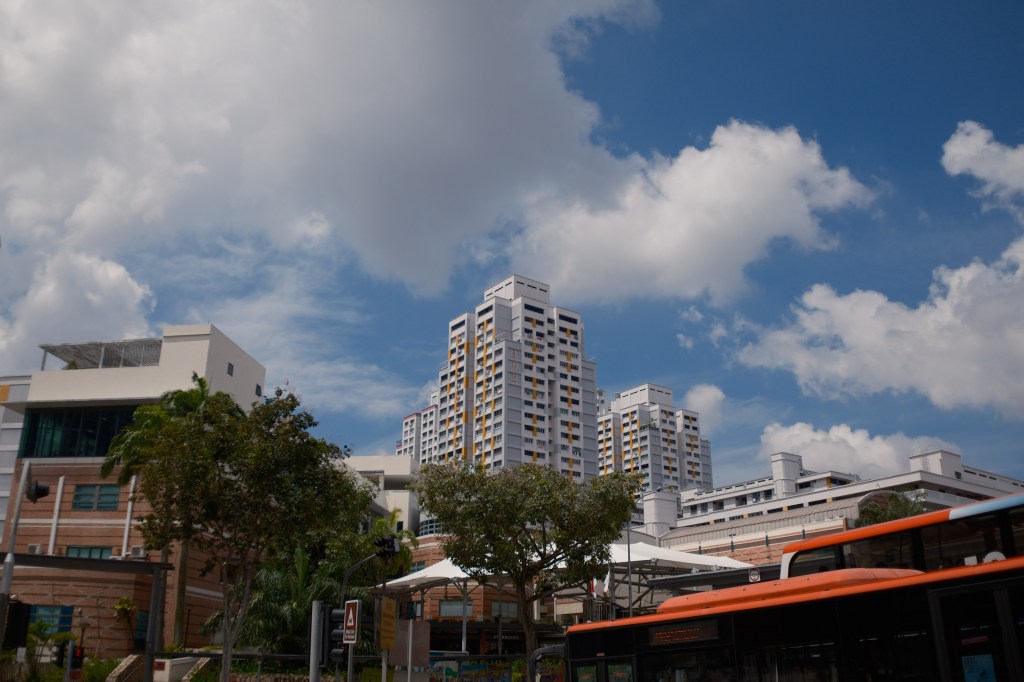
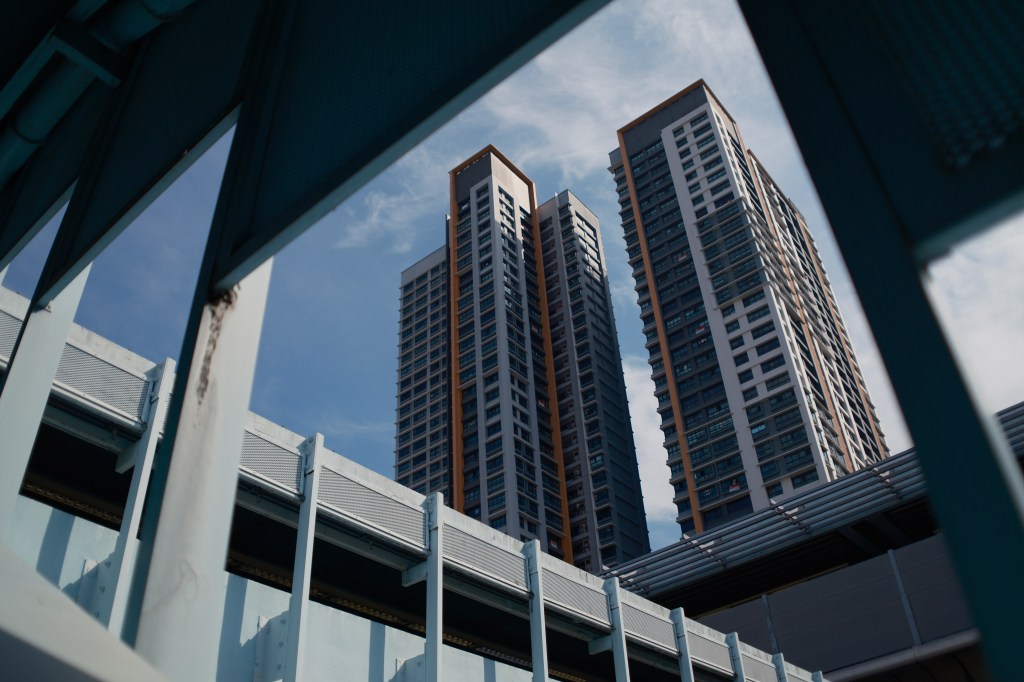
Fuji X100VI . ArtraLab X100 Pro WCL + Marco 25mm @ 17mm . f2. 1/5400″ . ISO 250 . Nostalgic NegativeLeft: Fuji X100VI . ArtraLab X100 Pro WCL + Marco 25mm @ 17mm . f2. 1/4400″ . ISO 250 . Nostalgic Negative Right:Fuji X100VI . @ 23mm . f2. 1/4400″ . ISO 250 . Nostalgic Negative
Fujifilm clearly recognized this limitation, which is why they introduced the WCL (28mm) and TCL (50mm) not long after the launch of the X100S. These two conversion lenses added much-needed versatility to the X100 ecosystem.
Fuji X100VI . ArtraLab X100 Pro WCL + Marco 25mm @ 17mm . f2. 1/1700″ . ISO 125 . Nostalgic NegativeLeft: Fuji X100VI . ArtraLab X100 Pro WCL + Marco 25mm @ 17mm . f2. 1/1800″ . ISO 250 . Nostalgic Negative Right: Fuji X100VI . Artralab X100 Pro WCL + Marco 25mm @ 17mm . f4. 1/240″ . ISO 250 . Nostalgic Negative
Fourteen years on, very few manufacturers have released dedicated conversion lenses for the X100 series. While some have produced generic options, they aren’t specifically designed for the X100. As far as I know, only Freewell and Neewer have ventured into making conversion lenses for this X100 ecosystem.
Design and Build Quality
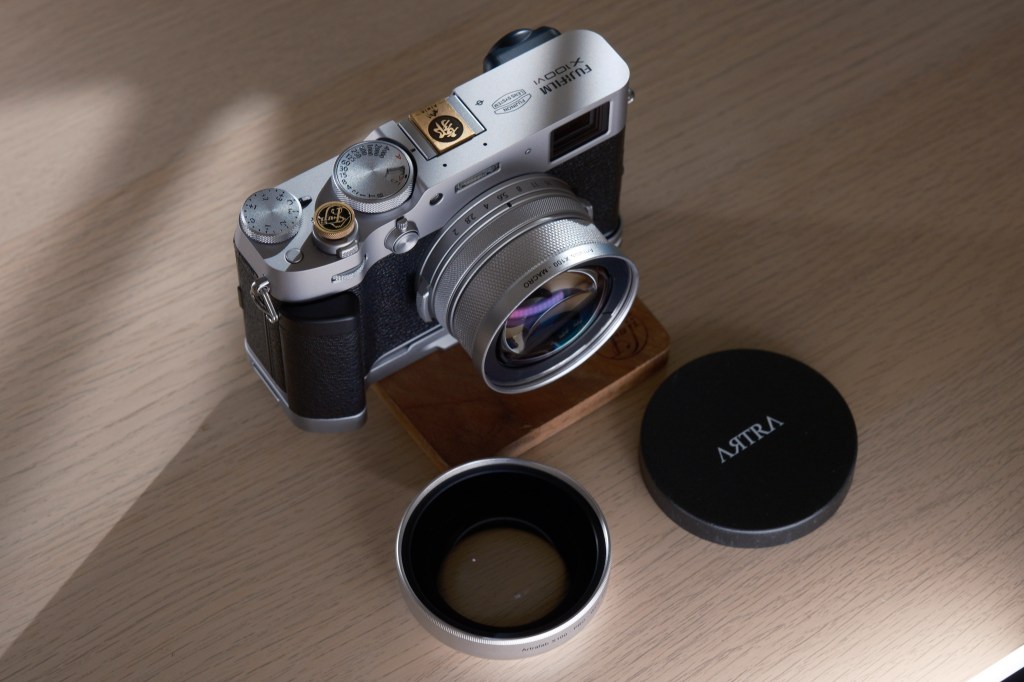
Weighing in at 190 grams, this conversion lens is a bit heavier than Fujifilm’s WCL II, which comes in at 150 grams. The handling feels solid, thanks to its full metal construction that gives off a premium impression. However, the silver finish is glossier than that of the Fujifilm X100VI and has a slightly different tone.
Fuji X100VI . ArtraLab X100 Pro WCL + Marco 25mm @ 17mm . f2. 1/80″ . ISO 320 . Nostalgic Negative
It includes a metal rear screw cap and a rubber front lens cap. However, I do wish it came with a metal front cap as well, it would have elevated the overall shooting experience.
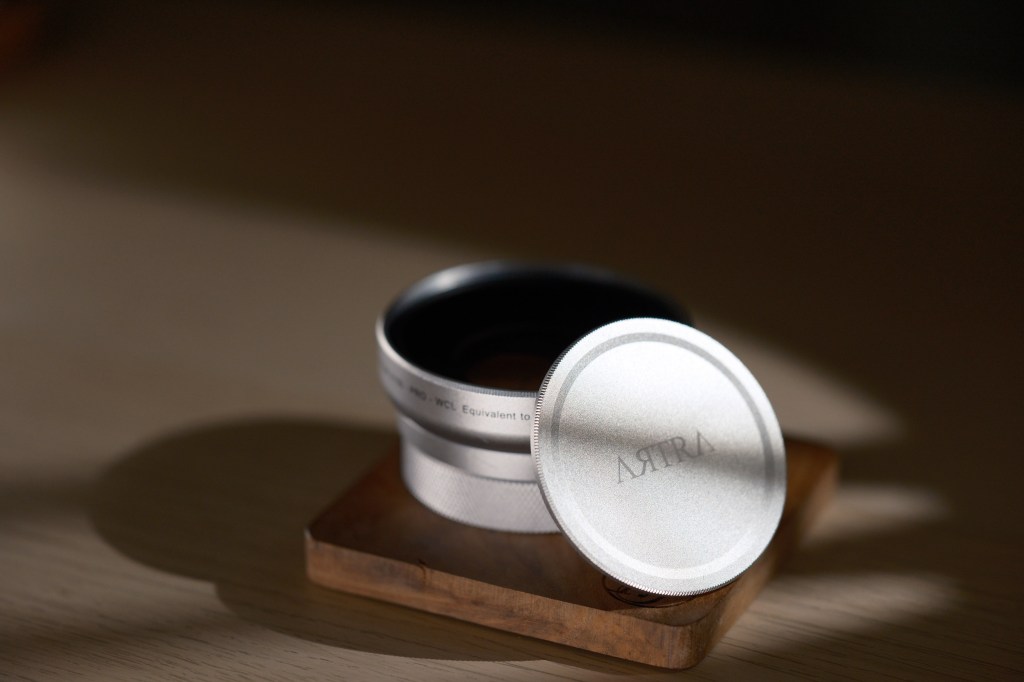
Artralab X100 Pro WCL + Marco 25mm with rear lens cap
Image Quality
When shot wide open, the image quality holds up well. If you’re particular about sharpness, you’ll notice it’s slightly softer compared to using the X100 without the WCL attached. For casual photography and social media sharing, though, it’s more than adequate. That said, the image corners do exhibit a bit of softness.
Fuji X100VI . ArtraLab X100 Pro WCL + Marco 25mm @ 17mm . f5.6. 1/3500″ . ISO 250 . Nostalgic Negative
Left: Fuji X100VI . ArtraLab X100 Pro WCL + Marco 25mm @ 17mm . f2. 1/2700″ . ISO 250 . Nostalgic Negative Right: Fuji X100VI . ArtraLab X100 Pro WCL + Marco 25mm @ 17mm . f2. 1/18000″ . ISO 250 . Nostalgic Negative
Chromatic aberration isn’t particularly noticeable to my eyes, but vignetting is a bit more apparent. I don’t usually bring up distortion, but in this case, there is some present, it can be quite noticeable, especially when photographing straight lines.
Fuji X100VI . ArtraLab X100 Pro WCL + Marco 25mm @ 17mm . f16. 1/350″ . ISO 250 . Nostalgic Negative
Focusing
In terms of focusing, the speed remains unaffected after attaching the conversion lens. Throughout my testing, I didn’t experience any missed or out-of-focus shots.
Fuji X100VI . ArtraLab X100 Pro WCL + Marco 25mm @ 17mm . f2. 1/900″ . ISO 125 . Nostalgic NegativeFuji X100VI . ArtraLab X100 Pro WCL + Marco 25mm @ 17mm . f2. 1/1100″ . ISO 250 . Nostalgic Negative
Minimum Focus Distance (MFD)
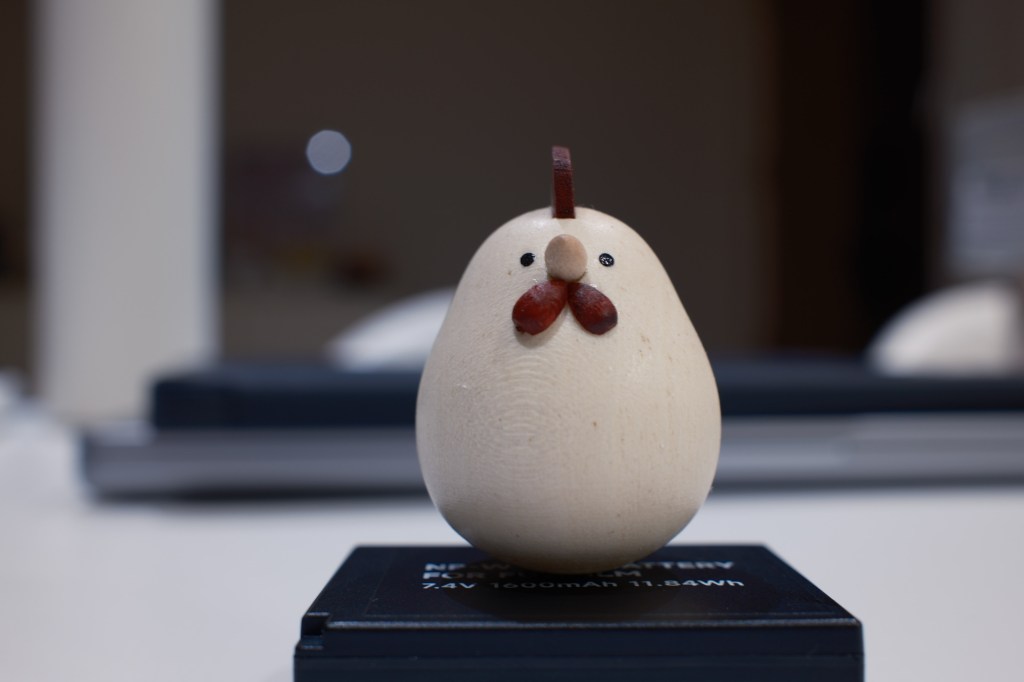
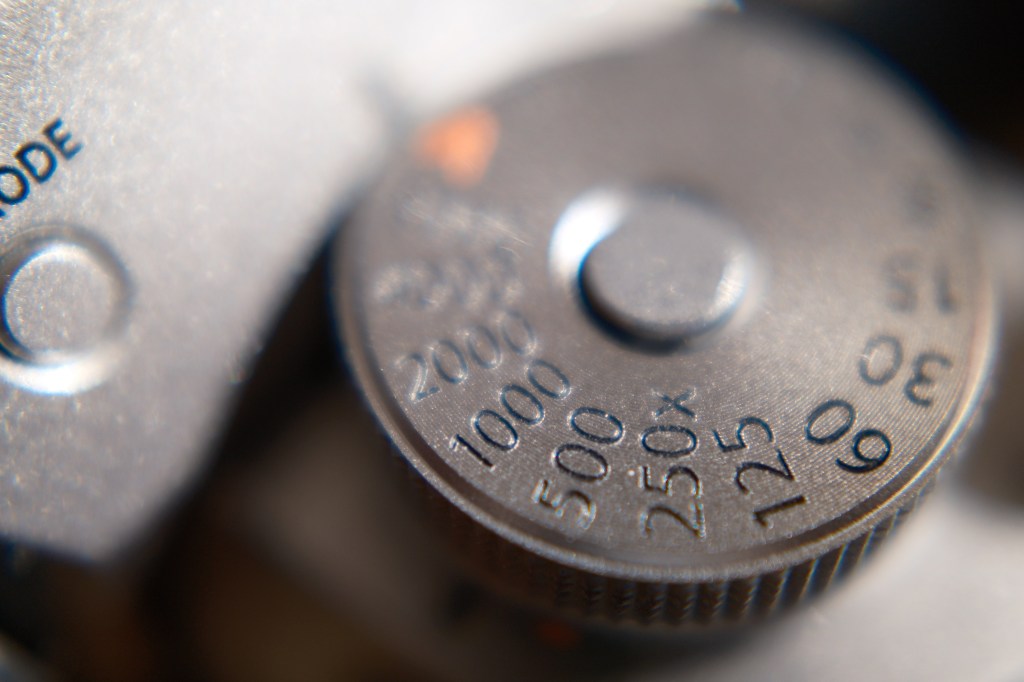
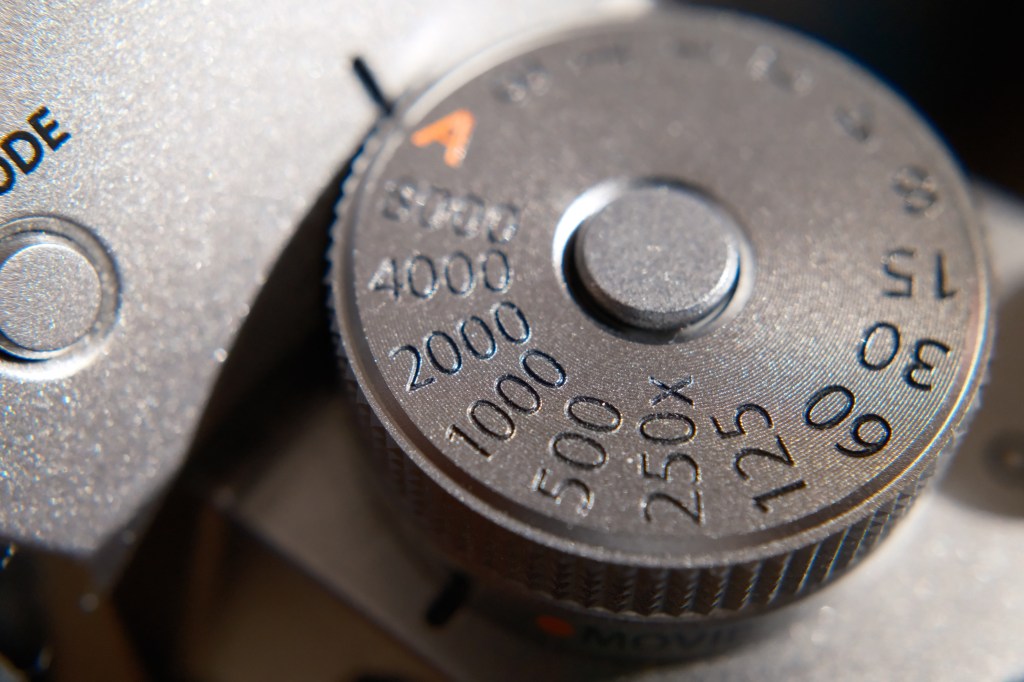
What makes this conversion lens particularly interesting is its second feature, as the name suggests, it includes a macro lens. Unfortunately, there’s no official specification on its minimum focusing distance, but it does allow for fairly decent close-up shots. It lets the X100VI focus closer than its original 10cm MFD. However, just to note, the macro lens is strictly for close-up subjects, it can’t be used for general shooting.
Left: Marco optic component Right: Wide conversion optic component
If you want to shoot macro using the entire WCL setup, that’s also possible, though it won’t allow you to get as close as when using the dedicated macro lens alone.
Anyway, photos are the best way to describe how close it is.
Left: Artralab X100 Pro WCL + Marco 25mm Center: Marco lens only Right: X100VI at MFDLeft: Marco lens only at f2 Center: Marco lens only at f5.6 Right: Marco lens only at f4
Price Point
Priced at 138 USD, it’s not exactly expensive, and it’s certainly much more affordable than the Fujifilm WCL II, which costs 349 USD. Given that it offers two functions in one, could it be considered a good bargain?
Fuji X100VI . ArtraLab X100 Pro WCL + Marco 25mm @ 17mm . f2. 1/4400″ . ISO 250 . Nostalgic NegativeLeft: Fuji X100VI . ArtraLab X100 Pro WCL + Marco 25mm @ 17mm . f5.6. 1/3200″ . ISO 250 . Nostalgic Negative Right: Fuji X100VI . ArtraLab X100 Pro WCL + Marco 25mm @ 17mm . f2. 1/80″ . ISO 320 . Nostalgic Negative
Others
Unlike the Fujifilm WCL-X100 II, the EXIF file still indicates 23mm instead of 17mm (APS-C format). Personally, this is not a deal breaker for me.
Fuji X100VI . ArtraLab X100 Pro WCL + Marco 25mm @ 17mm . f2. 1/3200″ . ISO 125 . Classic Negative
Left: Fuji X100VI . ArtraLab X100 Pro WCL + Marco 25mm @ 17mm . f2. 1/2700″ . ISO 125 . Classic Negative Right: Fuji X100VI . ArtraLab X100 Pro WCL + Marco 25mm @ 17mm . f2. 1/850″ . ISO 125 . Classic Negative
Who is this for?
If you’re an X100 user looking to add a bit more versatility, this could be a worthwhile option. It offers a slightly wider focal length compared to the X100 WCL II at a significantly lower price, though there is a small trade-off in image quality.
Fuji X100VI . ArtraLab X100 Pro WCL + Marco 25mm @ 17mm . f2. 1/125″ . ISO 250 . Nostalgic Negative Left: Fuji X100VI . ArtraLab X100 Pro WCL + Marco 25mm @ 17mm . f2. 1/80″ . ISO 2000 . Nostalgic Negative Right: Fuji X100VI . ArtraLab X100 Pro WCL + Marco 25mm @ 17mm . f2. 1/90″ . ISO 250 . Nostalgic Negative
Conclusion
This is an intriguing and innovative product from Artralab. It is a good alternative optical replacement for the X100 WCL II, it certainly provides photographers with an additional option to consider.
Left: Fujifilm 28mm WCL Right: Artralab X100 Pro WCL + Marco 25mmLeft: Fujifilm 28mm WCL Right: Artralab X100 Pro WCL + Marco 25mm
I’m curious whether Artralab will eventually launch a pro version of the TCL. If they do, I’m eager to see what innovative features or solutions they might bring to the table.
Thank you for reading.
Disclaimer: 1. All the shots taken here were taken by me. 2. Most shots are straight out of the camera, with some edited via In-Camera Raw Processing. 3. The opinions are based on my experience. If there is any mistake, please kindly message me, and I will gladly make the amendment. 4. I reserve ownership of these images. If you wish to use my images, please notify me.
If you like my works, please follow me on either one of the 2 Instagram accounts:
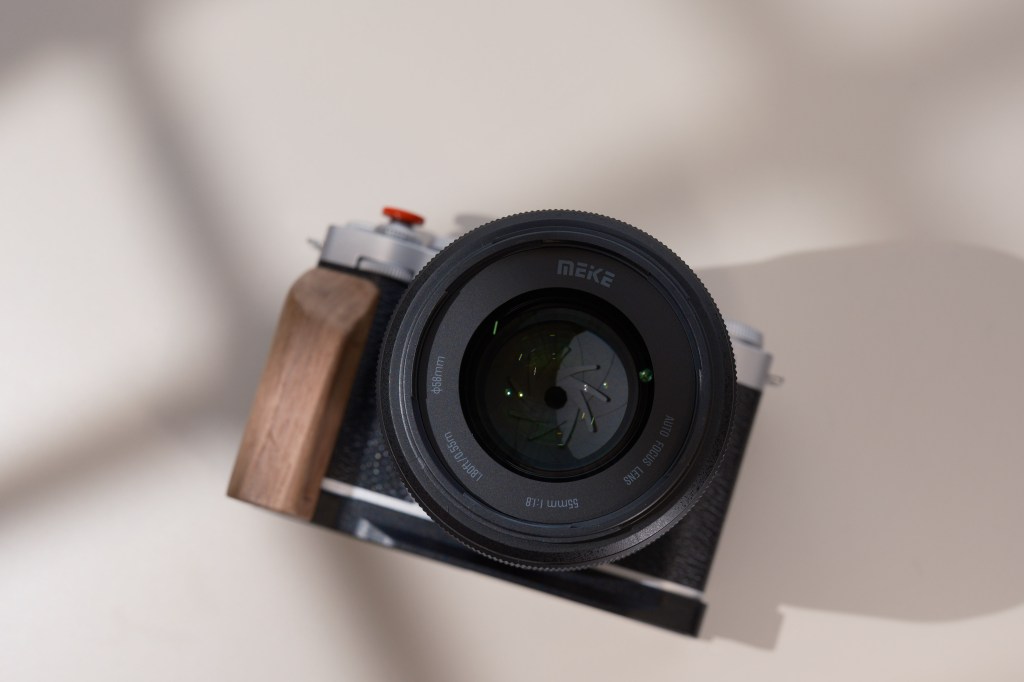
The Meike 55mm f1.8 Pro is the second lens in their professional-grade lineup, released shortly after their first Pro lens. This quick follow-up suggests that Meike is pretty serious about expanding its offerings for APS-C users.
Meike 55mm f1.8 Pro
For photographers, this means more choices, and this is always a good thing, though it can make deciding between third-party options a bit more challenging for us.
X-M5 with Meike 55mm f1.8 Pro
Intro
A 55mm focal length isn’t a common one, but when mounted on an APS-C body, it gives an effective field of view of around 82.5mm, very close to the popular 85mm perspective. Similarly, that goes the same for the 50mm (in APS-C format). Ultimately, what matters more to me is the total package: image quality, usability, and whether it justifies the asking price. Let’s dive into that.
Meike 55mm f1.8 Pro with lens hood
Design and Build Quality
Weighing in at 365 grams and sporting a 58mm filter thread, the 55mm f1.8 Pro is nearly indistinguishable from Meike’s 85mm f1.8 Pro lens in appearance. Both share the same minimalist design language, similar weight, and identical build materials. The primary visual difference lies in the 85mm’s slightly larger size and its 62mm filter thread.
Fuji X-M5 . Meike 55mm f1.8 Pro @ 55mm . f1.8 . 1/850″ . ISO 320 . Nostalgic Negative Left: Fuji X-M5 . Meike 55mm f1.8 Pro @ 55mm . f1.8 . 1/350″ . ISO 160 . Nostalgic Negative Right: Fuji X-M5 . Meike 55mm f1.8 Pro @ 55mm . f1.8 . 1/340″ . ISO 320 . Nostalgic Negative
Meike has kept things consistent across both lenses, including a smooth, clickable aperture ring with satisfying tactile feedback and a frictionless manual focus ring. A plastic lens hood is also included.
Image Quality
To my eyes, the 55mm f1.8 Pro produces slightly better image quality than the 85mm f1.8 Pro. Center sharpness is notably strong, with only minor softness in the corners—nothing alarming in my opinion. Vignetting is present as expected but mild and acceptable in real-world use. Chromatic aberration appears to be well-controlled, with no distracting color fringing in high-contrast areas.
Fuji X-M5 . Meike 55mm f1.8 Pro @ 55mm . f1.8 . 1/8000″ . ISO 160 . Nostalgic NegativeLeft: Fuji X-M5 . Meike 55mm f1.8 Pro @ 55mm . f2 . 1/125″ . ISO 500 . Nostalgic Negative Right: Fuji X-M5 . Meike 55mm f1.8 Pro @ 55mm . f2 . 1/125″ . ISO 800 . Nostalgic Negative
The bokeh is smooth and natural, with a more refined background blur compared to the 85mm. This helps isolate subjects effectively without any jarring distractions in the background.
The lines from the sunstar aren’t well-defined, and it will also introduce some ghosting flares.
Fuji X-T5 . Meike 55mm f1.8 Pro @ 55mm . f16 . 1/80″ . ISO 500 . Nostalgic Negative
Focusing
It uses the common Stepper Motor (STM), and the focusing performance seems much better than that of the 85mm counterpart. Although I did encounter some focus pullings in bright daylight, it is still less than that of the 85mm counterpart. Focusing speed is decent, but I did encounter 2-3 mis-focused shots when the focus is locked with the green box. I hope it will be fixed with a firmware update in the future.
Fuji X-T5 . Meike 55mm f1.8 Pro @ 55mm . f5.6 . 1/800″ . ISO 125 . Nostalgic Negative
Left: Fuji X-T5 . Meike 55mm f1.8 Pro @ 55mm . f1.8 . 1/15″ . ISO 500 . Nostalgic Negative Right: Fuji X-T5 . Meike 55mm f1.8 Pro @ 55mm . f1.8 . 1/5400″ . ISO 125 . Nostalgic Negative
Minimum Focus Distance (MFD)
The minimum focus distance is 55cm, which is typical for a lens of this focal length. I didn’t notice any loss in image quality when shooting at close range, which is always a plus
Fuji X-T5 . Meike 55mm f1.8 Pro @ 55mm . f1.8 . 1/8500″ . ISO 125 . Nostalgic NegativeRight: Fuji X-T5 . Meike 55mm f1.8 Pro @ 55mm . f1.8 . 1/900″ . ISO 320 . Nostalgic Negative
Price Point
Priced at $330 USD, the Meike 55mm f1.8 Pro sits in a competitive space. Here’s how it stacks up against rivals:
Fuji X-T5 . Meike 55mm f1.8 Pro @ 55mm . f1.8 . 1/240″ . ISO 125 . Classic NegativeLeft: Fuji X-T5 . Meike 55mm f1.8 Pro @ 55mm . f1.8 . 1/950″ . ISO 125 . Nostalgic Negative Right: Fuji X-T5 . Meike 55mm f1.8 Pro @ 55mm . f1.8 . 1/1900″ . ISO 125 . Nostalgic Negative
While the Sigma is a class leader among the third parties (I am excited to see what Viltrox 56mm f1.2 Pro can do), it’s nearly twice the price. Meike seems to be offering a solid middle ground in terms of price, performance, and build quality.
Others
Meike continues to place the USB-C port for firmware updates inside the rear lens mount. This is something I have come to appreciate for its neat and protected design.
Meike 55mm f1.8 Pro – USB-C port
Although there’s no official word on weather sealing, the red ring around the lens mount appears to be made of a rubber-like material, which may offer some degree of environmental protection.
Fuji X-T5 . Meike 55mm f1.8 Pro @ 55mm . f4 . 1/850″ . ISO 125 . Nostalgic Negative
Oh yes, if you wish to do manual focusing, you have to switch to manual on the focus mode selector switch on the lens and not on the camera body. I guess from the manufacturer’s perspective, it is easier to switch on the lens than on the camera body.
Meike 55mm f1.8 Pro – focus mode selector
Who is this for?
The 55mm focal length is versatile, suiting portraits and product photography well, while also offering an interesting perspective for street, documentary, and even landscape work. It’s a nice “in-between” focal length that can handle various genres with ease.
Fuji X-T5 . Meike 55mm f1.8 Pro @ 55mm . f1.8 . 1/80″ . ISO 400 . Nostalgic NegativeLeft: Fuji X-T5 . Meike 55mm f1.8 Pro @ 55mm . f1.8 . 1/80″ . ISO 160 . Nostalgic Negative Right: Fuji X-T5 . Meike 55mm f1.8 Pro @ 55mm . f1.8 . 1/400″ . ISO 125 . Nostalgic Negative
Conclusion
Compared to the 85mm Pro, I find the 55mm easier to use when composing shots, especially full-body portraits. Since you don’t need to step back as far. It also makes communication with your subject more natural. While the 85mm delivers better background compression, the difference isn’t a dealbreaker in most scenarios.
Fuji X-T5 . Meike 55mm f1.8 Pro @ 55mm . f1.8 . 1/3000″ . ISO 125 . Nostalgic Negative
Left: Fuji X-T5 . Meike 55mm f1.8 Pro @ 55mm . f1.8 . 1/500″ . ISO 125 . Nostalgic Negative Right: Fuji X-T5 . Meike 85mm f1.8 Pro @ 55mm . f1.8 . 1/550″ . ISO 125 . Nostalgic Negative
Meike has done a commendable job with the Pro series. While f1.8 isn’t extremely fast by today’s “Pro” standards, the lens offers a great balance between price, performance, and portability. For photographers looking for a lightweight, affordable, and well-built lens in the short-telephoto range, the 55mm f/1.8 Pro is a compelling choice.
Right: Fuji X-T5 . Meike 55mm f1.8 Pro @ 55mm . f1.8 . 1/1400″ . ISO 125 . Nostalgic NegativeRight: Fuji X-T5 . Meike 55mm f1.8 Pro @ 55mm . f1.8 . 1/80″ . ISO 200 . Nostalgic Negative
Right: Fuji X-T5 . Meike 55mm f1.8 Pro @ 55mm . f1.8 . 1/80″ . ISO 2500 . Nostalgic Negative
Hopefully, Meike continues this momentum and completes a “Pro trinity” by adding a wide-angle option in the near future.
X-M5 with Meike 55mm f1.8 Pro
Thank you for reading.
Disclaimer: 1. All the shots taken here are shot by me. 2. Most of the shots are straight out of the camera with some shots edited via In-Camera Raw Processing. 3. The opinions are based on my experience. If there is any mistake, please kindly drop me a message and I will gladly make the amendment. 4. I reserve ownership of these images, if you wish to use my images, please notify me.








































































































































































































 Alwin Kok