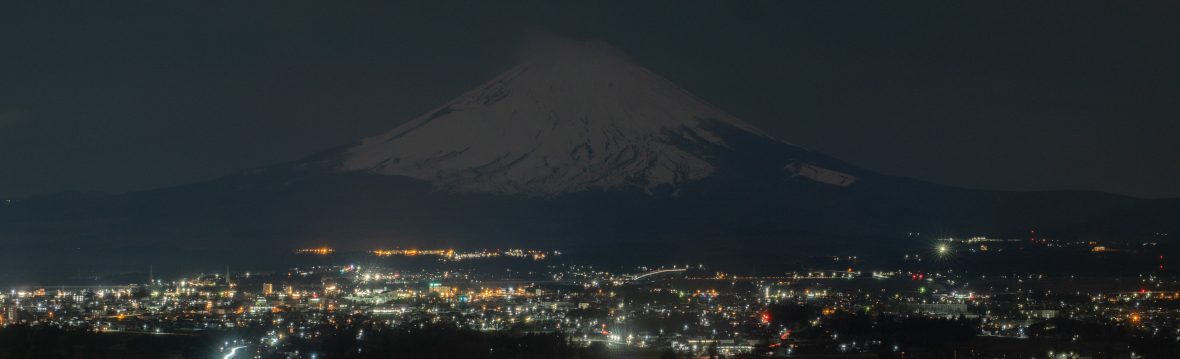


It’s been almost six months since I last got my hands on a Meike lens, and today I’m checking out something a bit different: Meike’s very first Pro lens.
That alone is enough to get me curious. However, the focal length itself isn’t new to me; I’ve used it before and, to be honest, it never really left a great impression. But every lens is different, and with this being Meike’s first step into the “Pro” territory, I am genuinely interested to see if this one can turn things around. Maybe it’ll surprise me.
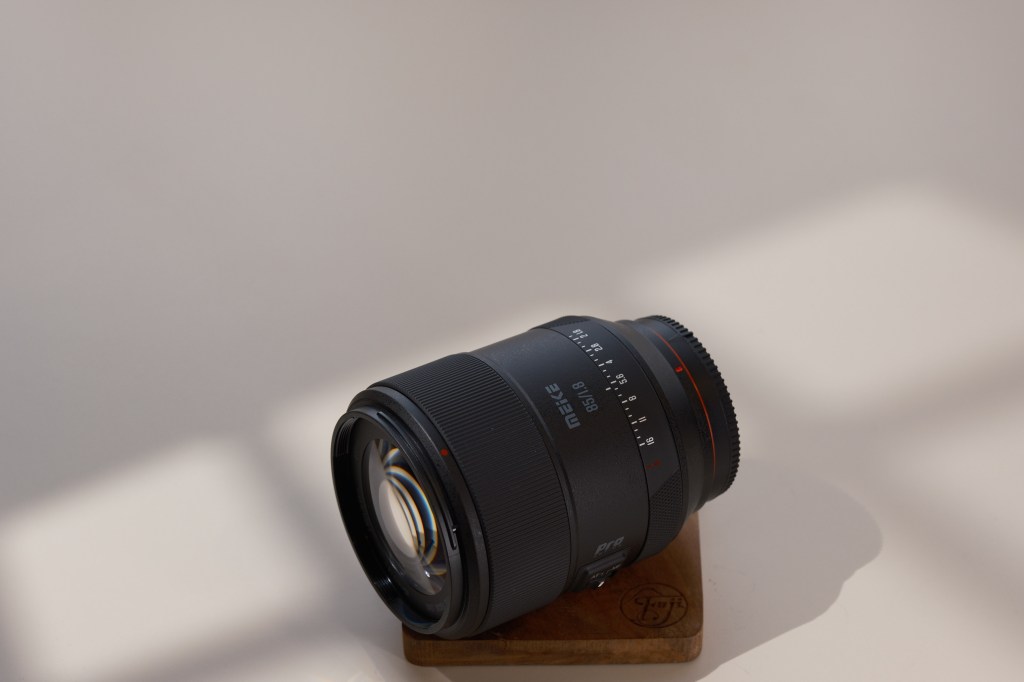


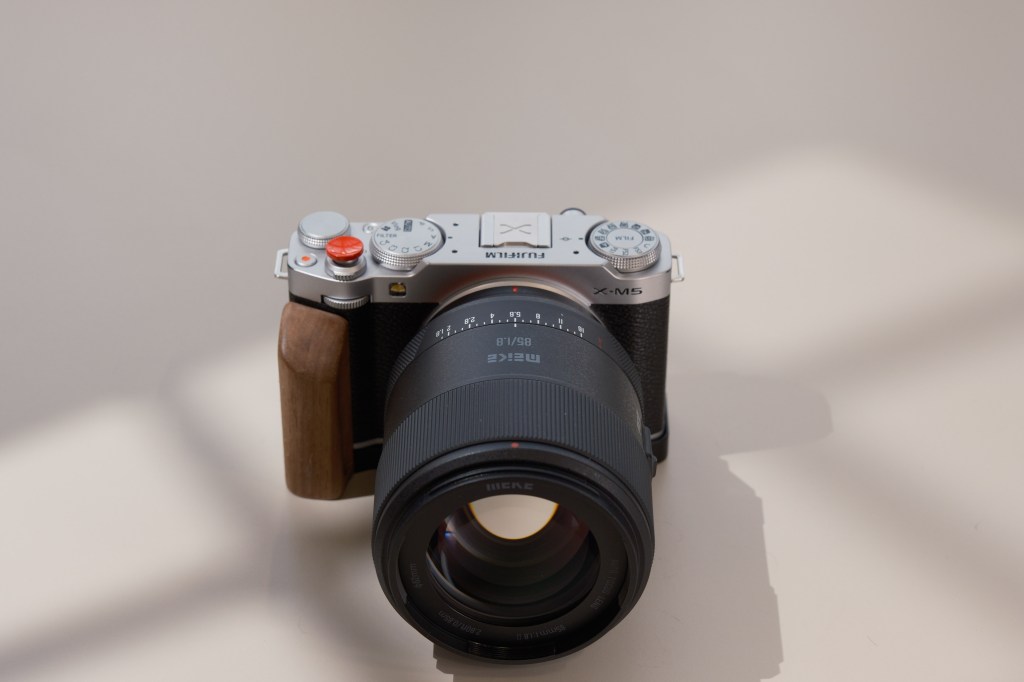
Right: Meike 85mm f1.8 Pro with lens hood
Intro
Meike launched the 85mm f1.8 Pro in November 2024, and let’s just say: it definitely turned some heads. Not because it’s an 85mm lens (we’ve all seen those before), but because “f1.8″ and “Pro” in the same name?
That’s not something you hear every day. It left a lot of people curious, and maybe even a little skeptical. I mean, isn’t “Pro” usually reserved for the big, heavy, brighter aperture, bank-account-crushing glass? So now the big question is: what actually makes a lens “Pro”? I’m here to test it out and see if this one earns the badge or if it’s just wearing the title for fun.


Right: Fuji X-T5 . Meike 85mm f1.8 Pro @ 85mm . f1.8 . 1/80″ . ISO 500 . Nostalgic Negative
Design and Build Quality
The first thing I noticed about the lens design is the noticeably bright red ring at the rear lens. Like the Meike 33mm f1.4 and Meike 55mm f1.4, it takes inspiration from the Canon L lens.


Right: Fuji X-M5 . Meike 85mm f1.8 Pro @ 85mm . f2 . 1/125″ . ISO 500 . Nostalgic Negative
The build quality is great. It comes with full metal construction and weighs about 390 grams. The weight is well-distributed across the lens body, which feels well-balanced when holding the lens in hand.
It comes with a 62mm filter size, pretty small for a “Pro” lens, and thanks to that, it allows photographers to buy considerably cheaper filters. It is also equipped with an aperture ring. The aperture ring is noticeably better than the f1.4 siblings. The gentle clicky aperture ring is smoother to control with minimum effort. As for the manual focus ring, it is frictionless and smooth.


Right: Fuji X-T5 . Meike 85mm f1.8 Pro @ 85mm . f1.8 . 1/180″ . ISO 125 . Classic Negative
Like all Pro lenses, it does come with a lens hood as well. But it is made out of plastic.
Image Quality
In terms of image quality, I’d say it’s quite decent. While it’s not as tack-sharp as Fujifilm’s latest generation of prime lenses, the sharpness is still respectable, and the contrast holds up well. Vignetting is noticeable but fairly mild. As for chromatic aberration, it appears to be well-controlled and not easily noticeable to my eyes.


Right: Fuji X-T5 . Meike 85mm f1.8 Pro @ 85mm . f1.8 . 1/80″ . ISO 500 . Nostalgic Negative
When it comes to background rendering, I really like how this lens performs. It produces a pleasing blur that isolates the subject nicely without being distracting.
Focusing
Although this lens uses a Stepper Motor (STM), the autofocus speed isn’t exactly class-leading. It occasionally hunts, even in bright daylight, and can be slow to lock focus—especially noticeable when shifting from the minimum focusing distance to infinity. This is an area I hope Meike can improve through a future firmware update.


Right: Fuji X-T5 . Meike 85mm f1.8 Pro @ 85mm . f1.8 . 1/1900″ . ISO 125 . Nostalgic Negative
On the upside, I didn’t encounter any misfocus issues during my shoots. The manual focus ring is smooth and responsive, no complaints there.
Minimum Focus Distance (MFD)
85cm MFD is pretty far, but it is considered pretty impressive for the 85mm focal length. In my opinion, the image quality retains pretty well and shows no sign of degradation or sort of.


Price Point
Before diving into the price of the Meike 85mm f1.8 Pro, let’s take a look at how other “Pro” grade lenses in a similar focal range are priced. The Viltrox 75mm f1.2 comes in at $580, the Sirui Aurora 85mm f1.4 is priced at $500, and the Fujifilm 90mm f2 sits at around $950.
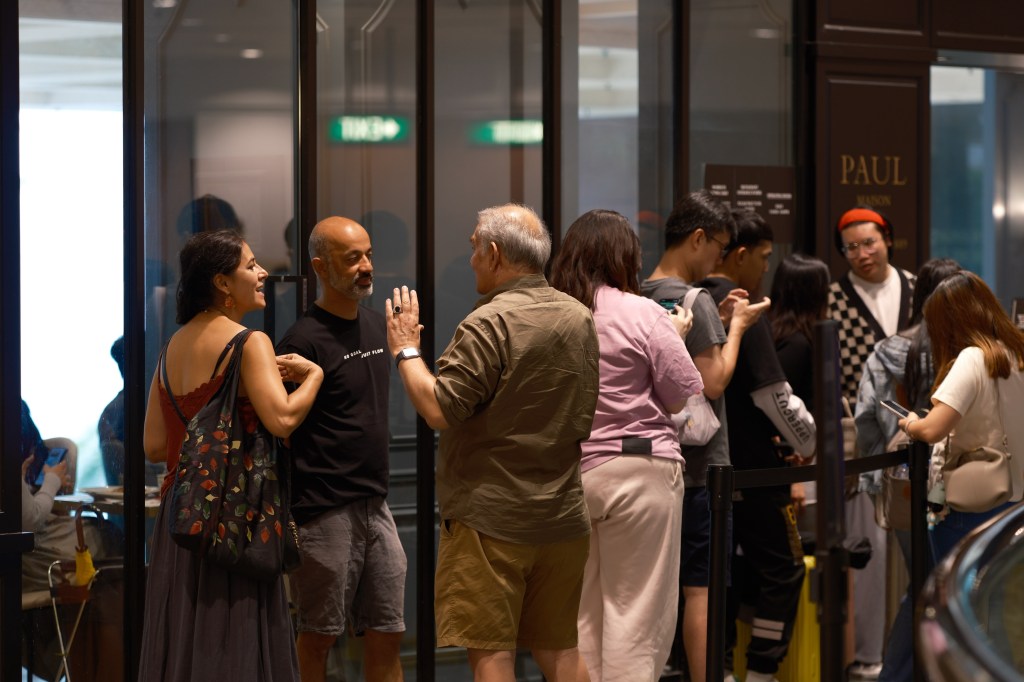


Right: Fuji X-T5 . Meike 85mm f1.8 Pro @ 85mm . f1.8 . 1/220″ . ISO 400 . Nostalgic Negative
In comparison, the Meike 85mm f1.8 Pro is priced at just $340, making it by far the most affordable “Pro” lens in this category.
Others
The lens features a USB-C port located at the rear, likely for firmware updates. However, there’s no official mention of weather sealing or dust protection. That said, the red ring, made of a silicone-like material, suggests there may be some level of sealing, even if it’s not explicitly stated.

One thing to keep in mind: if you want to shoot in manual focus, you’ll need to switch to manual mode using the focus switch on the lens itself, not the camera’s focus mode selector. I’ve occasionally picked up my gear only to find the lens stuck in manual focus, usually because the lens switch was accidentally toggled in my bag. So, if the lens isn’t focusing, don’t panic, just check that switch first.

Who is this for?
At 127.5mm (in 35mm format), this is a focal length that have good compression that suitable for portraits and product shots. That said, there is no reason why it cannot works for other genres.



Conclusion
For this focal length, or anything close to it, the market doesn’t offer many options. However, the few available are spaced out quite a bit in terms of pricing, which actually makes the decision-making process easier since they don’t overlap much.


Right: Fuji X-T5 . Meike 85mm f1.8 Pro @ 85mm . f1.8 . 1/16000″ . ISO 125 . Nostalgic Negative
Coming back to my earlier question: does it truly deserve the “Pro” label? In my opinion, it earns about half of it. (Probably a bit more than half.)
On the positive side, it delivers solid image quality, has a sturdy build, offers a manageable weight (for comparison: Viltrox 75mm f1.2 is 670 grams), and includes a well-designed aperture ring that enhances the overall shooting experience. On the downside, the autofocus can be inconsistent—focus pulling is noticeable, and there are times it struggles to lock focus even in daylight, which can be frustrating.

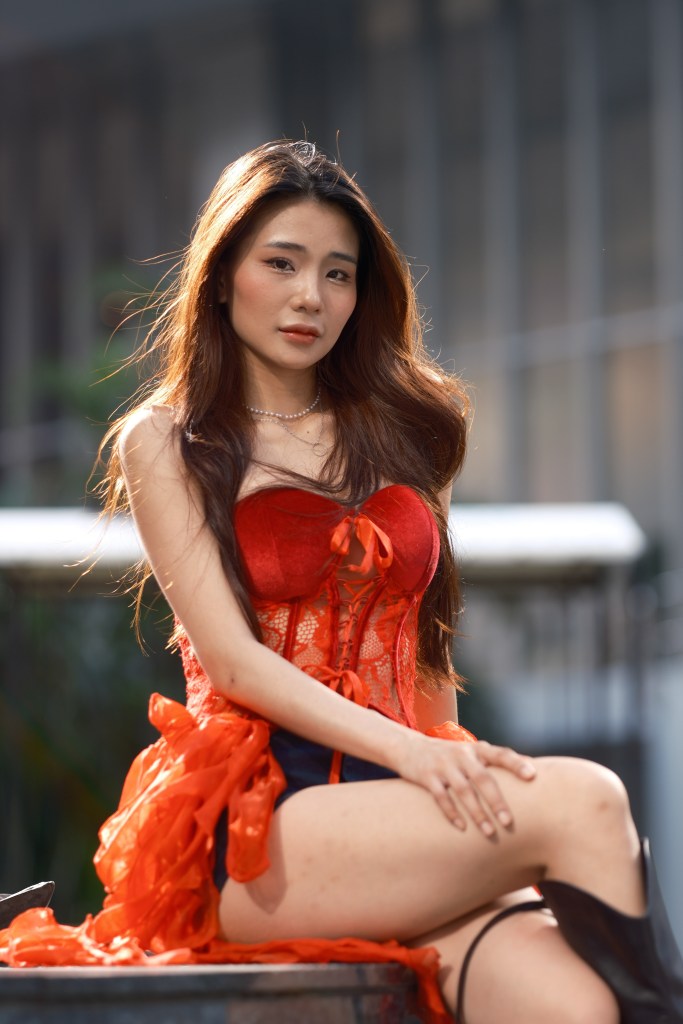

That said, Meike did a commendable job balancing affordability, weight, and a wide aperture while still maintaining good image quality. I would love to see a wide-angle “Pro” lens from them soon, hopefully completing the trinity.

Thank you for reading.
Disclaimer:
1. All the shots taken here are shot by me.
2. Most of the shots are straight out of the camera with some shots edited via In-Camera Raw Processing.
3. The opinions are based on my experience. If there is any mistake, please kindly drop me a message and I will gladly make the amendment.
4. I reserve ownership of these images, if you wish to use my images, please notify me.
If you like my works, please follow me on either one of the 2 Instagram accounts:
If you have a Facebook account, feel free to join Fujifanboys FB group.
If you like my content and you want to show some support and keep this blog alive, you can buy me a coffee here.

 Alwin Kok
1 thought on “Meike 85mm f1.8 Pro – What Makes A Pro?”