

Uncategorized

Budget & Camera

Lenses

Buying camera is never an easy task to being with. Of course, if budget is not an issue, you can purchase what you want off the shelf from the store immediately. But there are still a group of people who are more cautious about money spending, especially for the young one, be it a student or a young workforce.

Continue from my previous post, my friend had replied to me he want to use it for mainly for travel and causal family and friend shoot during weekends when there is a gathering or two. So he also further asked me to help him to recommend him what camera, lenses and accessories he should prioritize within the given budget with his usage. He So after understanding what he wants, I had work out some camera models & lenses from various brands and accessories. Over here, it’s all about Fujifilm. So I shared with you what I had shared with him.

With a budget of SGD2000, I have a few models for him to try out. These are based on suggested retail prices, street price should be slightly cheaper. (Due to Circuit Breaker, I am not able to get the street price.)

  1. X-T30 with XC 15-45mm (SGD 1549) + XC 35mm F2 (SGD 299) = SGD 1848.
  2. X-E3 with XF 18-55mm (SGD 1399) + XC 35mm F2 (SGD 299) = SGD 1698.
  3. X-T200 with XC 15-45mm (SGD 1148) + XC 35mm F2 (SGD 299) = SGD 1447.

Talk about camera body, X-T200 is the newest among this 3 choices but I will advise to get X-T30, given that it is using the latest sensor and processor. The longevity of the camera should last longer. X-T200, on the other hand, has bigger flip LCD screen for selfie and vlogger to use. Auto focus is not as fast as X-T30, probably similar to X-E3. Unless you love to selfie, X-T30 is my recommendation.

Usually I do not recommend XC 15-45mm lens but it seems that XC 16-50mm MK II is no longer available in Fujifilm Singapore. If I have to choose between these two XC lenses, I prefers XF 16-50mm over XC 15-45mm. Wait a minute, isn’t 15mm (22.5mm in full frame equivalent) is wider than 16 (24mm in full frame equivalent). Yes, it is wider and definitely helpful when you need that wide to cover some shots especially on landscape sceneries and group photos. The reason of not recommending is not because it has poor optic quality but because it is using power zoom lens which in my opinion is much slower than manually zooming.

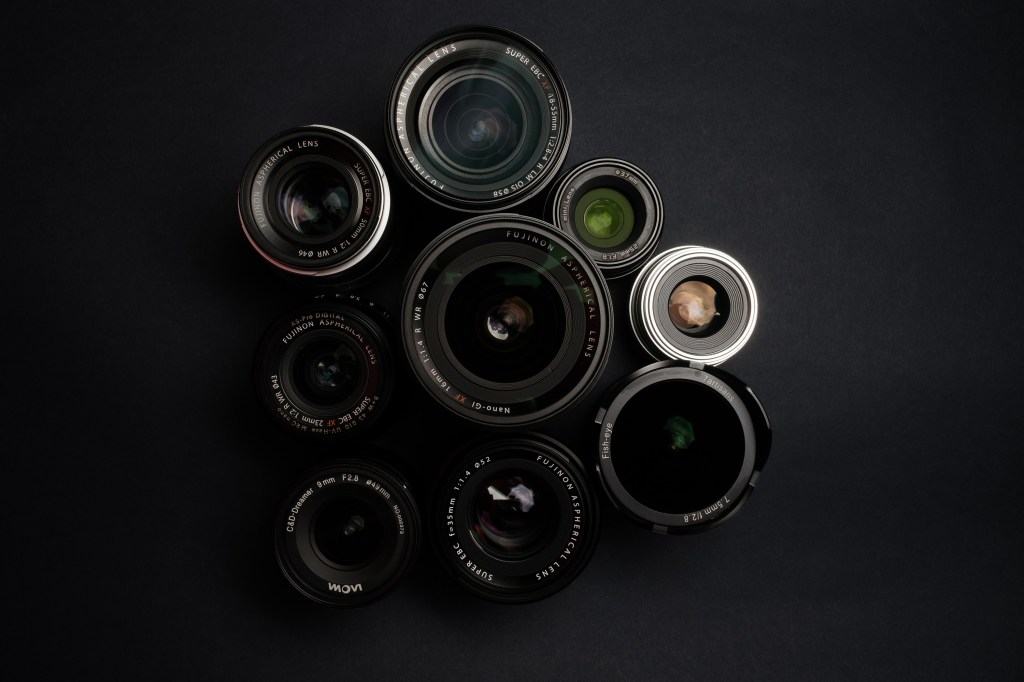
XF 18-55mm is my most preferred choice among all 3 choices. This is my first and only zoom lens from Fujifilm. To me, it is the standard of what premium kit lens should be. As most of the time, even for for travel, I use prime lens, unless situation does not allow me to do so, I will use this XF 18-55mm.

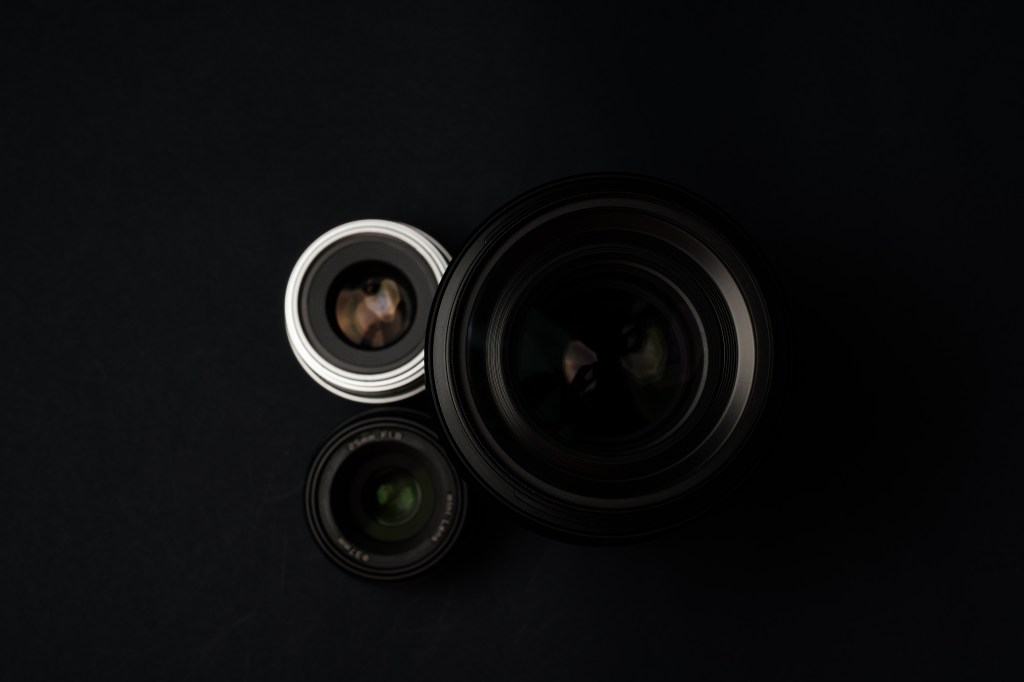
If you notice, I also included XC 35mm F2 inside all the 3 packages. This XC lens features plastic barrel but the optic quality is the same as XF 35mm F2. Of course it is lack of aperture control but I think it is okay. It is Fujifilm’s fifty nifty lens. It is the cheapest prime that I will definitely recommend to newcomers if they are entering to Fujifilm’s playground.

“XC class lenses can be viewed as Fuji’s budget oriented X-Mount lenses. There are currently only two XC lenses, both feature plastic barrels and lack the aperture rings often found on their XF R siblings. XC lenses also feature slower apertures but still feature ED and ASP elements to ensure consistent and high image quality. Often found bundled with Fujifilm’s lower priced mirrorless cameras, both the current XC lenses are under $400 and can be identified by the inclusion of ‘XC’ in the lens model designation.”

From Shutter Muse
Lenses

How about accessories?


First and foremost: Filters
I used to mount filters a lot and I always believe that they help to protect the front piece of glass. Just like “screen protector” logic to mobile phone. But I was wrong. I dropped one of the lens (not fuji) without the lens hood before and it actually scratched the front glass. Conclusion: no matter how, hood over filter. Always mount hood. Unless you want do special effect with certain filters, then it’s okay. By the way, getting cheap filters might also degrade the image quality.

Second item: Battery
This is important. For me, I have tons of spare batteries. Currently about 9 batteries in used with 3 brand new in box. I always bring 2-3 spare batteries with me for shoot and about 6 spare batteries for travel. That shows how afraid I am of losing batteries to shoot. It is not an excuse that not able to shoot certain things when I want to and the reason is because I forgot to bring extra battery. Depending on the retail shops, they might give you a spare battery as a free gift. So I think getting an extra one more battery should be sufficient for starter, which mean 3 batteries in total.

Third item: Cleaning kit
Basic cleaning kit is important. Typically getting a package that includes a decent blower, wipes, pen brush and microfibre cloth is good to start with.

Fourth item: Dry cabinet
If you do not intend to expand your lens collection so fast and so soon, you may consider to get a reasonable size digital dry cabinet. A 30 litre size is selling approximately SGD89 in Singapore. If on a budget, a dry box is doing fine with silica gel.

Fifth item: Tripod
Cheap tripod does the function of being a tripod but usually it is not stable and weak when exposed to outdoor environment. I do not recommend getting it. Tripod is not really essential unless you want to explore long exposure landscape photography. If you do, purchase a good one. But you are on budget, save up on some money to get it. This is something you shouldn’t save money on or you might be regret.

Last but not least: Memory Card
Never ever invest in cheap memory card. Why? Why do you want to take the risk of having problem with your memory card? What if your photos are corrupted because of the cheap memory card? In my opinion, it does not worth the risk at all. The price of getting decent brand memory card is reasonable nowadays and I don’t see why we need to take risk in getting a cheap one.

The above are the general idea of what I have shared with my friend. I hope the tips are helpful in your adventure of getting your first camera.

Lenses

On the other hand, I have also compiled as list between USA, Singapore and Hong Kong for your info. The price list is based on May 2020.

Camera and lens descriptionAdorama (US)
(USD)
B&H (US)
(USD)
Singapore
(SGD)
Hong Kong
(HKD)
X-T30 w/ XF 18-55$1,299.00$1,299.00$1,999.00$6,290.00
X-T30 w/ XC 15-45$999.00$999.00$1,549.00NA
X-T30 w/ XF 23f2NA$1,348.00NANA
X-T30 Body$899.00$899.00$1,399.00$4,350.00
X-T20 w/ XF 18-55$899.00NANA$5,050.00
X-T20 w/ XC 15-45NANANA$3,890.00
X-T20 BodyNANANA$3,220.00
X-E3 w/ XF 18-55$799.00$799.00$1,399.00$4,540.00
X-E3 w/ XF 23f2$749.00$1,052.50$1,299.00$4,680.00
X-E3 Body$499.00$499.00$999.00$2,520.00
X-T200 w/ XC 15-45$699.00$699.95$1,148.00$4,580.00
X-T200$599.00$599.95NA$3,890.00
X-A7 w/ XC 15-45$499.00$499.00$849.00$3,680.00
XC 35mm F2$199.00$199.00$299.00$1,380.00
XF 35mm F2$399.00$399.00$699.00$2,290.00
Table comparison

Disclaimer:

1. All the shots taken here were shot by me.

2. I reserve ownerships to these images, if you wish to use my images for whatever reasons, please notify me and we can see how to works thing out.

Uncategorized

Which camera suits you?

My Fuji family members.

Every now and then, there will be some friends asking me about what camera to get. A gear that is able to get beautiful shot of their lovely subjects. I am glad they approached me to help them with making their decisions. I hope I can assist them to understand what they need before spending unnecessary money on an equipment.

My friend contacted me early last week. He said he saw my post in Instagram showing so many camera bodies and asked if I still keeping all my old Fuji cameras. After some causal talk, he started to ask me what camera should he buy if he want to invest in one of them.

And then, I started to throw him some questions so that I can understand what is his intension for willing to spend money on a camera whereas nowadays mobile phone also produce very pleasant results. After some sharing of tips and pointers, he decided to think over it. Notably I decided to share what are my questions over here and hope newcomers can do some considerations. Over here, I am not sharing about technical skills and knowledge but rather understanding what is your needs and wants before getting an equipment.

“There is no rush to get the camera. Take your time considering it and don’t forget to ask questions when you are in doubt.”

1. What is your purpose of having a camera?

If you are thinking of learning photography, then you have to ask yourself what is the reason to make you want to learn?

Photography is about forever learning and improving. Upon reaching the limit that you think you can’t proceed further with the current gears, you expand with additional one to continue to achieve it. It’s a passion that you have to continue to grow at your own pace. Patience to learn is one of the critical key components.

Let me share with you about an example:
About a decade ago, I had a friend who got a camera for a reason. He wanted to learn to shoot portraits so that he had more opportunities with shooting models. Thanks to the recommendation by the salesperson, he spent a lot of moneys on getting a camera body, together with flash and many lenses. Many months later, he asked me where can he sell all his gears. Out of curiosity, I asked him what was his reason selling them? He said he cannot achieved what was deem to be his expected results, also claimed he had to spend a lot of time doing learning how to shoot and process the photos. And so, he decided to call it a day.

If you wish to take beautiful shots for travel, daily lifestyle, etc., then you have to ask yourself this question: can your mobile phone do the job?

If your answer is you want better image quality, does not mind the hassle of bringing the camera out and also the hassle of transferring your photos from a camera to your phone (or maybe transfer to a laptop first) to post photos on social medias. I have no objection with your reason because you are clear of why you need a camera.

My Fuji family members from another view.

2. What is your budget?

Having a budget in mind is always important. It will set you a target of what you can buy within that given amount. When I first started to learn photography, I actually overspent the budget that I had. I spent exactly the budget on the camera, without knowing that I need to get accessories such as dry cabinet. Luckily, the camera did come with some starter kits like extra batteries, not so useful cleaning kit and an unstable tripod. So I had to spend more to for a dry cabinet.

My point here is that it is always better to give some allowance to the budget you set for. I think 20% allowance is a good spot. For example: if you have a $1000 budget, keeping $200 aside for unexpected purchase.    

3. Are you looking at brand new or second hand market?

This is pretty straight forward. If you are looking for brand new, you can get advice from your photography friend on which good reputation shops you should get your camera from. If you are in Singapore or coming to Singapore for a holiday, you can also drop me an email or DM me in Instagram, I can share the information with you which my preferred shops.

As for second hand market, this is tricky for an inexperience person as you need some knowledge to spot the condition of the camera. For example: certain sellers tend to sell at a lower price than the market offers and we need to know why are they willing to let go at a much lower price tag.

Nonetheless, this might be a good option if you are unsure if you want to pursue this hobby further. If you are no longer interested, then selling off in the second hand market should be able to recover most of the money spend.

Fujifilm X100V with various lenses.

4. Is there any camera brand preference?

This is an importance question. You have to love the brand and the camera you are buying. If you are getting a camera brand that you do not like then it will be in a funny situation.

If you do not have any brand preference, I will suggest you to go and try the cameras out in the shops. After all, you have set your budget, identifying which camera within your budget is a simple task. If you are still uncertain with the camera and if your friend has the same camera you want, you can try to borrow from him or rent from camera rental store. Please try out the camera with at least one full week. If trying out for a few days or over a weekends, you might not have sufficient user experience with the camera. So I think a week or more is a preferred option. After all, it is not a small amount of money that you are going to invest.

But if you do have brand preference, narrowing down to that specific brand and models is a simpler task.

5. Interchangeable lens or no?

Interchangeable lens always give you the flexibility to upgrade lens or camera body as time goes by. Able to change lens give you more varieties of lens to suit your needs to explore more. For example, you are interested to go into sports or birding photography, you can purchase a telephoto lens to meet your needs. Or you are into macro photography, you can purchase a macro lens.

But if you are a causal shooter, does not intend to invest more and only bring out for family occasion and travel during holiday. Maybe a non-interchangeable, powerful enough camera should meet your requirement.

Of course, if you are into learning photography, either one is fine. But I believe an interchangeable camera is definitely the better choice as it does not limit your learning within that lens.  

Fujifilm X100V and X-Pro 2.

6. As a starter, what lens should you get? (For interchangeable camera)

If on a tight budget, having a kit lens and one prime lens should be a good starting point. A typical kit lens provide you a sufficient focal length coverage from wide to mid-tele zoom range and it covers most common usage and versatility. On the other hand, a prime lens give you a good learning experience of using a fixed focus length lens and it also does provide faster speed for low light situation.

7. What should I spend on the remaining budget?

With the remaining 20% budget, you can spend on extra batteries and memory cards. Usually camera shop does run some promotions and giving out extra batteries and memory cards but no harm getting another one set extra.

Not forgetting about cleaning kits such as a good microfiber cloth (but I use chamois leather) and blower to blow off dust.

As for dry cabinet, if you still have budget, you get consider getting one. Otherwise, I think getting a dry box with silicon gels do helps too.  If you still have budget remains, keep it for future use.

One last pointer, there is no rush to get the camera. Take your time considering it and don’t forget to ask questions when you are in doubt.

Thank you for reading.

Fujifilm X-T2 with various lenses.

Disclaimer:

1. All the shots taken here were shot by me.

2. I reserve ownerships to these images, if you wish to use my images for whatever reasons, please notify me and we can see how to works thing out.